

 admin
admin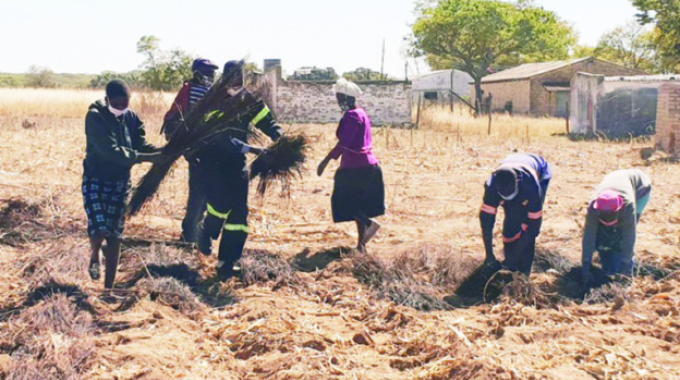
Obert Chifamba-Agri-Insight
SOUTH Africans have always been firm believers in their slogan — “local is lekker” that roughly translates to “innovation is always better when it is local”.
It seems that same faith in local solutions is fast permeating the Zimbabwean developmental agenda and fitting in seamlessly.
Instead of looking outside the borders for solutions, the country is seized with promoting a culture of utilising what is available locally first before thinking of outsourcing.
Where there are substitutes for imports, the new gospel is to “utilise them” and stop exporting foreign currency and in other cases jobs.
The agriculture industry, for one, has embraced the philosophy, with players in its various sub-sectors coming to the party in their different capacities to make it work.
Government recently introduced the idea of import substitution to cut on the country’s import bill.
And to that effect, the Government is leading from the front in this new line of thinking, with President Mnangagwa recently commissioning a fertiliser blending plant in Harare which is expected to boost the production of basal fertilisers.
The country’s sole Ammonium Nitrate (AN) fertiliser producer, Sable Chemicals, is also expecting to get chemicals for use in making the top dressing from the Muzarabani oil and gas exploration project.
The company has in recent years been struggling to access the chemicals and relying on imports from countries such as South Africa, which has always been costly.
Additionally, Government introduced the climate-proofed Pfumvudza/Intwasa concept that makes use of locally available resources such as crop residues, grass, dead leaves and animal manure to both boost yields and reduce the impact of adverse weather on crops.
Ordinarily, where a farmer would need drip irrigation to apply water directly to a plant, Pfumvudza uses the planting hole to trap water and moisture while mulching from locally available materials will reduce evaporation.
The organic matter deposited in the hole will provide plants with nutrients, while the mulching will also turn into organic matter with time and be used by plants.
This means less fertiliser application and reduced costs to the farmer.
The bountiful yields associated with the concept will always see the farmer remaining food secure at the same time.
The use of locally available resources dovetails with Government’s devolution agenda, which promotes the full utilisation of available resources in various localities.
It is refreshing to observe that experts in agriculture are also encouraging farmers to tap into locally available resources for both crop and livestock production, as the move is sustainable, as a way of improving the agro-ecology rather than using expensive chemicals and fertilisers.
In most cases, locally available resources are friendly to both the environment and the users (farmers) and are therefore sustainable options.
Resources extracted from the immediate environment always have the effect of promoting the agro-ecology and do not leave residues that later come back to haunt the environment or the users.
They also help minimise the use of potentially harmful chemicals whose effects may not be felt immediately after application, but may show years later or appear as residues in produce.
This has in some cases caused huge losses for farmers, especially those producing for export markets that are very particular on agronomic methods used during the growing of a product.
One other thing — chemical solutions to farming challenges always come with costs.
Chemicals are not for free. They come at a cost, yet most of the locally available solutions will only require the farmer to invest labour and knowledge in the application process.
Besides being expensive, cancer, heart diseases have become rampant as a result of the use of some of these chemicals.
Incidentally, this winter wheat season’s record hectarage has come at a time the country’s motto is to make the most of all resources at its disposal.
The bounteous wheat season comes as a blessing to livestock farmers and those intending to produce crops using the Pfumvudza concept, as they can get mulching material from the straws left behind after the harvesting of the cereal.
Livestock farmers can always bale the straws for later use as feeds when pastures go dry and food becomes scarce.
Converting the wheat straws into stock feed also becomes a form of value addition because they can be baled and sold to other farmers who did not produce wheat, but need the residue to feed their livestock.
The bumper wheat harvest expected this season will also yield bumper straws that will be a bonus to the farmers since they can get more earnings from selling them or through feeding their livestock and boost the body condition, which raises the value of the animal in the event that it is later sold.
Wheat straws are nutritious when used as supplementary feed for beef in pen-fattening and dairy animals and boast a long storage life.
This allows farmers to plan their feeding schedules.
Wheat straws do not deteriorate or lose quality fast and retain their good taste for a long time, which makes them good for animals to feed on.
It is exciting to note that cattle farmers in the arid Matabeleland region where rainfall ceilings rarely go beyond 350mm have since come to terms with the reality that they are situated in a dry region and have to act to save their animals.
Every year they make it a point that they either take them for relief grazing in areas with good pastures during the dry season or provide supplementary feeds.
Matabeleland falls under Natural Region 5 where natural pastures are perennially inadequate to sustain their animals so the majority now grows fodder during the wet season before harvesting and stocking for later use.
Some livestock producers also make use of pods and leaves from the Acacia thorn trees, which have high nutritional value.
They gather the pods and store them for later feeding.
Acacias belong to the family Leguminosae, many species of which are quite rich in proteins and minerals.
Their leaves, twigs and pods contain fairly high concentrations of protein with the seeds in particular containing high protein levels.
This makes Acacias vital supplements especially during the long dry seasons when they serve as a source of the much-needed nutrients by domesticated animals like cattle.
The fact remains undisputed that these bush meals come in handy in the quest to promote the agro-ecology.
Farmers situated in regions where there are inadequate pastures may also need to develop the habit of growing crops such as velvet beans and lablab to make sure their livestock will have enough feeds even in the driest of times.
They just need to harvest and store them safely.



 Online Reporter