


 Andrew
Theseus Shambare
MUNASHE Mombe was released from a local rehabilitation centre two months ago.
Mombe, who was undergoing therapy for three months, had battled a five-year drug addiction challenge.
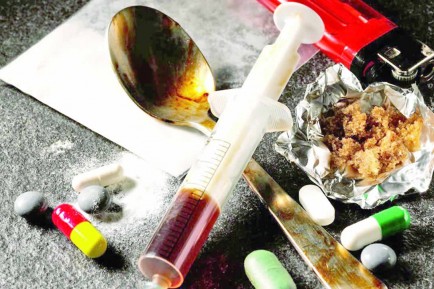
Prior to his admission, the 21-year-old, who stayed with his mother in Mutoko, is said to have gone on a three-day recreational drug binge with his friends.
On his return, in his “high” state, he allegedly went berserk and attempted to attack his mother and siblings with an axe.
A huge dent on the house wall still serves as a reminder of the horrible incident.
Disturbed, the family was prompted to seek help for Mombe, after realising that he was taking illicit drugs.
His mother, Mrs Maria Mombe, a widow, gave up all her savings to check him into a rehabilitation centre.
As per procedure, Mombe had to be tested before admission.
The mother recalls how heartbroken she was when the results revealed that his blood was heavily saturated with crystal meth, popularly known as dombo, guka or makafela. He also tested positive for using marijuana, Broncleer and other unknown substances.
“I had on countless times tried to restrain him from associating with drug addicts. This was no longer the Munashe I raised,” said the mother after suspending plans of having a borehole drilled at their rural home.
She also deferred several other projects as saving her son’s life became top priority. Funds were channelled towards the rehabilitation process.
“He would sell anything, including clothes, just to get drugs,” added the mother.
Remorse
Now drug-free, Mombe, who is employed by a Mutoko-based motorcycle assembling company, regrets ever taking drugs.
Vowing to stay clean, he notes that his mother’s unconditional love helped him to successfully fight the addiction. He encouraged other families not to neglect members facing drug addiction challenges.
“All it takes to heal is someone to believe in you, and I want to thank my family, especially my mother, for showing me love during my worst moment. I did not deserve that considering how much I wronged her,” a rejuvenated Mombe told The Sunday Mail Society.
Mombe said he could not explain or find logic in some of the things he did after taking drugs.
“Each time I took drugs, I felt like someone or something immediately took control of my body. I could not control it (body). Up to now, I don’t even know where I got the guts to lift an axe and attempted to attack my mother and siblings.
“It is all like a drama to me. With drugs, you cease to think properly. They are not good in any way and only create problems. I don’t remember most of the embarrassing things I’m told I did under the influence of drugs,” said Mombe.
He now wishes to play a part in assisting drug addicts.
“I have lost five years of my life. I cannot get them back, but I can help somebody else,” he said.
Relapsing
Mombe is now gainfully employed and taking proper care of his mother, who, if fate had acted otherwise, would have died at his hands. But sceptics feel he is currently exhibiting compensatory behaviour.
Without proper support, they reckon, he will relapse.
This school of thought’s position is buttressed by conformists, who feel he will only be set free after appeasing (kuripa ngozi) his mother for wronging her.
However, Mrs Mombe, a staunch Christian, does not see any need for rituals.
“I only pray that God keeps my son safe and in the correct lane,” she said.
Mombe sought help at the International Wellness Centre. The institution has a holding capacity of 50 patients and is always full to capacity at any given moment.
Founder and chief executive officer of the organisation, Dr Nkululeko Dhewa, said getting out of drugs was not easy, but possible.
“With (crystal) meth, which Munashe was taking, it is not an easy journey because one can be an addict even upon taking it once or twice. When you consume it, it leaves the residue and it is this residue that gives one the craving to continuously want to take more,” said Dr Dhewa.
He said the institution’s rehabilitation process was in three phases.
The first stage involves two weeks of withdrawal, whereby the addict is assisted to abstain from drugs. The second phase will be detoxification. At this stage, the patient is introduced to steaming (kunatira) after receiving some vitamin supplements.
The final session is a psycho-support programme, where social workers and psychologists identify the skills and knowledge of the patient so that they prepare him or her for life after rehabilitation.
“The family needs to continue supporting the patient, even after the formal rehabilitation process. We are in constant contact with him (Munashe). He personally refers to me as his father. Our social worker calls him frequently and he is now in his right senses,” added Dr Dhewa.
“When we house anyone at our institution, we create a bond with them and they become family.”
Serenity Mind Centre mental health specialist and psychiatrist, Dr Anesu Chinoperekwei, says the relationship between drug abuse and mental health is bidirectional.
“You will find that in a significant part of the population, there are dual or core morbidities of both substance use and mental health illness. Drug abuse can result in precipitation of mental health illness, particularly depression and anxiety symptoms. In addition to that, it can result in psychosis, whereby people start seeing or hearing things that are not existing and being paranoid as if something is following them,” she explained.
Dr Chinoperekwei reckons the need for continued support for victims as they may still suffer from a condition called substance-induced psychosis — showing symptoms even after stopping drugs.
In Epworth, Tapfumaneyi Jozera (47) was battling similar demons. Jozera, better known as Quarter, tried all sorts of illegal drugs.
He got his moniker due to the fact that he was always in possession of a quarter litre of “musombodhiya”, an illicit brew.
Often high, he sometimes failed to get home and would spend the night by the roadside. At some point, he said, he got robbed, forcing him to skip work, which led to his subsequent dismissal.
“Poverty forced me into using drugs. I got addicted to the extent that I became resistant. I would not get high. This would then force me to search for a new high. I would try all sorts of products — among them tambilani, kenge, soldier, codeine and Broncleer,” he revealed.
Apart from losing his mind, some of the substances physically affected him as he lost his teeth.
Fortunately, Jozera found salvation.
“The church rehabilitated me. The leaders would counsel and even give me piece jobs to keep me occupied. I was willing to get out of this (drugs). It took me two months to get used to a sober life,” Jozera said.
However, fighting addiction, he said, was not a stroll in the park.
“It was not easy and I vowed never to relapse. I have been clean for six months and now ready to get married. Back then, I never thought of finding a companion because drugs had taken over that place in my life,” said Jozera.
Fatal consequences
The issue of mental challenges has become a cause for concern across the country and experts opine most of the cases are related to drugs and substances.
A local mental health institution revealed that barely three days pass by without new admissions. Reports indicate that at Sally Mugabe Hospital, the majority of people passing through the psychiatric unit are substance users.
In 2019, the hospital treated 150 substance abuse cases and the figure spiked to 850 in 2020.
The authorities argue the figures could be much higher if most people were seeking help. Suffering in silence has, however, led to fatal consequences in most instances.
It is now not unusual to get reports of mentally challenged people who would have committed suicide or killed other people.
Dr Takunda Wingwiri, a general practitioner, said mental illnesses can sometimes run in families.
He, however, added that drug abuse has of late been the major contributor to mental illness.
“People who have family members with mental illness may end up with this condition themselves. It can be passed on through genes in families,” he said.
“Infections also lead to brain damage and the development of mental illness. Streptococcus bacteria causes a condition known as paediatric autoimmune neuropsychiatric disorder, which is linked to the development of obsessive compulsive disorder in children.”
Stranded
As the number of drug users swells, steep charges by private rehabilitation facilities have left most families stranded.
Some of the facilities charge as much as US$750 and US$1 200 for a three-week admission.
However, there are some private institutions that have affordable fees ranging from as low as US$30 per month.
Experts argue that Zimbabwe currently has limited publicly run rehabilitation centres, which is worsening the plight of those in need of help. Those struggling with drug addiction either pay their way into private facilities or are bundled into mental shelters at hospitals like Sally Mugabe, Wilkins, Ngomahuru and Ingutsheni.
The Government has since introduced drug abuse campaigns, and drug dealer hunt operations meant to crack down on syndicates. Steep jail terms for those arrested have been put in place.
An inter-ministerial task force was also established to deal with the drug scourge.
A review of the National Policy on Drug and Substance Abuse, and amendment to the Dangerous Drugs Act is also in progress.
“Drug use — just like suicide, depression and other immoral acts — is a result of mental health problems, so these issues need to be nipped in the bud,” said popular television personality, Mrs Vickie Mlilo-Maponga, a passionate mental health advocate.
“Others are forced by work pressure and economic challenges, among other reasons, to abuse drugs but are not aware of the long-term effects.”
Zimbabwe Civil Liberties and Drug Network projects director, Mr Wilson Box, weighed in. He notes most people get into drug abuse because of peer pressure, idleness, urge to experiment, role model influence, broken homes and economic pressures because of unemployment.
“Drug addicts claim to see things or hear voices telling them to do certain things and they also become violent and dangerous. They can also go for days without taking food, which is why most of them look unhealthy,” said Mr Box.
Drug abuse, he added, leads to anxiety, depression and paranoia.
According to Mr Box, families and society at large should unite in offering drug abuse victims support to address the scourge.



 Bongani Ndlovu
 Online Reporter