Online Reporter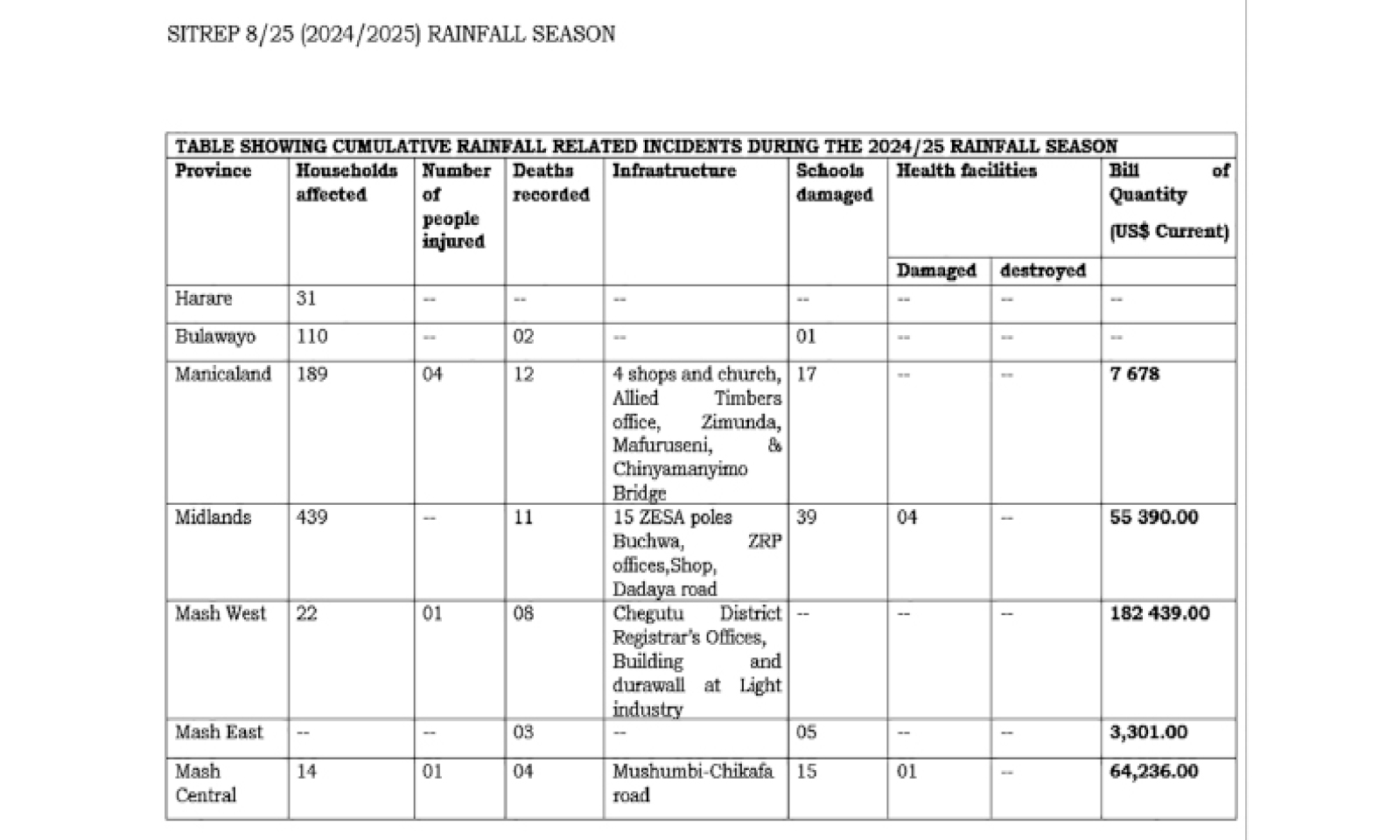
Precious Manomano-Herald Reporter
As rain-soaked fields of Zimbabwe turn green, a complex narrative unfolds, one of both hope and heartbreak.
Where ongoing rainfall ignites optimism among farmers, promising bountiful harvests, it also brings devastation, claiming lives and impairing livelihoods.
This duality of rainfall illustrates the stark contrast between agricultural promise and the severe challenges faced by many communities.
President of the Zimbabwe Commercial Farmers Union (ZCFU) Dr Shadreck Makombe, indicated that a bumper harvest is likely to be achieved following abundance of rains this season.
“The rains have transformed our crops. Crops are now growing, and there is renewed hope among farmers since we are receiving good rains in most parts of the country,” he said.
This sentiment resonates in the agricultural community, where the First Round of Crops, Livestock and Fisheries Assessment (CLAFA-1) indicates significant growth.
The area planted with maize rose from 1,728,897 hectares in the 2023/24 season to 1,822,904 hectares in 2024/25, marking a 5.4percent increase above the set target.
Traditional grains also saw a 7percent increase, underscoring the positive influence of the rains on food production.
However, this uplifting narrative is overshadowed by a grim reality.
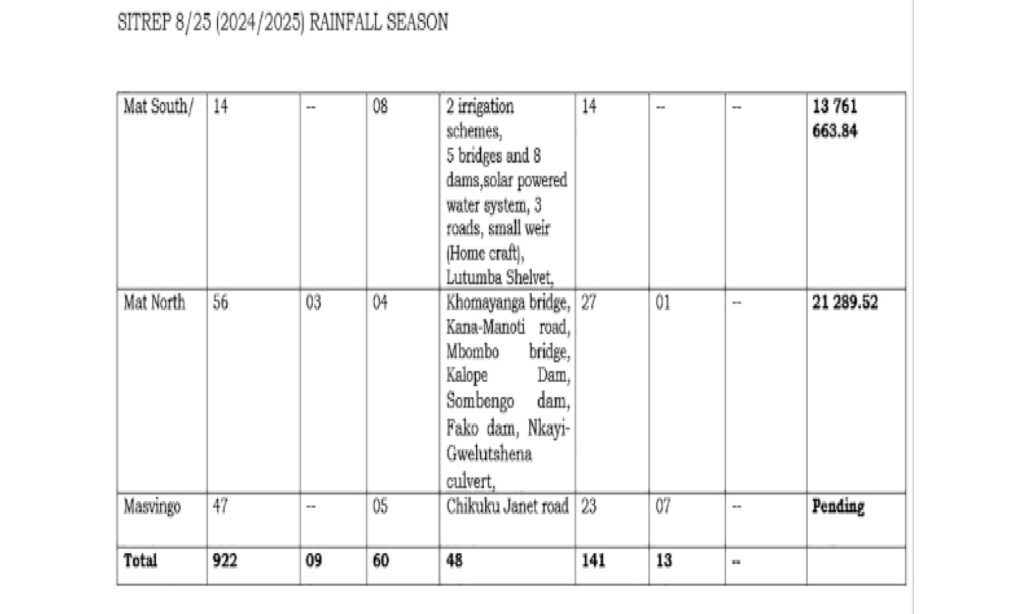
Since the onset of the rainfall season, 60 lives have been lost, and 922 households have been severely affected.
This was revealed in an update by the department of Civil Protection on Friday last week.
The tragic incidents include a 13-year-old boy who lost his life to a crocodile attack while swimming in the Gweru River, and a woman who drowned while attempting to cross a flooded river in Gwanda District.
The rains have not only impacted lives directly but have also wreaked havoc on infrastructure.
Severe weather on February 22, 2025, led to the destruction of local dams in Madlozi village, exacerbating food insecurity as fields were flooded.
In Matabeleland South, a culvert was destroyed, leaving communities isolated and reducing mobility.
“These floods pose a significant threat to food security in the area,” said the Department of Civil Protection.
In schools, the consequences of the deluge are equally concerning. At Siboza Primary School, flooding turned classrooms into virtual rivers, with only 11 pupils attending classes as of February 19, 2025.
The educational disruption adds another layer to the challenges faced by communities during this tumultuous weather season.
Despite these hardships, the resilience of the farming community shines through.
Dr Makombe urged farmers to embrace water conservation techniques to prepare for future weather variability.
“We must harvest rainwater to sustain our crops and livestock,” he advised, emphasising the importance of proactive measures in the face of climate challenges.
As the rains continue, Zimbabwe finds itself at a crossroads where the promise of a fruitful harvest is tempered by the stark reality of loss and destruction.
The dual impact of this rainfall serves as a reminder of nature’s power and the need for communities to adapt and prepare for both the blessings and challenges it brings.