Online Reporter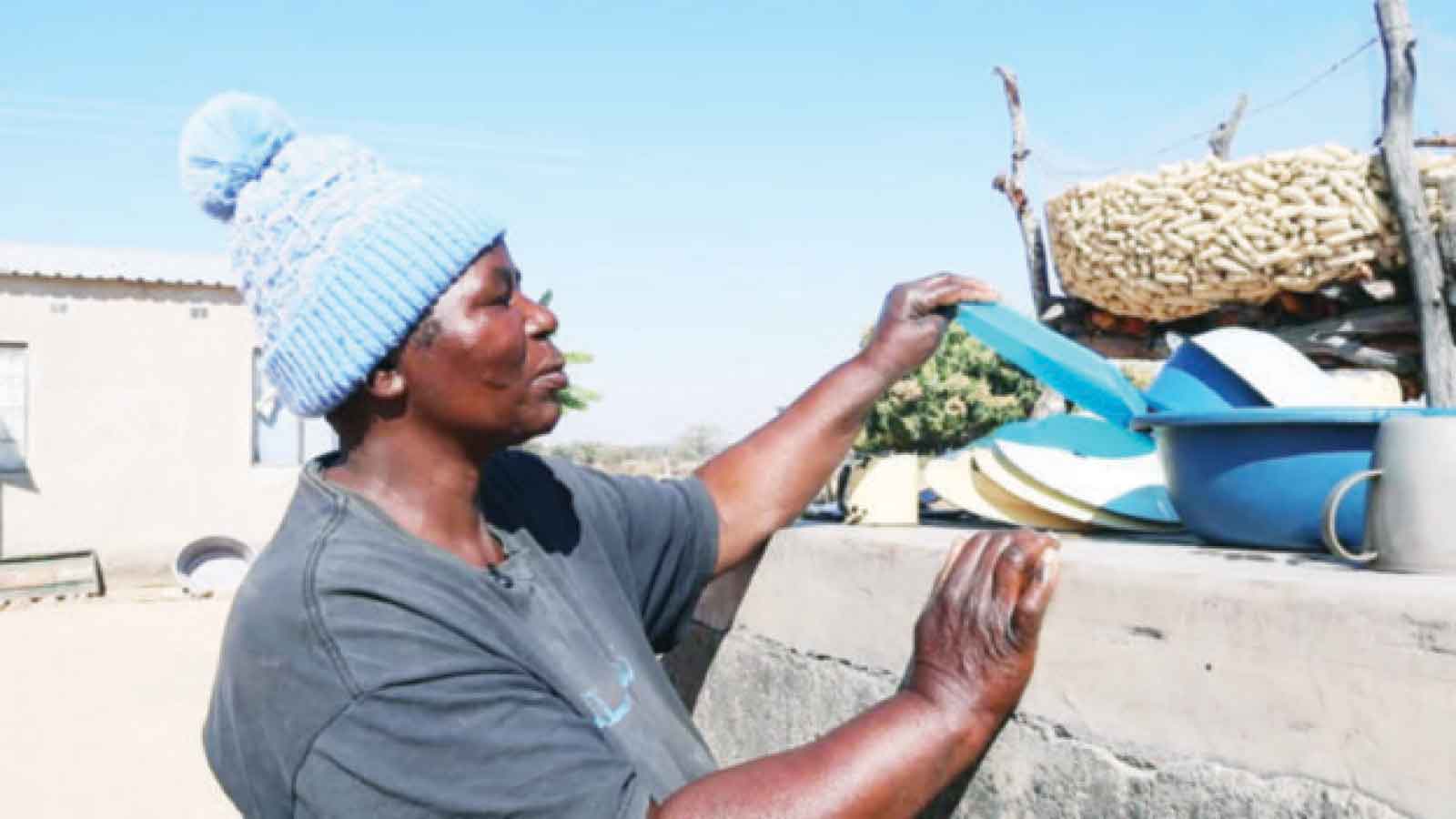
Theseus Mauruki Shambare recently in MBERENGWA
STHEMBISIWЕ SHAVA stands beside a simple traditional dish-washing stand made from wooden sticks cut from wild trees, washing plates with clean water drawn from a borehole at her homestead in Mberengwa.
The makeshift structure is modest, but the water flowing through her hands represents years of struggle to secure a reliable source for drinking, washing and farming in a community where mining and environmental pressures are changing the way families access natural resources.
For Shava, washing plates at home is a reminder of how much life has changed.
“When we came here during the Land Reform Programme, there was not even a borehole,” she said.
“We used to go to the river and dig wells to get drinking water.”
The river was once central to the community’s daily life, providing water for household use while agriculture and livestock supported livelihoods. But Shava said the river is no longer suitable for drinking.
“The water is no longer drinkable, and the river has become heavily silted,” she said.
The change exposes a gendered dimension of environmental degradation that can easily disappear from discussions about mineral production. When water sources become unreliable, households still need water.
Someone has to fetch it.
Someone has to prepare food, wash utensils, maintain household hygiene and keep gardens productive. For women living in rural communities, those responsibilities can turn environmental degradation into additional unpaid labour.
Shava experienced this first-hand when Government boreholes were located several kilometres from some households.
“Some were as far as five kilometres,” she said.
For families with limited resources, the distance meant that obtaining water required additional time, effort and transport.
Eventually, Shava and her husband, Newman Mabika, used pension money to drill their own borehole.
“Eventually, we managed to drill our own borehole,” she said. “Now we have clean water at home for drinking and irrigation.”
The borehole has done more than solve a household water problem. It has allowed Shava to rebuild a livelihood through agriculture.
She wants to establish a productive garden and eventually expand production, but water alone is not enough.
“We have drilled our own borehole, but we still cannot farm on a large scale because we do not have the necessary equipment — the pumps, drip irrigation and other things,” she said.
For now, the family is starting with a small garden. Shava hopes that by December they will be able to produce crops for household consumption and sell some of the surplus.
“We are hoping that by December we will be able to grow some crops of our own and perhaps sell some of the produce so that we can earn money to support our livelihoods,” she said.
Her experience illustrates why water security is also an economic and gender issue.
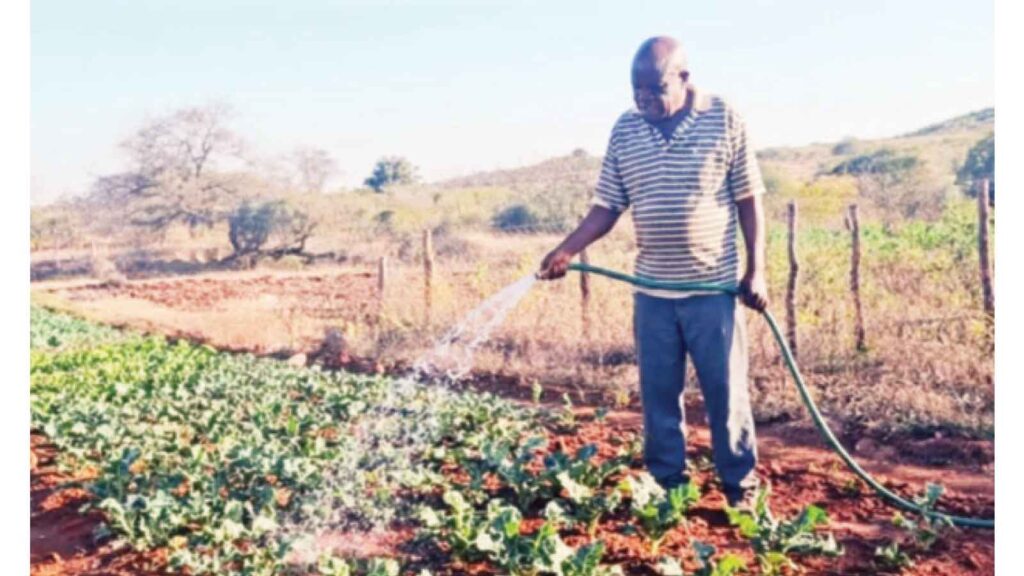
Cde Newman Mabika, a war veteran and former soldier, waters vegetables at his homestead in Mberengwa after drilling a borehole that provides potable water for drinking. — Picture: Theseus Mauruki Shambare.
A reliable water source can support household food production. Food production can reduce household expenses. Surplus produce can generate income. And income can give women greater room to contribute to household resilience.
But that resilience is being tested by mining activities around the community.
Mabika said mining has affected agricultural fields and water sources, particularly where he alleges illegal miners have entered community land.
“A lot of the mining being done is illegal,” he said. “Mining has become widespread, and some of these people do not even have licences from the Ministry of Mines.”
He said some miners enter agricultural fields and begin digging, sometimes disturbing infrastructure. “When these people come, someone just starts digging,” Mabika said.
“You can find that there is a water line or some other infrastructure, and they start digging in people’s fields.”
Mabika said some disputes are reported to the police but are not always resolved, leaving households uncertain about how to protect land that supports their livelihoods. “You begin to wonder how people are supposed to survive because there is no proper livelihood anymore,” he said.
He also said mining has affected rivers, with some becoming blocked and filled with sediment.
“Some of the pools where people used to get water are gone,” he said.
The concerns are particularly significant in Mberengwa, where farming is already constrained by relatively limited rainfall.
“Here in Mberengwa, we only receive rainfall for a short period,” Mabika said.
“That is why Mberengwa is known for small grains. They do better here, including groundnuts, roundnuts, sorghum and millet.” This means that water, land and agriculture are interconnected. When water becomes harder to access, farming becomes more difficult. When farming is affected, household food security and income can suffer.
And when those pressures increase, women can carry a disproportionate share of the household burden.
ActionAid Zimbabwe’s #PayTheHarm campaign puts this question at the centre of its climate justice advocacy: who bears the environmental and social costs of mineral extraction, and who benefits from the wealth generated?
The campaign challenges the idea that minerals associated with the global transition to cleaner technologies are automatically “clean”, arguing that a just transition must also protect communities where minerals are extracted.
ActionAid Zimbabwe Country Director Dr Selina Pasirayi said the campaign places women, particularly rural women and women affected by mining and climate injustice, at the centre of evidence generation and policy engagement.
“Women will document their lived experiences through community dialogues, feminist research, testimonies, digital storytelling and youth-led media,” she said. She said women should also participate directly in policy dialogues and engagements with decision-makers, while helping to identify their own priorities around environmental protection, livelihoods and corporate accountability.
“This ensures the campaign does not speak for women, but supports women to define the problems, propose solutions and hold decision-makers accountable,” Pasirayi said.
That distinction is important in Mberengwa. Shava is not simply describing the challenges facing her household.
She is showing how a family can respond. After years of relying on distant or unreliable water sources, she and her husband invested their own resources in a borehole. Now she wants to transform that water into food and income.
But the fact that a household has adapted does not necessarily mean the underlying problem has been resolved.
The family still needs irrigation equipment. The community still has concerns about the condition of its rivers.
And questions remain about how mining activities are regulated and how communities participate in decisions affecting their land and water.
Government, meanwhile, says mineral wealth must generate benefits that extend beyond the extraction process.
Mines and Mining Development Minister Dr Polite Kambamura has stressed the importance of ensuring that mineral extraction contributes to long-term development.
“We must also think about future generations,” he said. “We have an obligation to ensure that our children and their children can benefit from Zimbabwe’s mineral wealth.” That principle is at the heart of the debate facing mining communities.
Future generations will need the economic benefits of mineral resources, but they will also need water, productive land and functioning ecosystems.
Government has also emphasised the importance of mining companies contributing to sustainable community development. Kambamura has previously said mining should go beyond extraction and leave communities with sustainable livelihoods.
“It is no longer just about mining; it is about the people and the communities where minerals are found,” he said.
For the #PayTheHarm campaign, however, development must also address who carries the cost when environmental harm occurs.
Pasirayi said the campaign is calling for stronger accountability, including environmental restoration, compensation, community participation and mechanisms that enable affected communities to seek remedy.
The principle is straightforward: communities should not be left to absorb the costs of environmental damage while mineral wealth flows elsewhere. For women, that cost can be particularly difficult to see because it is often absorbed through unpaid household work. It can be measured in the hours spent looking for water. It can be seen when a household garden cannot be maintained.
It can be felt when food production declines and household income becomes harder to generate.
It can also be seen in the money families spend developing private alternatives to public or natural water sources. Shava’s borehole is therefore both a solution and a reminder. It has brought clean water closer to the household. It has reduced dependence on distant sources. It has created an opportunity for irrigation. But it was financed by the family itself. For now, Shava is focused on what she can build with the water she has secured. She wants a garden that can feed her family and eventually generate income.
“We are hopeful that, as time goes on, we will be able to do it and start farming properly,” she said.
Her aspiration is simple: clean water, productive agriculture and an income that can support the household. Yet it speaks to a much larger question confronting Zimbabwe’s mining sector. As the country seeks to extract greater value from its mineral wealth, how can it ensure that communities — and particularly women whose daily lives depend heavily on water, land and household production — are not left carrying the hidden costs?
Standing beside her traditional wooden dish-washing stand, Shava provides an answer that is both practical and quietly powerful.
She is adapting. She is investing. She is farming.
She is trying to turn water into food and food into income.