Chronicle Editor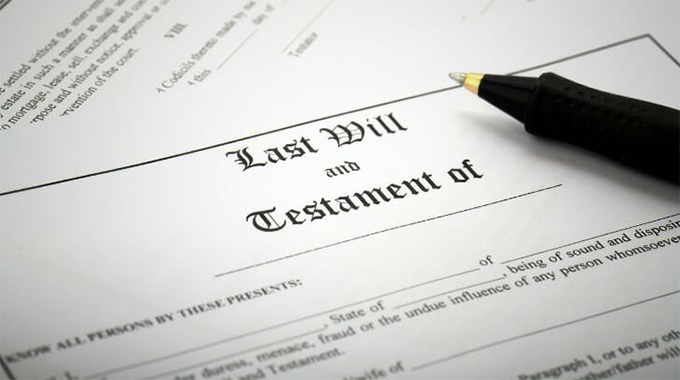
Mbulelo Mpofu, Showbiz Reporter
ARGUABLY the most trying time that humanity endures is the permanent loss of a loved one. The excruciating angst is the product of death and sometimes, the pain is too much that even the toughest of people crumble under its pressure.
The post-burial period is one of the most-contested ones if a will was not written by the deceased. Instead of finding closure, most of the time, family members fight for what remains from the deceased.
“This is the last will and testament for . . .” are some of the most said words lawyers say after a loved one has been buried.
What is a will? If the Wiktionary is anything to go by, then, a will is, “a formal declaration of one’s intent concerning the disposal of one’s property and holdings after death; the legal document stating such wishes.”
If such “formal declarations” are not properly done, survivors of the deceased may end up engaged in verbal fights and if push comes to shove, even mortal retribution ensues.
A case in point happens to be Bob Marley who died without a will and this led to his widow Rita being entangled in all sorts of troubles as she was alleged to have forged documents regarding the singer’s corporate holdings.
Bob Marley’s story is just the tip of the iceberg as other icons also left a trail of war and destruction after they passed on.
Battle lines were drawn in Barry White’s family over his outdated and, thus, contested will after he passed in 2003.
The deep-voiced singer left behind two ex-wives, nine children, and one long-term partner in the process.
The king of pop, Michael Jackson actually did have a will, but it was considered invalid by several of his family members.
Attorney John Branca and music executive John McClain were named the executors of Jackson’s estate, but Janet Jackson and the pop star’s other siblings took the case to court, stating Branca and McClain had no claim to the estate.
“What will be gained by a finding of invalidity is that the executors will be replaced and the estate and the guardianship will be managed in the best interests of the children, which is what Michael wanted,” Janet’s lawyer said in a statement.
Who should write a will and when should they do it?
Bulawayo residents responded to the question and alluded to a lot of factors to be considered in the process. Below are some of the responses they gave:
Kingsley Mathe said 40-year-olds should be the ones that write wills since “They are of age.”
“They say life begins at 40 so it makes perfect sense for one who is 40 years old or above to write a will. Most of the time, at 40, people would have accrued something meaningful that they can pass to generations after them and I think it makes perfect sense for one to write it at 40 or afterward,” he said.
Sindisiwe Bhebhe said a will is sometimes not necessary, especially in Zimbabwe where it’s tough to make ends meet.
“I don’t think a lot of priority should be given to the writing of a will in Zimbabwe because, sometimes, it will look like a slap in the face since most of us live on a shoestring budget and barely accumulate anything substantial to offer our loved ones and children who will be left behind.
Most of the time, we grow grey hair and still have nothing to offer and that’s the sad reality,” she said.
Such a line of thought was considered pessimistic by Joe Dube who said people should not subscribe to that line of thinking.
“What is the purpose of living if we will not try by all means to secure a better future for our children? It defeats the whole purpose if we do not even try and hide under the ‘times are hard’ banner?
It is our job to carefully plan for our families’ futures and that involves writing a will that will clarify how one wants their legacy to be shared. It’s a path that every parent or guardian should tread with real care,” said Dube.
For July Gwetu, it does not matter the amount of money or wealth accumulated, but the little one has, suffices for the writing of the will.
“Be it a two-roomed or eight-roomed house, nothing is too small to be considered useless to be part of a will. One who owns a table with four chairs, wardrobe, television, radio, refrigerator and one who just owns a single bed all have a right and power to carefully share it with their survivors via a will.
“As far as age is concerned, I cannot pinpoint that, but I believe that as soon as someone starts earning something, they should start contemplating writing a will,” he said.
Lawyer, Abel Nxumalo weighed in on the matter and said a will is a very critical document that is a must-have for people if they are to maintain peace after they die.
“First of all, people should understand that a will should not be treated as a luxury, but in fact, utmost priority should be attached to it.
“The will must be written by the one passing his inheritance to others and they must do it while they are alive and kicking, and in full health.
“People should not wait for their deathbed to write a will, but from as early as 18 years, one can start to plan for theirs and their loved one’s futures.
This document is critical in the sense that it expresses the will of the one passing his legacy and if properly done, no contests about its validity may arise,” he said.
When quizzed on prerequisites needed for one to legalise a will, Nxumalo said there are legal fees to be paid.
“For one to legalise their will and make it formal and usable, they have to pay fees in terms of the law society tariff where people can individually lodge their wills.
Family feuds which emanate from the absence of a will are avoidable if people actually plan for the future,” Nxumalo said.
What do you think is the right time for people to write wills and why? Is will-writing a Western culture that does not apply to our African society?
Tell us what you think of this matter and let us know if you have written your own will yet. – @eMKlass_49



 Online Reporter