admin
admin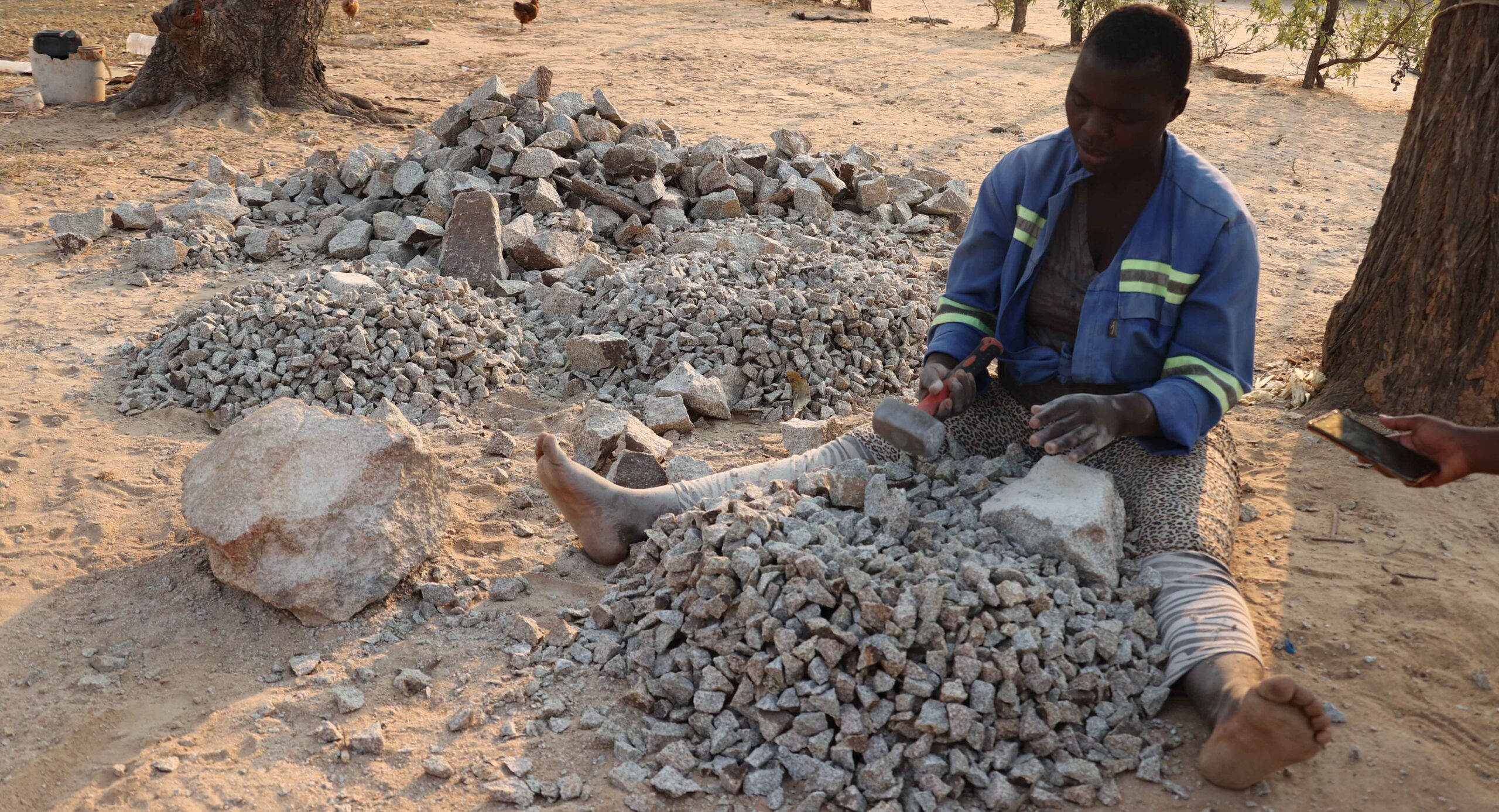
Tendai Gukutikwa
Post Reporter
SHE spends her days under the scorching sun, squatting, lifting and crushing heavy rocks to earn a living.
Her muscles ache and her joints creak, but she has no choice.
Ms Lista Kambanje, a 38-year-old woman from Gutaurare in Zimunya, says the venture is rewarding as she is now able to send her children to school and take care of them.
While stone crushing is a hazardous occupation that poses many health risks to those in the trade, Ms Kambanje cares less as this is her only source of income that enables her to cater for her four children.
Three of them are in school.
One of them will be sitting for her Ordinary Level examinations this year, all thanks to her mother’s stone crushing business.
The risks that come with stone crushing include hand injuries, eye irritation and respiratory problems, and Ms Kambanje has been affected by all of them in the three years that she has been plying her trade.
In this job, people can crush their hands and may end up in hospital or losing their limbs.
Ms Kambanje has countless scars all over her body from the mishaps.
Despite the health hazards, Ms Kambanje is not relenting as this trade has changed her financial fortunes for the better, something which she never dreamt of.
Ms Kambanje said she operates without protective clothing such as gloves, mufflers, googles and safety shoes.
She said in the event of suffering an injury, the stone crushers spend the little money they have to get medical attention.
“My two eldest daughters are strong women. I try and discourage them from joining me in stone crushing, but they insist because they know that we get our bread and butter from this trade. Since they keep insisting, we agreed that they can join me during their spare time. We are who we are today because of these stones,” she said.
As she crushed her stones, her two daughters aged 16 and 13 sat beside her, crushing their own loads of stones.
Armed with only hammers and nothing to protect them from their workplace hazards, the trio concentrated on crushing the stones.
Ms Kambanje is married, but her husband, who has been based in South Africa for the past decade, does not provide for his family.
“My husband views me as a baby making machine. He never provides anything for the family. I would wait for his call from South Africa to travel there and only return home carrying his baby. I would end up begging for food and school fees for my children from strangers because my husband does not provide anything. All he care about is making babies. I later realised that I should not depend on anyone for my children’s welfare,” said Ms Kambanje.
Today, she is not only a stone-crusher, but a barrier breaker, a survivor, and nobody can stop her from realising her dream of providing for her family.
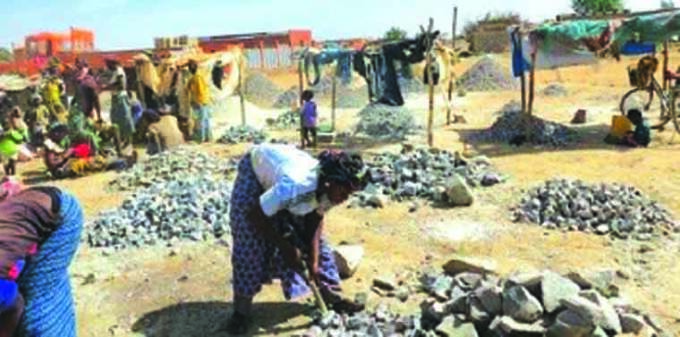
Ms Kambanje is not alone in the business, as at least 30 women have joined her and are crushing stones in Gutaurare, a growing peri-urban area just outside Mutare, near Zimunya Township.
The income from stone crushing is often insufficient to meet stone crushers’ basic needs, but for these women, the little they get is sufficient to enable them to survive.
A wheelbarrow full of crushed stones sells between US$2 and US$2.50.
Ms Kambanje sells a wheelbarrow full of stones for US$2.50.
“On a good day, I crush three full wheelbarrow loads of concrete stones. When my daughters are around, we crush at least six wheelbarrow loads a day, which is worth US$15. This means that during school holidays, when all of us work daily, we get close to US$75 a week, weekends excluded. However, on a bad day, we fail to sell a single load,” she said.
Another stone crusher, Ms Maria Chimutemo who suffers from a heart ailment said the dust has increased her risk of a heart attack as diagnosed by her doctor.
“I have been told at the hospital on countless occasions that I might suffer a heart attack in the near future because of the dust. However, this has not stopped me from working because if I stop, this means my family will starve as we have no other source of income,” she said.
Ms Chimutemo said they lack resources to purchase protective gear such as gloves, masks, goggles and boots.
“Most of our income goes to paying school fees for our children, and as a result, buying protective clothing is not a priority to us. We cannot afford it, and therefore expose ourselves to health hazards by working without them. We will appreciate any help from Government or the business community, as we urgently need protective clothing,” said Ms Chimutemo.
According to mining rights expert, Mr Cosmas Sunguro, self-employed stone crushers are facing legal challenges as they are regarded as illegal extractive miners.
This means they do not enjoy the same benefits, laws and policies as other miners in the country.
He urged them to register with the relevant statutory bodies and communicate through them so that they can be legally recognised.
“Stone crushing, like quarrying, falls under the extractive sector. This implies that they are subject to the same laws that regulate the operation and welfare of miners. These laws cover issues such as remuneration, health and safety.
“It is important to engage the stone crushers and formalise their operations so that their concerns, such as lack of protective clothing and the health risks they face, are looked into,” he said.


 Online Reporter