Online Reporter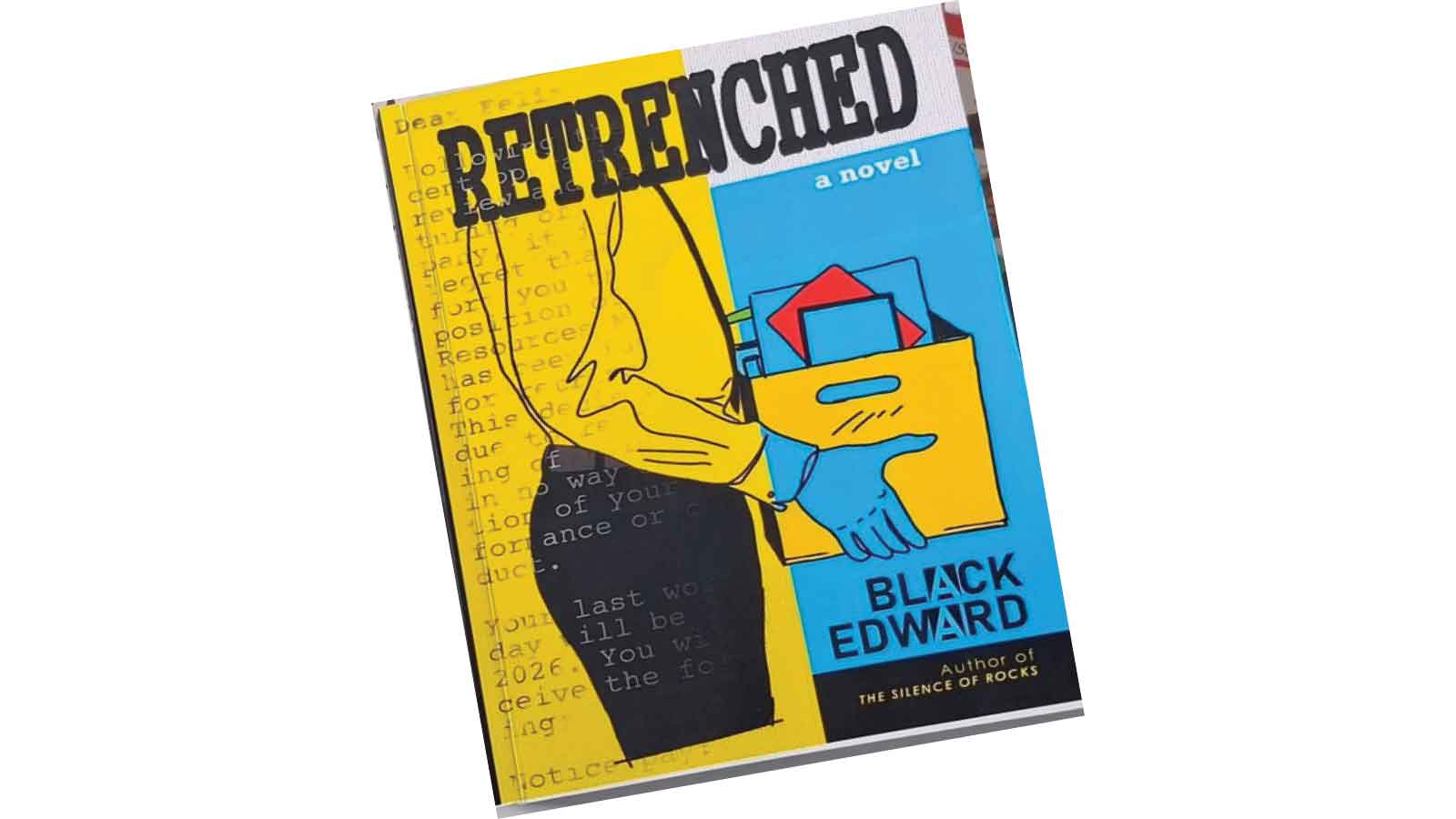
Emmanuel Kafe
Book Review
The latest Mercedes. The corner office. The absolute power.
Three short sentences. Three symbols of arrival. Three illusions.
In his novel, “Retrenched” (2026), published by Elane Arts, Black Edward, opens with the confidence of a writer who knows exactly where he is taking his reader.
Before the first chapter gathers momentum, the reader is ushered into the gleaming world of executive privilege, where polished boardrooms, expensive cars and corporate authority appear permanent.
The protagonist, Felix Muchero, sits comfortably at the summit. As a human resources manager, he is feared, obeyed and intoxicated by the authority that comes with deciding other people’s futures.
But Edward’s real story begins when the applause stops.
The latest Mercedes Benz is parked. The corner office is vacated. The title disappears.
And with it comes the haunting question that drives this remarkable novel: Who are you when your job can no longer answer for you?
“Retrenched” is not simply another workplace drama. It is one of the most psychologically astute Zimbabwean novels in recent years, exploring not only unemployment, but also the collapse of identity, the seduction of power and the painful possibility of redemption.
Edward, a veteran journalist and educator with more than three decades in southern African media, writes with the precision of a reporter and the emotional patience of a seasoned author. He understands institutions because he has lived inside them. More importantly, he understands people who mistake institutions for themselves.
Felix Muchero is one of the most fascinating characters to emerge from contemporary Zimbabwean literature precisely because he refuses easy categorisation. He is not corrupt in the conventional sense. He does not steal company funds, he is efficient, organised and exceptionally competent. However, his tragedy lies elsewhere.
Felix has confused fear with respect and mistakes procedure for justice. In his view, documentation is leadership. Thus, he weaponises policy.
Readers will recognise Felix immediately. Every office has one. The manager who publicly humiliates junior staff over minor mistakes. The executive who measures his worth by the size of his office rather than the quality of his relationships. The boss who demands greetings as though courtesy were tribute.
When a junior employee walks past his office without acknowledging him, Felix storms out and humiliates her before the entire floor. To him, this is discipline. To everyone else, it is cruelty disguised as professionalism.
Edward refuses to caricature him. That restraint becomes the novel’s greatest achievement.
Rather than presenting Felix as an irredeemable villain, the author slowly exposes the insecurity beneath the arrogance. The expensive suits, the polished confidence and the executive authority begin to resemble armour protecting a deeply fragile man.
That fragility is first revealed not through retrenchment but through rejection.
Felix’s wife, Philisiwe, quietly packs her belongings, lifts their 18-month-old daughter and leaves.
She does not scream. She does not insult him.
She simply delivers one devastating sentence: “You are a house with no foundation. All façade. Hollow inside.”
It is one of the novel’s defining moments.
Felix cannot understand her decision. He provided the Borrowdale house, paid the bills and increased her allowance whenever she seemed unhappy.
Surely that should have been enough.
His bewilderment reveals the emotional illiteracy that sits beneath his professional success. Felix understands transactions but not relationships; promotion but not partnership; and provision but not presence.
In many ways, “Retrenched” becomes a powerful meditation on modern masculinity. Edward quietly dismantles the long-held belief that financial success automatically translates into emotional competence. Felix has mastered corporate strategy while remaining a stranger to intimacy.
Therefore, the retrenchment that follows is less a plot twist than an inevitability. Power, Edward reminds us, always has an expiry date.
When Felix eventually loses everything, his title, company vehicle, Borrowdale home and executive status, the novel shifts from corporate thriller to psychological excavation.
Watching him rebuild his life from a modest room in Glen Norah and later behind the counter of a tuckshop is both uncomfortable and strangely moving.
The people he once terrorised now pass him on the street. Some pretend not to notice him while others stare. For perhaps the first time in his life, Felix is invisible.
Edward wisely avoids sentimental redemption. Felix does not suddenly become kind after losing his job. Old habits persist. His temper returns unexpectedly and his instinct to dominate refuses to die quietly.
Transformation arrives in small, almost ordinary acts.
Listening instead of commanding. Apologising without defending himself. Showing kindness when nobody is watching.
That measured approach gives the novel unusual credibility.
Equally compelling is Panashe, Felix’s cousin and moral opposite.
Raised in rural Murehwa before moving to Harare, Panashe carries none of Felix’s hunger for status. He pursues education without arrogance and success without spectacle. Throughout the novel he functions less as a rival than as a mirror, reflecting everything Felix could have become had ambition not consumed character.
Their relationship is among the book’s richest achievements.
Edward understands that envy rarely arrives dramatically but it grows quietly.
One examination result. One compliment from a teacher and one extra piece of meat served at dinner.
Small resentments accumulate until they become lifelong bitterness.
Instead of physical violence, Felix perfects psychological cruelty. He isolates Panashe socially, undermines his confidence and quietly manipulates perceptions around him.
It is bullying in its most sophisticated form.
Perhaps the novel’s most original contribution lies in its central metaphor.
Running through the narrative is the traditional ngano of the manyawi tree, which grows spectacularly tall but develops shallow roots, collapsing when the first serious storm arrives.
The allegory quietly shapes everything that follows.
Felix becomes that tree. His career reaches impressive heights while his character remains dangerously underdeveloped. The metaphor also serves as a gentle rebuke to contemporary society.
In an age obsessed with visibility, luxury cars and social media success, Edward asks whether we are investing enough in the unseen foundations that sustain real achievement. The question feels particularly relevant in Zimbabwe and across Africa, where economic uncertainty often encourages the performance of success even when stability remains fragile.
Another strength is Edward’s treatment of language. English, Shona and Ndebele flow naturally through conversations without unnecessary translation. Rather than interrupting the narrative to explain cultural nuances, he trusts readers to discover meaning through context and emotion.
The effect is authentic.
This is how Zimbabweans actually speak. Corporate Harare, rural Murehwa, Highfield, Bulawayo and Mutare emerge not merely as locations but as emotional landscapes shaping the choices of the people who inhabit them.
The women in the novel also deserve particular praise.
Philisiwe refuses to remain trapped inside an emotionally empty marriage and quietly rebuilds her own future as a medical doctor. ChaShe refuses to romanticise Felix’s suffering simply because he has fallen. Amanda carefully documents workplace abuse instead of allowing intimidation to silence her.
These women are neither victims nor symbolic accessories. They possess agency, conviction and moral clarity.
If the novel has a weakness, it occasionally leans heavily into explanation where silence might have been even more powerful. Certain philosophical reflections, particularly towards the latter sections, occasionally state what readers have already understood through the unfolding narrative. Felix’s internal transformation could also have benefitted from slightly greater ambiguity, allowing readers to wrestle longer with whether genuine change is truly possible.
These, however, are relatively minor observations in an otherwise deeply satisfying work.
What distinguishes “Retrenched” from many contemporary novels is that it refuses easy heroes and convenient villains.
Instead, it asks difficult questions.
What happens when ambition outgrows character? Can institutions reward efficiency while quietly cultivating cruelty? Is success measured by position or by the people still willing to stand beside you after the position disappears? Most hauntingly, who are we once our business cards, office keys and executive parking bays have been taken away?
These questions linger long after the final page.
Edward’s background as both journalist and educator is evident throughout. His prose is clean, accessible and disciplined, yet never sacrifices emotional depth. He writes with compassion without becoming sentimental and with authority without becoming preachy.
In “Retrenched”, Black Edward has produced far more than a novel about losing a job. He has written a profoundly Zimbabwean story that speaks to universal anxieties about identity, power and self-worth.
The latest Mercedes eventually ages. The corner office belongs to someone else.
Absolute power proves temporary. Character is the only possession that survives the retrenchment.
“Retrenched” is essential reading for professionals, students, managers, policymakers and anyone who has ever mistaken status for substance. It entertains, unsettles and ultimately challenges readers to examine the roots beneath their own ambitions.
Long after Felix Muchero walks away from the final chapter, one question refuses to leave: When your title disappears, who will you be?
For an immersive reading experience, visit the DigiHub Retail Shop at Herald House, corner George Silundika Avenue and Sam Nujoma Street in Harare. Contact Leon on 0772739306.