Online Reporter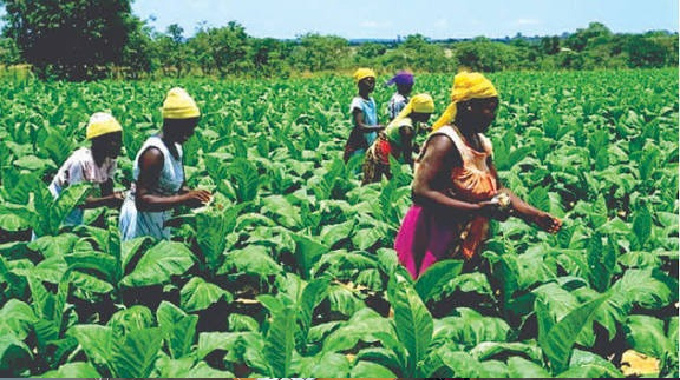
Theseus Mauruki Shambare
After testing the father, the mother, and the child, the probability of paternity is zero percent. Muchidimbu tirikuti, baba, hapana chenyu chirikuwanikwa mumwana uyu.”
If you grew up watching Zimbabwean television in the last few years, you know that line. You have probably heard it shouted in a taxi, quoted in a group chat, and used as a punchline at funerals.
DNA, the science that once lived only in white coats and court files, walked straight into our living rooms and became part of our everyday language.
So when delegates walked into a conference hall in Harare last Friday for the inaugural Joint Illegal Tobacco Varieties Indaba, they thought they knew what DNA was going to be about. Genetics, breeding charts, seed certification, maybe a bit of legislation to keep everyone awake.
What they did not expect was to start the day staring at an elephant, a lion, a monkey and a zebra on a giant screen.
No tobacco leaves, no microscopes, no graphs and just animals.
Every Zimbabwean in the room instantly got it, because those were not animals from a nature documentary. They were mitupo. Totems. The same totems that tell us who we can marry, where we come from, and which families we do not mix with.
The room went quiet. Scientists glanced at farmers. Farmers looked at merchants. Even the researchers who had spent 30 years in labs seemed to sit up a little straighter. For a few minutes, a technical indaba about illegal seed felt more like a family meeting under a tree.
Standing in front of them, smiling, was Kutsaga Tobacco Research Board Senior Plant Breeder Dr Chenjerai Kashangura. He knew he had their attention.
“In terms of maintaining the genetic health of the human population, it is important to consider the concept of totems, which represent a lineage,” he said.
“Our tradition and culture mandate that people of the same totem do not marry each other.”
He let that sink in. Then he delivered the twist.
“The same principles apply to our current discussion. If we do not follow certain principles in our seed sector, there are consequences.”
Just like that, the conversation shifted, and it was no longer about people, but it was about tobacco. In fact, Zimbabwe’s tobacco. The golden leaf that pays school fees, builds clinics, and keeps the foreign currency coming in.
Most people never think about where that leaf comes from. They see the bales on the auction floor, the bright grades, the bales being loaded onto trucks. What they do not see is the 13 to 20 years of work that happened before a single seed ever touched Zimbabwean soil.
Dr Kashangura peeled that back for the room and said a registered tobacco variety is not something one can cook up in a season.
He said firstly, it goes through pre-breeding in the lab, then greenhouse work, years of field trials, followed by agronomic assessments, then disease screening, curing evaluations, chemistry analysis and then the grower testing.
He added that only after all that does the variety go to Seed Services for distinctness, uniformity and stability testing, after which the merchants have to smoke it and decide if international buyers will want it, then growers have to test it in real fields under real Zimbabwean rain.
“It is a lot of capital investment. It is also intellectual property that has been produced,” said Dr Kashangura.
He said illegal germplasm, the seed that is now quietly moving through informal networks, skips every single one of those steps. It comes in unlabelled, undeclared, often hidden in a bag that crosses a border without anyone noticing.
In addition, because tobacco seed is basically dust, one cannot tell by looking at it whether it is the certified hybrid that Kutsaga spent 15 years perfecting, or a random open-pollinated line from somewhere else.
Genetically, though, the difference is huge: certified varieties are bred specifically for Zimbabwe’s soils, rainfall patterns and diseases while illegal lines are not, and many of them are inbred. Save the seed and replant next season, and the performance falls apart. Yields drop. The plants get sick. The leaf quality becomes unpredictable.
The risk is not just to one farmer’s plot. The Tobacco Research Board has spent 75 years pushing potential yields up to around 4,5 tonnes per hectare, building disease resistance, and improving curing quality. All of that can be quietly eroded if illegal seed becomes normal.
Dr Kashangura’s warning landed hard because everyone in the room had already heard the names that include: Kamuzambia. Kamtombeni.
In tobacco-growing areas, the names travel fast. Someone’s cousin knows someone who planted it and got an early crop. Someone else says it is cheaper. Word of mouth does the marketing that no company ever paid for.
Mr Ashton Munaki, a grower who attended the indaba, was honest about it. “Kamuzambia was becoming more popular. There were theories that it performs better,” he said.
Mr Stewart Mubonderi, speaking for village heads, put numbers to it.
“The testimonies we are getting from farmers; these seeds are performing better. Additionally, they are cheaper in Zambia, with a packet going for only US$3 vis-a-vis the local one which is sold at US$30 for the same quantities.”
That $27 gap is real money in January when you are buying inputs and it feels like a bargain. What no one tells people is the bill that comes in July when the crop is rejected, or when one tries to save seed and the second generation collapses.
That is where the law comes in, and Mrs Tariro Mukoko from the Tobacco Industry and Marketing Board was clear about it. Science is one defense. Legislation is the other.
“The mandate of the TIMB in terms of our Act is to control and regulate the marketing of tobacco and to promote, protect and maintain the sale of tobacco,” she told delegates. That starts before planting.
Under the Tobacco Industry and Marketing Act, farmers/growers must register with TIMB, and they must grow only prescribed varieties approved by TIMB and Kutsaga.
She said that to grow without registering, or plant something not on the list, one can be prosecuted, fined, or jailed, and the crop itself can be ordered destroyed.
“TIMB can then order the grower to destroy the tobacco. It does not matter if it is still green in the field, already cured in the barn, or sitting on the sales floor. Inspectors can even suspend sales while they investigate where the tobacco came from,” emphasised Mrs Mukoko.
She acknowledged that the current review of the Tobacco Industry and Marketing Regulations is a chance to make the rules sharper, more practical for day-to-day enforcement.
“It is also an opportunity for TIMB and Kutsaga to work together in the amendment of the policies, the regulations that are in place, and to come up with notices and rules that can be used on a day-to-day basis,” added Mrs Mukoko.
Then the conversation moved to the border, with Plant Quarantine Services officials reminding everyone that illegal seed is not just an economic problem. It is a biosecurity problem.
“Our borders are porous,” one presenter said. “Seed comes in through unofficial crossing points, tucked into luggage, undeclared. Without proper screening, that seed can bring in pests and diseases that do not care about totems or auction prices. They just eat.”
The proposal on the table was straightforward: more joint operations between Plant Quarantine, TIMB, Kutsaga, the Zimbabwe Republic Police and the courts. Rapid genetic testing in the field. Public destruction of illegal crops. Faster prosecutions. Make it clear that smuggling seed is not a small thing.
Ms Patience Takundwa, a seed inspector representing Seed Services Institute head Mr Edmore Mtetwa, brought the discussion back to what certification actually means.
“Our mandate as Seed Services is to make sure we produce seed of good quality and to uphold the integrity of the seed supply chain,” she said.
“For every new tobacco variety, inspectors check distinctness, uniformity and stability. They visit fields repeatedly from nursery to harvest. In the lab, they test purity, germination and moisture against international standards. For tobacco, to pass, it must have a purity of 99 percent and germination above 90 percent.”
Only licensed dealers can sell. Breeders are protected under the Plant Breeders’ Rights Act so they can keep investing in new varieties instead of watching their work walk across the border in an envelope.
By the afternoon, the delegates had covered a lot of ground. They had started with totems and ended with international seed standards. They had talked about DNA markers, intellectual property, biosecurity and the courts.
But during tea, people kept going back to that first slide. The elephant. The lion. The monkey. The zebra.
Because Dr Kashangura had done something rare. He had taken a room full of scientists, regulators, merchants and farmers and given them one story they all understood. Genetics is not just about what happens under a microscope. It is about protecting identity. Preserving lineage. Safeguarding what generations have built.
Long before tobacco becomes the golden leaf that shows up on export statistics, it is a seed. Like every family, that seed has a lineage, a lineage of research, of testing, of farmers who trusted the system enough to plant what scientists recommended.
The phrase that once meant heartbreak on television now felt different in that hall. “Hapana chenyu chiripo.” Once it was about a child and now it could be about a harvest.
The message is the same either way. When you ignore lineage, you lose something you cannot get back.
Zimbabwe’s reputation as a producer of premium flavour-style tobacco was not built in a season. It was built over 75 years of careful breeding, careful testing, careful choices. Illegal seed threatens to undo that quietly, one $3 packet at a time.
Protecting it will take scientists to keep breeding, Seed Services to keep certifying, Plant Quarantine to keep watching the borders, TIMB to keep regulating, the Police and courts to keep enforcing.
Ultimately, farmers decide what goes into the ground in October.
As the indaba wrapped up, there was no dramatic resolution, no big announcement; it was just a room full of people who had been reminded, in the most Zimbabwean way possible, why the small things matter.
A totem protects a family, a certified seed protects a crop, and a country protects both by remembering where it came from, and by being careful about what it lets in.
Outside the hall, Harare traffic was moving as usual. Inside, a few people were still standing around the screen, pointing at the animals and laughing softly. Someone said, “So we are saying, don’t marry your cousin, and don’t plant your cousin’s seed either.”
It made me laugh. But everyone knew it was not really a joke.