Tendai Gukutikwa
Health Reporter
“IF a mother dies, who will look after the children?” quips an old adage, speaking to the importance of a mother in a family and need to protect her life, particularly during pregnancy and childbirth.
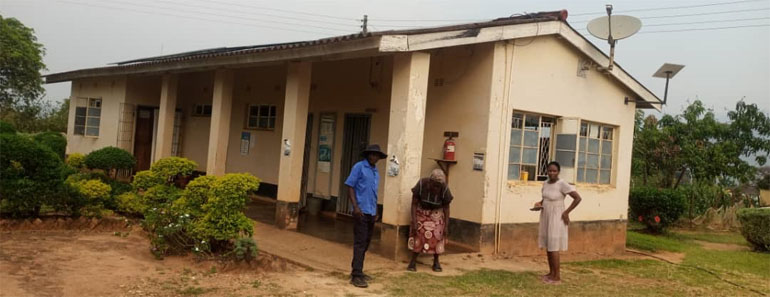
Yet for women in Mutasa’s Gatsi and surrounding villages in Honde Valley, accessing maternity services at their local clinic became a challenge, especially when the facility ran short of water.
Since August 2024, Gatsi Clinic in Mutasa North Constituency experienced water shortages that disrupted maternity services, forcing expectant mothers to seek assistance at Hauna District Hospital.
For expectant mothers, the problem meant more than a dry tap. It meant having to look beyond their local community for maternity care, adding another challenge to a period when access to health care should be as straightforward as possible.
In rural communities, a nearby clinic can be a lifeline, particularly for expectant mothers who need professional assistance during pregnancy and childbirth. But when a facility cannot provide essential services because of inadequate infrastructure, the effect extends to patients, families and health care workers.
In an interview, Mutasa Rural District Council chairperson, Councillor Paddington Nemaunga, said water shortages affected the clinic’s ability to provide services under suitable conditions.
“Access to reliable water was critical for the effective delivery of healthcare services, particularly for expectant mothers. The completion of this borehole is an important development for Gatsi Clinic and the surrounding communities. Water is essential at any health facility, especially where maternity services are concerned, because mothers and new-born babies require clean and safe environment,” he said, adding that water is indispensable in health care.
“It supports sanitation, cleaning and infection prevention, all of which are particularly important in maternity care, where the health of mothers and new-born babies must be protected. Without a reliable supply, healthcare workers face additional difficulties maintaining hygienic conditions, even when they are ready to attend to patients,” he said.
For women who had to seek maternity services at Hauna District Hospital, the disruption meant they had to travel long distances to another facility, requiring additional transport arrangements, money and assistance from relatives.
Councillor Nemaunga said the completion of the solar-powered borehole at Gatsi Clinic offers hope of better conditions for the facility and the communities it serves.
The project was facilitated by Mutasa North legislator, Honourable Obey Bvute through the Constituency Development Fund, and is expected to improve water availability at the clinic and eight surrounding villages.
The installation comprises a 5000-litre JoJo tank, piping, solar panels, a control box and a 2,5-horsepower pump capable of operating on both alternating current and direct current power.
The solar-powered system is also expected to reduce reliance on conventional electricity while providing a more dependable water supply.
Councillor Nemaunga said the project will ease some of the difficulties previously faced by patients and health care workers.
“The availability of water will help improve conditions at the clinic and ease some of the challenges that women have been facing when seeking healthcare,” he said.
Gatsi Clinic has eight staff members, and serves Gatsi Primary School, St Columbus High School and surrounding communities.
With its reach, more patients seeking treatment at the facility can benefit from the reliable source of water.
However, the immediate concern remained the clinic’s ability to provide maternity services under appropriate conditions.
When water sources are far away, fetching it takes time and energy that can otherwise be spent caring for children, attending to household responsibilities or pursuing income-generating activities.
Councillor Nemaunga said bringing water closer to communities will help reduce the burden.
“When water is available closer to communities, women spend less time walking long distances in search of it. This gives them more time to attend to their families and other responsibilities. For women visiting the clinic, reliable water supplies also help ensure a more hygienic environment,” he said.
Community member, Ms Charity Samanga, said the water shortage affected local families, forcing them to travel longer distances to get to the nearest facility with a reliable source of water.
“Most of us did not have the money to get to Hauna Hospital and I know of some who had complications during birth because they had to travel a 10km stretch to get to Hauna District Hospital. We are just happy that now our clinic is back to offering us such services, and no more travelling. When a clinic serving our community struggles to access water, patients and healthcare workers are affected. We hope this development will improve conditions at the clinic and make it easier for families to access essential services,” she said.
Disability advocate, Mrs Tsitsi Munyebvu, thanked Government for the development, saying pregnant women with disabilities face harsher challenges when services are unavailable locally than those faced by able-bodied pregnant women and that the availability of water at the clinic is greatly appreciated.
“Pregnancy is already a demanding time for a woman, and now imagine if that were a pregnant woman who has a disability and they have to travel longer distances to access maternal services. That is what we have been facing for the past two years and now that we have reliable water at our local clinic, we now have hope that our expectant mothers, disabled or now, will receive better support closer to home,” she said.
Mr John Mandeya said they are grateful because water is now easily accessible at the clinic and near their homes.
“Water is needed in our homes, schools and health facilities. We hope this project will be maintained so that the clinic and surrounding communities can continue benefiting from it. We are also grateful that a nutrition garden is also being established, and everyone including us fathers and children will benefit. This is a welcome development,” he said.
Beyond the borehole, a nutrition garden is being established at Gatsi Clinic, with approximately 70 households expected to benefit.
The garden is intended to improve access to fresh vegetables, connecting water infrastructure with nutrition and household welfare.
“For families, putting nutritious food on the table is an everyday concern. Fresh vegetables contribute to a balanced diet, but access to them can be affected by household resources and availability.
“A well-managed garden will help participating households obtain fresh produce while making productive use of the available water. Its success will depend on reliable irrigation, proper management and arrangements that ensure the intended families benefit,” said Councillor Nemaunga.
He said the initiatives addressed basic needs that affect both health facilities and surrounding communities and people were grateful for them.
“Water is not only important for drinking but also for maintaining cleanliness and preventing infections at health facilities. This project will help Gatsi Clinic provide services under better conditions, while also extending the benefits to surrounding communities,” he said.
The completion of the borehole marks an important step towards addressing Gatsi Clinic’s water challenges, but sustaining the improvement will be just as important as installing the equipment.
Ends