Online Reporter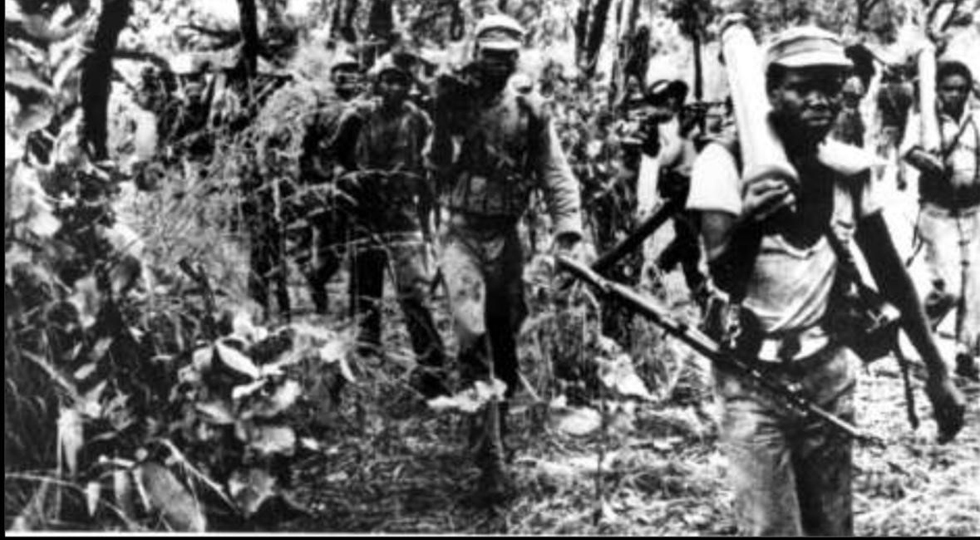
Lloyd Makonya
Correspondent
AS Zimbabwe prepares to commemorate Heroes Day in a week’s time, it is essential to revisit some of the darkest, but most defining moments in our liberation struggle.
One such moment is the Nyadzonia Massacre of August 9, 1976, a tragic, but galvanising episode that underscores the high price of our freedom.
Beneath the serene banks of the Pungwe River in Mozambique once stood Nyadzonia Camp, a supposed sanctuary that turned into a blood-soaked field in what would be remembered as one of the deadliest attacks on a refugee camp in Southern Africa.
Nyadzonia also known as Nyadzonya was more than just a refugee camp. Administered by ZANLA (Zimbabwe African National Liberation Army), it housed over 5 000 people by mid-1976. Among them were women, children, and the elderly refugees fleeing the brutality of Rhodesian raids and young men and women undergoing ideological orientation and military training.
The camp was a complex ecosystem of resistance; a place of healing and preparation, of survival and mobilisation.
It is this dual identity of being both a humanitarian centre and a liberation hub that made Nyadzonia a target.
Leading up to the massacre, freedom fighters had launched a series of daring attacks in the eastern districts of Rhodesia, particularly near Ruda in Honde Valley.
These operations struck deep psychological blows to the Rhodesian state, exposing the vulnerabilities of the white settler enclaves and disrupting agricultural and military installations.
The attacks infuriated the Rhodesian security establishment, prompting calls for swift and punishing retaliation.
And so began the planning of Operation Eland, a mission sanctioned at the highest levels of the Rhodesian military establishment and spearheaded by the Selous Scouts, an elite pseudo-guerrilla unit known for deception, infiltration, and ruthless efficiency with support from the Rhodesian Special Air Service, Rhodesian Light Infantry and the Rhodesian Armoured Corps.
At the heart of the operation was a man whose name would become synonymous with betrayal, Morrison Nyathi aka Livison Mutasa.
A former ZANLA cadre turned collaborator, Nyathi provided the Rhodesians with precise intelligence about the layout and routines of Nyadzonia Camp. But his betrayal went beyond intelligence; The Rhodesian
vehicles were painted in Frelimo colours and the soldiers wore Frelimo uniforms.
They flew Frelimo flags and markings to fool anyone who may have been inquisitive. Their faces were painted black to conceal the white faces among them.
What followed was not a battle, it was a slaughter.
At dawn on August 9, 1976, the Selous Scouts, rolled into Nyadzonia under the guise of a friendly visit.
The camp guards misled by Nyathi opened the gates and the column drove onto the parade ground, where civilians and trainees had gathered for morning assembly.
As the camp gathered, many singing and ululating in celebration, the attackers opened fire with automatic weapons, grenades, and mortars. The river ran red with blood. The killing was a horror which still sends echoes for generations.
Reports from international observers and journalists who later visited the scene estimated that over 1 000 people, mostly unarmed civilians, were killed.
Some put the number closer to 1 200, with many more wounded.
The attack was so brutal and overwhelming that even hardened war correspondents were shaken.
The Nyadzonia Massacre caused a global outcry.
International media carried harrowing images of mangled bodies and bloodied survivors.
The Rhodesian regime, while officially denying the scale, attempted to justify the attack by claiming Nyadzonia was a military base.
The massacre also had significant strategic consequences.
ZANLA, under the late General Josiah Tongogara and other commanders, immediately began plans to relocate their camps further from the Rhodesian border. Nyadzonia survivors were moved inland, and the massacre
reinforced the need for tighter security and decentralisation of training operations.
In Mozambique and throughout the Frontline States, the massacre galvanised support for the Zimbabwean cause. New recruits flooded the ranks. Foreign governments and liberation movements decried the Rhodesian
brutality and inside Zimbabwe, the bloodshed became a catalyst for resistance, emboldening both guerrillas and civilians.
For Zimbabweans, Heroes Day is, not just about those who died in battle, but also those who were slain without arms, in the belief of a better tomorrow.
The victims of Nyadzonia were, not accidental casualties, but were systematically targeted to break the spirit of the liberation movement. Instead of breaking it, the massacre hardened the resolve of the people.
Today, Nyadzonia remains a sacred site designated as a national liberation war monument and remembered in song and speech.
The name Morrison Nyathi, meanwhile, lingers as a cautionary tale about betrayal and collaboration.
In a time when history risks being diluted or forgotten, Nyadzonia must be remembered, not just as a massacre, but as a moment of collective awakening. As we commemorate Heroes Day, let us honour, not only the fighters with guns, but also the children, the mothers, the cooks, the nurses, and the refugees who paid the ultimate price.
Their blood speaks still.
Their legacy lives in every inch of free Zimbabwe.