Vusumuzi Dube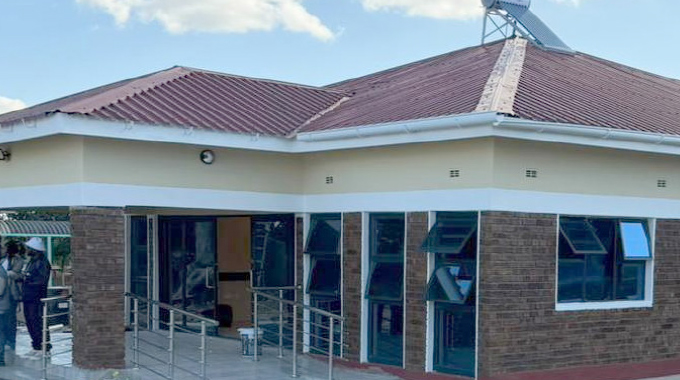
Robin Muchetu, [email protected]
FOR years, expectant mothers in Kezi, Matobo District lived with an unspoken fear, knowing that the journey to give birth would not begin in comfort or certainty, but in haste, anxiety and risk. When labour came — often in the stillness of night — there were frantic searches for transport, long and costly trips along unforgiving roads, and anxious waits at distant health facilities. For many families, childbirth was not just a moment of joy, but a test of survival.
Today, that chapter is steadily closing. Rising with renewed purpose, the newly upgraded Kezi Rural Health Centre now stands as a symbol of hope, dignity and accessible healthcare for communities in Matobo District.
The transformation reflects President Mnangagwa’s determination to close the gap between urban and rural healthcare, ensuring that no one and no place is left behind under the Second Republic’s inclusive development agenda, which aligns with Vision 2030. What once felt distant and unattainable has begun to feel real, present and reassuring.
At the heart of this push is a clear commitment: guaranteeing that every Zimbabwean can access quality healthcare within a 10 kilometre radius by 2030. This ambition speaks not only to infrastructure, but to equity and human dignity — bringing essential services closer to those who have waited the longest.
For Ms Sinikiwe Moyo, a local resident, the changes go far beyond bricks and mortar; they represent safety, relief and life itself.
“We used to struggle a lot, especially at night when a woman went into labour. Transport was expensive and not always available as most women were being transferred to Maphisa District Hospital to deliver. Now, the clinic is closer and some women can even walk there. It is a huge relief for us,” she said.
The modernisation of Kezi Rural Health Centre is firmly anchored in the National Development Strategy 2 (NDS2) for 2026–2030, which prioritises the construction of new health facilities, the upgrading of existing ones and the strengthening of primary healthcare systems nationwide. It signals a shift from reactive care to preventative and accessible services, especially in rural communities that have long borne the brunt of neglect.
Under this broader vision, Government plans to establish at least one fully equipped hospital in every district, a sweeping reform aimed at reducing pressure on referral institutions and improving access to quality services where they are most needed.
Rural health centres, including Kezi, are being upgraded with modern amenities such as maternity wings, solar power solutions and improved diagnostic tools, while new district hospitals are being developed to ease overcrowding elsewhere.
In support of this commitment, the Ministry of Health and Child Care received ZiG30,4 billion in the 2026 National Budget, representing 15 percent of total Government expenditure and meeting the Abuja Declaration benchmark that calls on African nations to prioritise healthcare funding. It is a statement of intent, backed by resources, to place health at the centre of national development.
Originally opened in 1948, Kezi Rural Health Centre had, over time, slipped into serious disrepair. Infrastructure weakened, ceilings were eaten away by termites and facilities could no longer meet the demands of the growing community. Yet a recent visit by a Zimpapers news crew revealed a dramatic transformation: a state of the art facility now capable of accommodating at least 52 patients, and ready to serve as a nucleus of care for the district.
Ms Moyo said the excitement among locals extends beyond the clinic itself, capturing a sense of renewed confidence in the future of Matobo.
“We are happy as the people of Matabeleland South province over these developments. We are grateful for the work President Mnangagwa has done for this province. As the people of Matabeleland, we feel recognised and appreciated,” she said.
Health officials say the upgraded facility is expected to play a critical role in reducing maternal mortality, a concern often linked to delays in reaching appropriate medical care. According to the Ministry of Health and Child Care, such delays remain one of the leading contributors to maternal deaths, particularly in rural settings.
District medical officer for Matobo, Dr Matthew Mthunzi, explained that the work at Kezi forms part of a wider package of health sector investments in the district, which include completing the Kezi Rural Hospital, refurbishing the nursing school and upgrading Maphisa District Hospital. He said these projects are designed to reinforce one another, strengthening the district’s entire healthcare ecosystem.
“Kezi Rural Hospital has undergone extensive reconstruction, with contractors effectively rebuilding it from the foundation due to structural damage. The hospital is now old and the plumbing was last attended to a long time ago.
The ceiling was also affected by termites and it was a challenge for us. The hospital was in bad shape and needed a new look,” said Dr Mthunzi.
While all wards have now been completed, some bathroom fittings and finishing touches are still pending.
Nonetheless, Dr Mthunzi confirmed that the facility is already operational — a marked turnaround from the years when it could not admit patients at all. He added that work at the nursing school includes plumbing, painting and furnishing, while upgrades at Maphisa District Hospital have focused on structural repairs, roofing, plumbing and overall rehabilitation.
The revival of the nursing school, one of the district’s key legacy projects, is expected to significantly boost human resources for health.
“The training school will not only benefit Matabeleland South but the entire country. Officials projected that around 40 to 50 students per intake would be taken at Maphisa, provided some will be using local accommodation. The nursing school can accommodate around 20 students only,” said Dr Mthunzi.
He noted that expanding training programmes is critical, particularly after years of limited recruitment, with the last major nursing intake having taken place in 2018. The school is expected to have one or two intakes each year, with enrolment set to begin in May or September.

On the construction side, project contractor representative Mr Joseph Mutiyeni said the team faced significant challenges, particularly severe termite infestation, but took steps to ensure long term durability.
“We started work in October last year, resumed in January, and we are now about 98 percent complete,” he said, underscoring the sense that a long awaited vision is finally within reach.
For the people of Kezi, the upgraded health centre is more than an infrastructure project — it is a promise honoured, a burden lifted, and a future made safer for mothers and children alike.



 Online Reporter