Online Reporter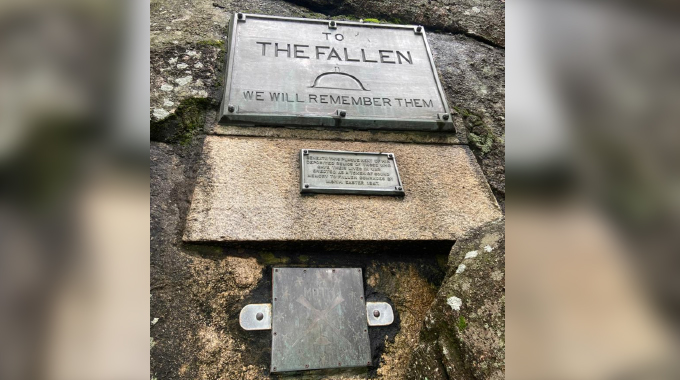
Rutendo Nyeve, [email protected]
AS Zimbabwe prepares to gather in Maphisa for the 46th national Independence Day celebrations next month, the focus naturally turns to the journey of liberation and the triumph of self-determination.
Yet, hidden within the granite beauty of the Matobo National Park, just a short drive from the celebratory grounds, lies a different kind of historical ledger, one that speaks to a complex, pre-colonial and colonial past that continues to shape Zimbabwe’s post-independence identity.
While Matobo Hills is globally renowned for its balancing rocks and sublime landscapes, its kopjes and valleys form a profound historical archive. This is the resting place of Cecil John Rhodes, whose grave at World’s View remains a controversial monument to British imperialism.
Nearby lie the remains of Sir Charles Coghlan, the first Premier of Southern Rhodesia, and Leander Starr Jameson, the architect of the disastrous Jameson Raid. For decades, these sites were the secular shrines of the colonial regime.
However, hidden in the shadows of these grandiose graves is a shrine that tells a different story of sacrifice, one that includes the thousands of native Africans who were drawn into a European war far from the granite hills of home.
The M.O.T.H. (Memorable Order of Tin Hats) Memorial Shrine, established in 1947, stands as a silent sentinel to this layered history. Situated roughly 34km from Bulawayo along the main road to World’s View, the shrine is a place of quiet reflection.
Unlike the individualistic monuments to colonial statesmen, the M.O.T.H. Shrine is dedicated to the “Fallen Comrades” of the World Wars.
For the casual visitor, the most striking feature is the detailed rolls of honour inscribed on the brass plaques and stone walls. Here, listed with regimental numbers and dates, are the names of countless native Africans, men from Matobo and beyond who served in the Rhodesian Native Regiment and the Carrier Corps during the First and Second World Wars.
These men fought and died in unfamiliar lands for a crown that did not yet recognise their right to the soil they were defending. Their presence on these rolls is a powerful reminder that Zimbabwe’s history is not merely a story of colonial conquest and liberation struggle, but also one of global entanglement and the ironic citizenship of the colonised in the empires that ruled them.
The shrine itself was dedicated in a ceremony that sought to transcend the politics of the day.
“M.O.T.H. MEMORIAL SHRINE – MatoboS HILLS – BULAWAYO
“This Memorial Shrine was dedicated to Fallen Comrades on Easter Sunday, April 1947, by Moth C.H. Evenden, founder of the Memorable Order of Tin Hats,” reads a placard at the entrance, which sets the scene. The words of Founder Evenden, etched into the stone, attempt to capture a spirit of universal brotherhood, yet they are hauntingly poignant when read against the backdrop of Zimbabwe’s subsequent struggle for independence.
Comrades and Friends. Coming from the four corners of Southern Africa, to this place, remote from the world, some might ask why ordinary men, who earn their daily bread, make this trek to a Silent Shrine.
“The answer is plain.
“Our allegiance to the Fallen is A Bond of Honour and True Affection, and is the inspiration of true unity and fellowship to our Warrior Brotherhood. Those who fell, irrespective of class or creed, are the Nobility of the nation, and we know from long experience that if we work for Them and do the things they would have us do, that bond, which joins us, shall never be broken,” reads Evenden’s words on one of the placards at the shrine.
“Let us never abuse Their Greater Love by unseemly arguments, but let actions be our remembrance. In the silence of these Everlasting Hills, we do not mourn Them, but greet them with the affection of true men.
“They teach us that, in the Silence, a man can find the Spirit of God of Love, of Sweet Reunion. In the silence, They Say to us, Fear neither Life nor Death, but work and pray for Brotherhood. In Their Finest Hour The Trumpet Sounded, The Triumph of Good over Evil; The triumph of Life Over Death.
“And now, with these words; In True Comradeship, Mutual Help and Sound Memory, and witnessed by you, who have come so far, and by Those who have come from a greater distance I humbly Dedicate this Shrine, inspired by our Brothers in the Memorable Order of Tin Hats, to the Lasting Memory of the Happy Warriors Beyond,” reads the placard.
As Zimbabwe celebrates its independence at Maphisa, the Matobo Hills stand as a palimpsest of history. The graves of Rhodes, Coghlan, and Jameson speak to the ambitions of empire that were eventually overcome.
But the M.O.T.H. Shrine, with its roll call of African soldiers, complicates the narrative. It is a hidden gem precisely because it reveals that the path to 1980 was not a simple line between black and white, coloniser and liberated, but a terrain crossed by men who served a foreign king, yet whose descendants would ultimately claim the very landscape where their names are now inscribed in stone.
To honour the full depth of Zimbabwe’s journey, then, is not to erase these layered stones, but to read them together — not as contradictions, but as a truer account of the sacrifice, entanglement, and enduring resilience that paved the way for independence.