Online Reporter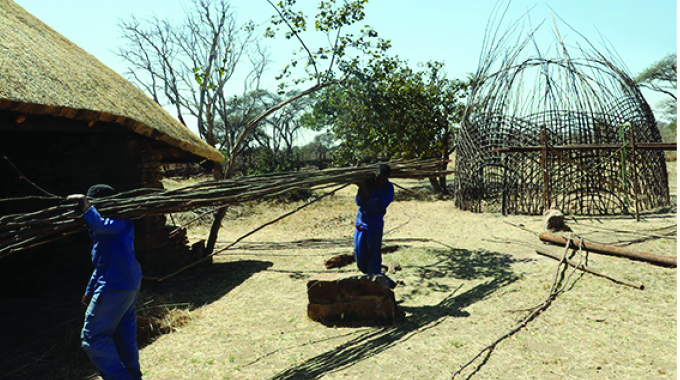
Elliot Ziwira, Deputy Features Editor
AS Zimbabweans gather once again to honour their fallen gallants this Heroes Day, commemorated annually on the second Monday of August, there is something quietly powerful in turning the gaze to Bulawayo — not merely as a city of monuments but as a monument in itself.
Here lies a cradle of resistance, a city that resisted not only the gun but the erasure of memory, name and spirit.
Having attained municipality status in 1897, and became a city in 1943, the City of Kings, is far more than Zimbabwe’s second largest urban settlement.
It is a crucible of anti-colonial resistance, where the first seeds of rebellion were sown against imperial greed; where names, bones and shrines were held sacred against the desecrating tide of conquest and where the dignity of the African remained clenched in the fists of a people too proud to bow.
Betrayal: The Rudd Concession and a city in peril
On 30 October, 1888, under the cover of diplomacy and deceit, the now-infamous Rudd Concession was signed in Bulawayo between King Lobengula and emissaries of Cecil John Rhodes, led by Charles Rudd.
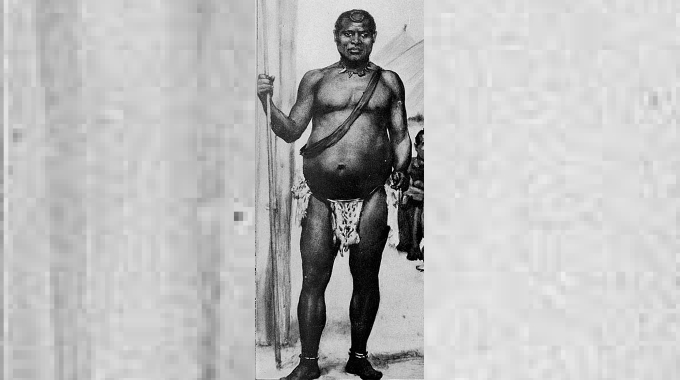
To the unsuspecting monarch, it was a simple mining deal, to the imperialist schemers, it was a blank cheque to seize a nation.
The concession marked the beginning of formal colonial intrusion into Zimbabwe. But even as the ink dried, Bulawayo did not buckle. It resisted. It held on to its name, to its heritage and to the memories of its fallen — defying the fate that colonialists imposed on so many African cities, towns and villages.
Where names were power, and identity was sacred
Unlike Salisbury (now Harare), which was a colonial construct imposed on African space and memory, Bulawayo never surrendered its identity. Its name — derived from “KoBulawayo”, the place of slaughter — echoes with ancestral pride and is an emblem of cultural tenacity.
To colonists, naming was conquest.
It was a weapon as powerful as the Martini–Henry rifle or the Maxim gun. When they renamed Salisbury (now Harare), Fort Victoria (Masvingo), Essexvale (Esigodini) and Enkeldoorn (Chivhu), it was not done for convenience, no. It was done for erasure.
But Bulawayo stood unmoved.
Here was a city that refused to disown its lineage. From Mzilikazi, Pelandaba, Magwegwe, Matshobana, Lobengula to Njube, Nguboyenja, Sidojiwe and Pumula, every suburb is a living invocation of the city’s heroes, not Rhodesian governors or foreign generals.
These names are not relics, but declarations. In retaining them, Bulawayo made a radical statement: We are not Rhodesians. We are Africans.
As historian Pathisa Nyathi notes, identity lies in nomenclature, for names are never neutral. They carry the weight of memory, culture and struggle. Colonialism sought to overwrite that memory.
But Bulawayo was not for the overwriting.
Rhodes the “Colossus” of plunder: A portrait of empire’s greed
At the centre of the colonial project was Cecil John Rhodes, a man described by Rosemary Moyana in Reading our Past (2017) as one who “instilled a foreboding sense of might” into settler consciousness.
No conversation about Zimbabwe’s colonisation and indeed, its resistance, is complete without reckoning with Rhodes, the godfather of plunder and white supremacy in Southern Africa.
To Rhodes, Africa was a chessboard of resources to be seized. He saw its people not as sovereigns, but as pawns — “children” to be civilised, guided and when necessary, crushed. In his imperial worldview, Africans had no history, no culture and no claim to land unless validated by British benevolence.
His ruthlessness was masked as enterprise. Rhodes turned entire communities into labour pools, erased ancestral boundaries and corrupted sacred shrines. He believed that the British Empire was the natural culmination of history, everything else being expendable.
But not everyone was willing to be expended.
As history recalls, Bulawayo fought back.
The Ndebele people, with Bulawayo as their heartland, were not easily subdued. General Mtshana Khumalo, King Lobengula’s commander of the Imbizo Regiment, delivered one of the earliest and most significant blows to colonial conquest at the Battle of Pupu on 4 December, 1893.
Though facing a well-armed patrol led by Major Allan Wilson, General Khumalo’s forces routed the invaders with such decisiveness that it shattered the myth of white invincibility. The Shangani River ran with the blood of the arrogant.
Even colonial records, often full of bias, could not ignore the courage of the Ndebele. Frederick Courtney Selous, writing in 1899, acknowledged that the war left the settlers with “pride mingled with sorrow” pride in their fallen, but sorrow in the realisation that the “uncivilised” were not cowards. They were warriors.
The Battle of Pupu was not just a military victory. It was a psychological turning point, proving that resistance was possible. That a rifle in the hands of a young African chief could silence the rhetoric of supremacism embodied in Rhodes.
Memory as resistance: The voice of the young
Perhaps no words better capture the spirit of resistance than those spoken by an unnamed young chief during peace talks in the twilight of the First Chimurenga/Umvukela.
Recorded by journalist De Vere Stent in Julie Frederikse’s None But Ourselves (1990), the young leader confronts Rhodes directly: “Where are we to live when it is over? The white man claims all the land.”
Rhodes replies with patronising ease: “We will give you settlements. . . We will give you land.”
Not lost to the irony of it, the young chief is unperturbed.
His response pierces across time: “I find if I talk with my rifle in my hand, the white man pays more attention. Once I put my rifle down, I am nothing. I am just a dog to be kicked.”
A declaration of dignity and defiance, the statement reverberates across time and space. On Heroes Day, we remember this young chief, whose name history did not record, but whose courage is scribbled on the boundless slate of collective memory, as a hero of resistance. His words prefigured the ethos of the Second Chimurenga/Umvukela, where young men and women took up arms to say: “Enough.”
Like the guerrillas of the Second Chimurenga/Umvukela, he knew that decolonisation could never be a polite negotiation. It had to be a struggle and struggle means Chimurenga/ Umvukela.
KoBulawayo: From sacred settlement to silent flame
Long before colonial settlements and railway lines, there was KoBulawayo, founded by King Lobengula in 1870 after the death of his father King Mzilikazi on 28 September, 1868.
Named after the original Bulawayo built by the Zulu King, Tshaka, in South Africa, it was located about 20 kilometres south of modern Bulawayo and served as the political and spiritual capital of the Ndebele Kingdom.
Before then it was known as Gibixhegu.
About 11 years later, in 1881, Lobengula moved his capital to the present site of the Government’s State House in Bulawayo’s Sauerstown suburb.
After the Battle of Pupu, Lobengula moved his court to present-day Bulawayo, but not before instructing his chief induna, Magwegwe to burn KoBulawayo to the ground, not in surrender, but as tradition.
The Ndebele, according to Nyathi, never kept permanent capitals. When a site was no longer spiritually viable or sustainable, it was destroyed to protect sacred knowledge and prevent sorcery.
Therefore, the ashes of KoBulawayo became a sacred symbol of continuity, not loss.
Rebuilding memory: Rise and fall and rise of Old Bulawayo
In 1990, the National Museums and Monuments of Zimbabwe, working with the Khumalo family, began reconstructing Old Bulawayo as a heritage site and educational centre.
The goal was more than tourism — it was restoration of memory.
By 1999, archaeologists had painstakingly recreated the beehive-shaped huts, the king’s palace, the wagon sheds and even the cleansing huts used by traditional healers to purify warriors returning from battle. The layout mirrored Ndebele cosmology, with precision down to the placement of stones.
Tragically, in August 2010, a bush fire engulfed the site, reducing most of it to ashes, yet again. Only the Interpretive Centre survived.
But like the Ndebele spirit, Old Bulawayo refuses to die. Reconstruction efforts have resumed, driven by the belief that we cannot know who we are until we remember who we were.
As Nyathi noted then: “The reconstructed city will provide a window into better understanding of Ndebele history. The scientific investigations currently being done will help us understand the Ndebele state, its economic and political nature.
“This should effectively remove the prejudices that have existed in the past. For example, that the Ndebele thrived on raiding other nations.”
Heroes Day, therefore, is more than a holiday for Zimbabweans.
On this day, the nation gathers at provincial shrines across the country, with the main event held at the National Heroes Acre in Harare.
As a united people, Zimbabweans are aware that liberation was not won in one war, or by one generation.
It was a continuum, from the unnamed Matabele chief, who clutched his rifle with pride, to General Mtshana Khumalo on the battlefield and Mbuya Nehanda and Queen Lozikeyi leading the spiritual front, to the thousands of sons and daughters who crossed borders in the 1960s and 1970s with nothing but belief.
In all this, Bulawayo remains not just a place, but a metaphor for resistance, a city that withstood Rhodes, rebuffed renaming and rekindles its sacred fire after every assault.
On Heroes Day, we honour not just those who fell in trenches, but those who preserved memory, held on to culture and refused to be erased through calculated theft of their names, gods and bones.
In naming, memory lives, and in memory, freedom is sustained!