Online Reporter
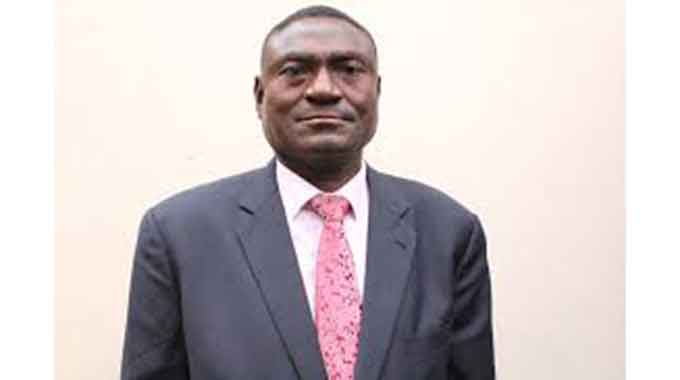
WHEN a group of ZPRA guerrillas descended on Manama Mission in Gwanda District in January 1977 and took with them over 400 pupils, 230 boys, 170 girls and staff members, among those caught in the dramatic operation was Cde Obert Matshalaga.
Now a former Deputy Minister and Member of Parliament for Zvishavane in the Midlands Province, Cde Matshalaga spoke to our Matabeleland South Bureau reporter, Sukulwenkosi Dube-Matutu (SDM), and walked her through the events of that unforgettable day.
The pupils were marched into neighbouring Botswana, en route to Zambia for military training. Below are excerpts from the interview. Read on . . .
SDM: Who is Cde Matshalaga? Could you briefly tell us about your background?
Cde Matshalaga: I was born on 21 April 1951 in Zvishavane, then known as Shabani, in the Midlands Province.
I did my primary education at Siboza School in Zvishavane, then attended Dadaya Mission for my secondary schooling (Form 1–4). After Dadaya, I proceeded to Fletcher High School in Gweru for my A-levels.
SDM: What educational qualifications did you attain before joining the armed struggle?
Cde Matshalaga: I trained as a graduate teacher at the University of Zimbabwe, which was then called the University of Rhodesia.
SDM: When did you join Manama High School, and what was the educational environment like?
Cde Matshalaga: I joined Manama High School in 1975, a year after graduating in 1974, and taught there until January 1977, when we were taken by guerrillas.
I taught Forms 1 to 3 in Geography, History, and Shona. The education system was highly restrictive
There was a screening process after Standard 6 (now Grade 7), which allowed only a few to proceed to secondary school.
Manama High was one of the few boarding secondary schools in the district, hence it attracted pupils from across the country.
There were further screenings at Form 2, where some learners were directed into vocational courses.
Compared to today, secondary schools were very limited, and many children did not make it past primary education.
SDM: Please take us through what happened on the day you were taken from Manama Mission.
Cde Matshalaga: It was a Sunday evening, right after dinner.
I was the teacher on duty. The learners had just finished supper and were preparing for evening studies.
The comrades arrived and began mobilising the pupils.
I was at my house when I was summoned. I found the students already assembled, ready to begin their journey across the Shashe River into Botswana.
There were about 450 learners, and only three teachers were present.
SDM: What was going through your mind at the time?
Cde Matshalaga: When the comrades came to my house, they simply said, “kuyahanjwa baba” we’re going and I knew immediately there was no turning back.
I was confused and fearful; I didn’t fully understand what was happening.
Many students also had questions and looked to us, the teachers, for guidance. Interestingly, some seemed to know about the operation in advance.
As the senior teacher present, I felt responsible for the students’ welfare and was determined to ensure they arrived safely and were accounted for.
SDM: Were you afraid?
Cde Matshalaga: Yes, especially of a possible ambush by Smith’s regime forces. Once we crossed the Shashe River, we felt relieved. We had travelled all night on foot, during the rainy season. Occasionally, it rained as we walked.
We later spotted Rhodesian spotter planes, but by then, we were beyond their reach. It felt like a miraculous escape.
The comrades had clearly done excellent reconnaissance.
SDM: What happened once you crossed into Botswana?
Cde Matshalaga: The Tswana people were incredibly welcoming. Local chiefs and police were very supportive. Villagers organised food for our large group.
We were initially accommodated at Gobajango Village, thanks to a local chief, and then transported by police vehicles to Francistown. From there, we were airlifted to Zambia and taken to Nampundwe Transit Camp.
SDM: Please continue.
Cde Matshalaga: I spent three weeks at Nampundwe.
We were later addressed by the party President and Commander-in-Chief of the ZPRA forces, Dr Joshua Nkomo. After screening and interviews, I was appointed Director of Education.
We had many young children who could not yet undergo military training, so our task was to set up schools for them.
Along with other qualified teachers, I helped establish refugee schools at various camps.
I was also responsible for manpower development, identifying colleges in Lusaka where cadres could prepare academically for leadership roles after Independence.
Though I served in education, I too underwent military training, like every other comrade.
SDM: What happened after that?
Cde Matshalaga: In 1979, just before Independence, the US government offered 10 scholarships.
I was one of the beneficiaries and went to the United States, where I earned a Master’s degree in Economics and Social Development.
This was part of the broader effort to ensure that Zimbabwe had skilled personnel post-Independence. Upon returning in 1982, I joined the Ministry of Finance, serving as Director of Finance until my retirement in 2001.
After that, I entered politics, becoming MP for Zvishavane and later Deputy Minister of Foreign Affairs, and then Deputy Minister of Home Affairs.
In 2015, I was appointed to the Zimbabwe Gender Commission, where I currently serve as Vice-Chair.
I will be retiring from this role in September.
SDM: Next month we commemorate Heroes Day. What does that day mean to you?
Cde Matshalaga: It’s a sacred day.
It allows us to honour those who didn’t make it back from the struggle. I knew many of them personally.
Their sacrifices gave us the freedom we now enjoy. We must never forget the work and courage of our fallen comrades.
SDM: How do you reflect on the role played by the Manama Mission team in the struggle?
Cde Matshalaga: I’m immensely proud to have been part of Manama High School.
It produced many remarkable individuals who made meaningful contributions to the liberation struggle and the nation’s development thereafter.
Because they had strong academic foundations, they excelled in their fields. Figures such as the late Dr Sibusiso Moyo, and Air Force commander Cde Elson Moyo, among others, trace their roots to Manama. They were high flyers, both in the military and beyond.