admin
admin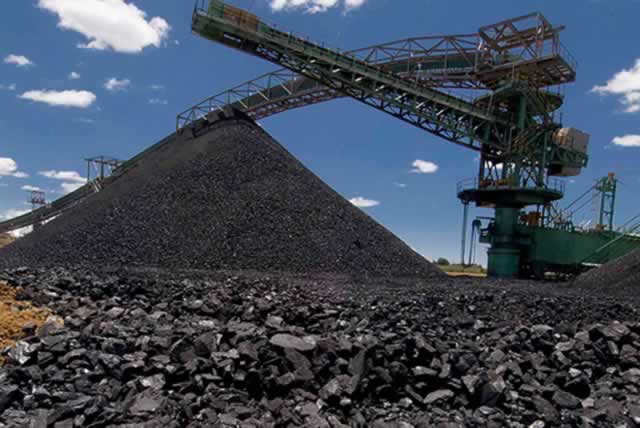
PARASTATALS and companies in which the Government has a majority stake which are mainly domiciled in the Matabeleland region, the National Railways of Zimbabwe (NRZ), Cold Storage Company (CSC) and Hwange Colliery Company have been in the news for the wrongs reasons.
These companies which during their glory days employed thousands of people in the region were dubbed Zimbabwe’s own Manchester because of industrial activity have featured in the media mainly because of maladministration, viability issues and in some instances allegations of corruption.
Sunday News Correspondent, Dumisani Sibanda (DS) had an interview with the president of the Affirmative Action Group for the Matabeleland Region, Cde Reginald Shoko (RS), on the state of the parastatals in the region and what should be done to save them from going down the drain.
Below are excerpts from the interview.
DS: I want to talk to you about the state of parastatals in the Matabeleland region. We have National Railways of Zimbabwe, Cold Storage Company and the Hwange Colliery Company where the Government is the major shareholder headquartered here in Matabeleland how do you rate their performance vis a vis those headquartered elsewhere?
RS: First and foremost we have to acknowledge that the whole idea of having a parastatal is on its own a service by the Government to the people in strategic sectors of the economy.
The most unfortunate part in parastatals generally in Zimbabwe is that there has been a pull down of the economy which is opposite to what happens the world over where parastatals are economic drivers and advance the policy of the Government of the day. In our case the parastatals are not doing that. Actually, the Government and other quasi-Government departments have tried by all means to put money into them and the money has gone into the drain.
I will hasten to say that most of these are not properly run. There are issues of corporate governance, mismanagement, organised corruption. We have to go back and say for the parastatals that are in this region, we have to look at the economic structure of Bulawayo per se. The economic history of Bulawayo will tell you its own economic activities have always been hinged around the National Railways of Zimbabwe. That is why you find most of the companies have closed down. It is a clear indicator of how NRZ is performing. Bulawayo has been the industrial hub of Zimbabwe purely because of the engineering part that companies were doing for the NRZ. Now that NRZ is not performing or has gone down, industry will always collapse.
DS: And just to interject there. Why do you think the National Railways of Zimbabwe is not performing well?
RS: There are a number of issues that have made NRZ and most parastatals in general to fail.
Primarily, you have to understand that we inherited some of the parastatals from the colonial era, previous government. How they were managed and run is that they were protected from competition and industry. A good example is that, it is true that our technological advances are such that we have not reached a stage where NRZ can compete with the road form of transport. That is why when you go into economic history, prior to independence, anything above 30 tonnes was not allowed on the roads. That’s why the roads were able to be sustainable for a longer period. I think certain ministers, liberalised that issue because they were starting to buy haulage trucks to get the business for themselves.
They then liberalised that 30 tonne cap. Ring fencing of big consignment of goods was what made NRZ thrive because everyone planned around what NRZ could deliver. You had coal from Hwange going to ZISCO via the railway line. You had coal to the rest of the country through the railway line. Now you have the coal going by road. NRZ can’t compete.
It takes 30 hours to move the coal from Hwange to Kwekwe by rail but 18 hours by road or even less. We need to ring fence large wagons on the railways. We don’t have to allow coal on the roads, fuel on the roads, anything above 25 tonnes must not be allowed on the roads, not only to protect Railways but as a measure to protect our roads. You see even the major accidents we have on our roads are those involving these haulage trucks.
So to save Railways is not only to correct mismanagement at the NRZ, there must also be a deliberate policy by the Government to make NRZ work. And there is always an issue of communication that systems are down, this and that.
I think technology has moved, they can use base stations at Net One, Econet and so on and trains will move. We don’t need the network to be at NRZ. People are saying its efficiency, you need to plan. You need to go back to when Willowvale was Willowvale when you order a car a 323, you will not have a choice to say what colour it was because they were supporting their own. When your time comes if you are number 96, a 323, a green one is what you get until such a time that Willowvale could then afford to do things efficiently.
DS: But don’t you think that such protectionism is the one which breeds inefficiency? If you know, I am protected then people don’t plan, don’t become creative. They don’t come with creative solutions to problems.
RS: It’s different when you are protecting a national asset like the National Railways of Zimbabwe for freight.
Remember it’s not just an idea of protectionism you are also doing planning for the roads. That is why I mentioned the issue of roads, moving freight on our railway lines. You are providing business for the Railways. It’s not the new protectionism where as Government you are just ring-fencing certain things that support the Railways.
People must understand that we need to create business for the Railways.
Business and industry must also understand that it would be cheaper for them to transport by rail. Remember the broader economic thinking in Zimbabwe is that of internal devaluation, which is reducing costs of everything that we are doing and one major thing would be pushing for people to use rail. You must understand your turnaround time now, you need to forward plan, you must hold on stock for forward planning knowing that it will take three or four days to have another load from Railways.
DS: So you are saying if we give the Railways this protection, in other words, ring fence some areas then NRZ will go back to its former self because that is the only thing that is required?
RS: No this is but one of the things that is required. Remember at the moment NRZ has no business because of the competition that is there which is artificial in actual fact. For us to be talking about NRZ needing funding, we need to first before we talk about the funding of NRZ to give it the business. In finance, you need to understand that no matter how much you put in a loan if there is toxic money the new money will be toxic, it will be dirty money. So what we are simply saying is that we have to de-toxicise NRZ by having a cash business.
Already it is still moving with the business because few people are still using trains because they are still efficient to them. But let’s increase the business for NRZ. The money that will be needed to fund it will be lesser. But if we say we want to revive the parastatal with this structure where there is competition, it is just but a dream because we will need $2bn or $3bn to do that, we will need electric trains that will be more efficient than road.
We have to take reality. I must not expect efficiency when I am not doing anything to build the capacity for that efficiency.
But we also know that NRZ has been a headless chicken since the death of the former general manager (Retired Air Commodore Mike Karakadzai), Government must come in and appoint a manager as one of the conditions that has to happen immediately.
DS: So you think that is why we are reading stories about NRZ managers giving themselves huge monies because there is no substantive General Manager? But there is a board of directors.
RS: Remember the board meets once in a while but the General Manager is responsible for the day to day activities and reports to the board. In this situation, the middle managers have no one to report to, they do things without checks and balances I suspect. In actual fact, we must be blaming the board and Government for what is happening at NRZ where managers are “eating” at no control because there is no control measure.
DS: So you are saying there is no discipline and effective corporate governance. Can you explain further?
RS: I doubt the desire by certain elements or by Government and the board of directors to turn around and make NRZ work. Because you can’t tell me that it takes three years to appoint a general manager but if you throw a stone outside and in Bulawayo you can hit someone who can run NRZ because Zimbabwe has educated people, the number one in (education) Africa. So can we fail to run izitimela (trains), Railways?
DS: You spoke about companies in the region and I suppose being AAG regional president you are aware of the goings on in the companies in the region? What’s your comment on the state of the Cold Storage Company?
RS: It is a surprise when the Government wakes up and says CSC must be an exporter company when in actual fact the authorities have watched CSC being taken down by workers through litigation. They talk about the national herd policy. Why do you talk about the national herd policy when we have watched a parastatal lose its entire herd through litigation procedures because the workers sold all the cows that were there at CSC? You have the infrastructure and assets being sold by workers and the authorities have been watching. We need to understand that these are national assets that we need to protect. It goes back to poor planning.
I will tell you. When we opened CSC to competition did we think about capacitating CSC to be ready for competition or it was just driven by the fact that someone out there just said okay, I own an abattoir, now that I have money to establish an abattoir, let me open and change laws. Some of these things are seriously hampering us because we did them as the people of Zimbabwe. We have to learn… because history will never lie. CSC also had some monopoly of its own that it benefited from.
DS: So you would have wanted it to continue its monopoly?
RS: The world over there are examples of efficient monopolies, some are listed (on the Stock Exchange). Sometimes you need to list it rather than de-monopolise it because the whole idea of monopolising a market is to protect certain interests. Now that the CSC has been de-monopolised competition has come and when competition comes it’s no longer about service to the people it’s about profits and profit, profit, even if profit means milking the next guy, it has to happen and that is what is happening. CSC has gone.
CSC has gone the same way as Dairiboard as it stands now, I know even the headquarters of the CSC is under attachment and we have a full board of the CSC. What is that board doing everyday when it sits? We have a full minister who sits in Cabinet and I believe the President sits in the same Cabinet so it just takes a minister to say President such an asset is going may you use your powers to protect it or what can we do to protect it. I applaud the Minister of Health and Child Care, Dr David Parirenyatwa for doing just that in the case of PSMAS.
DS: But do you think there is a chance of turning around the CSC? I know they have tabled a turnaround document which has been taken to Cabinet. It’s almost a year now.
RS: The truth has to be told, CSC can be revived and there is a possibility of it being revived. But at the moment we have to accept the revival of the CSC will not result in the CSC we had. It has to dove-tail with the new business.
Remember they have a cannery which is the biggest in the country. They can concentrate on canned meat and canned foods for both export and local consumption.
CSC has the biggest slaughter facility. So it can concentrate on slaughtering for the region. There is a blessing in disguise of foot and mouth when it comes to the region because half of Botswana – which still has a big herd – is a red zone for foot and mouth. This automatically means they can’t slaughter that beef and move it to the other side. Why does CSC not partner with Botswana Meat Commission? The issue has been spoken about there, BMC bring all the cattle here for slaughter. We need to capacitate CSC but also we need to understand that we really need to revisit the way we appoint board members. We need to look at the way we appoint managers of these parastatals.
There is a drama in Zimbabwe, every Cabinet reshuffle comes with new boards for the various ministries. A new minister once appointed brings in a new board. This affects the continuation of the strategic plan that will be there because the new board will immediately try to do things differently.
DS: What about management?
RS: You find the new board firing the managers to appoint new ones and this is why we have a lot of litigation from such managers.


 derick.khumalo