Online Reporter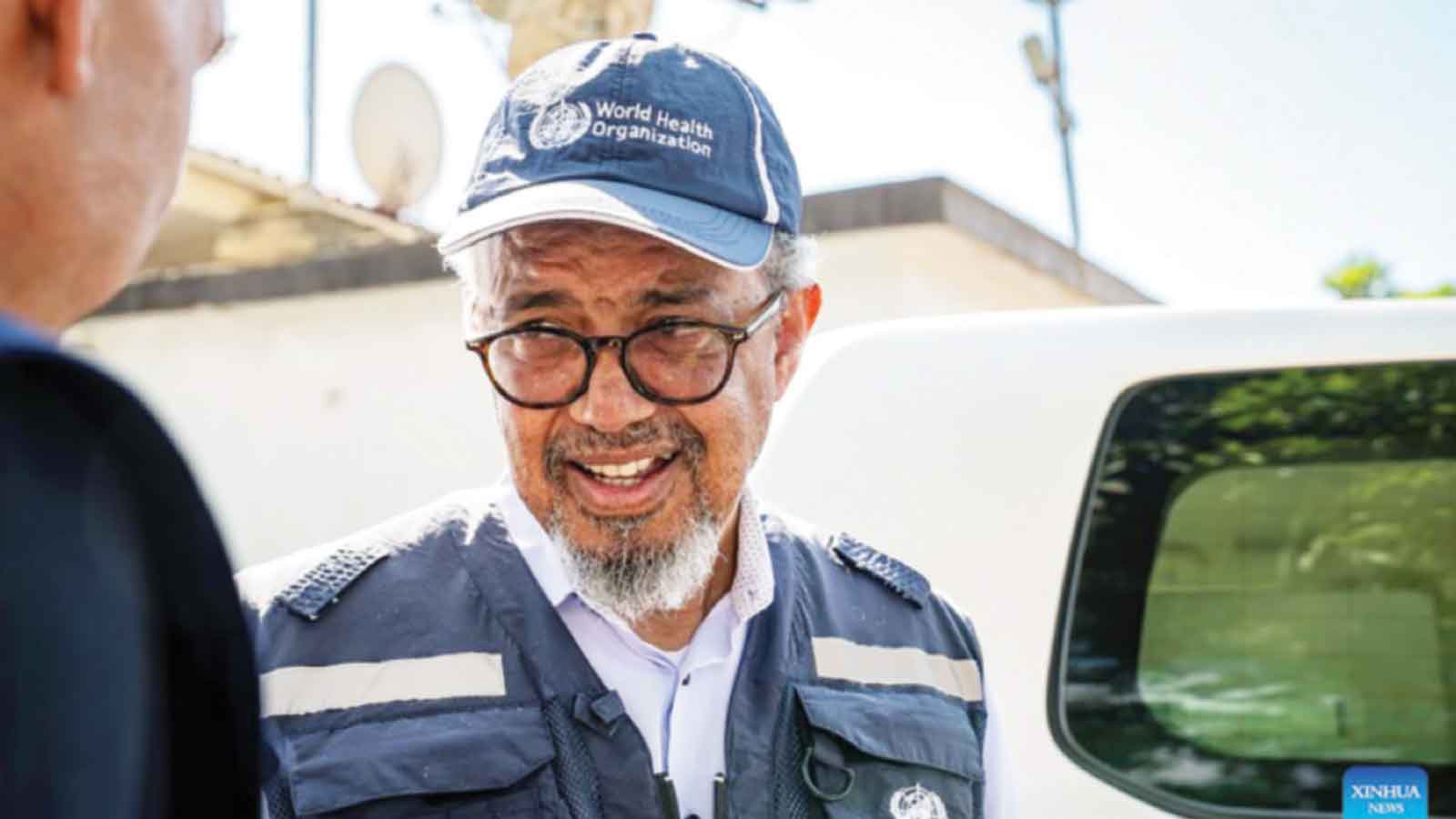
KINSHASA. – World Health Organisation director-general Tedros Adhanom Ghebreyesus has called for stronger community trust and international solidarity in the response to the Ebola outbreak in the Democratic Republic of the Congo, warning that travel bans and border closures could make the fight against the disease more difficult.
Speaking at a joint press conference with Congolese officials in Bunia, the capital of northeastern Ituri Province and the epicentre of the outbreak, Tedros said on Saturday that he came to the area to show that people in the provinces of Ituri, North Kivu and South Kivu, and across the DRC, “are not alone”.
“We are not here to tell people what to do. We are here to listen,” Tedros said, stressing that communities understand their own challenges and are often best placed to identify solutions. “Building trust takes time, and it starts with listening.”
The latest outbreak, declared on May 15, is the 17th in the DRC since the virus was first identified in 1976. In the past two weeks, over 1 000 suspected cases and more than 230 suspected deaths have been reported. Neighbouring Uganda has also reported nine confirmed cases.
The WHO chief said community ownership, government leadership, and international support would be key to ending the outbreak, which has spread across three eastern provinces, Ituri, North Kivu and South Kivu, in a region already strained by insecurity, population movement, and humanitarian needs.
DRC Health Minister Roger Kamba said the best-case scenario would be to contain the outbreak within the three affected provinces and avoid wider spread. He said the vast majority of cases remain concentrated in Ituri, while North Kivu has far fewer cases and South Kivu has reported only one case.
Kamba said authorities hope to bring the epidemic under control within four to six months, based on the country’s experience with previous Ebola outbreaks and the disease’s incubation period.
He added that the DRC has previously controlled multiple epidemics, including Ebola and mpox, and expects the international community to trust the country’s response capacity.
Tedros also expressed confidence that the outbreak can be stopped, citing the DRC’s long experience in dealing with Ebola. He noted that the country has faced Ebola 16 times before and has ended every outbreak. “If we do our best, it can be stopped,” Tedros said. “The issue is in our hands.”
The current outbreak is caused by the Bundibugyo virus, a less common Ebola species for which no licensed vaccine or specific treatment currently exists.
Patients infected with Bundibugyo Ebola can survive if they receive timely and quality medical care, Tedros said, adding that some patients in Ituri had already recovered. He also said the WHO is working with partners to advance safe and effective vaccines and treatments through clinical trials.
On testing, Kamba said laboratory capacity had been strengthened after earlier delays. Around 900 samples had been tested, with about 260 positive cases identified, he said, noting that the response now has the capacity to process incoming samples and aims to conduct 200 to 300 tests per day. – Xinhua