Online Reporter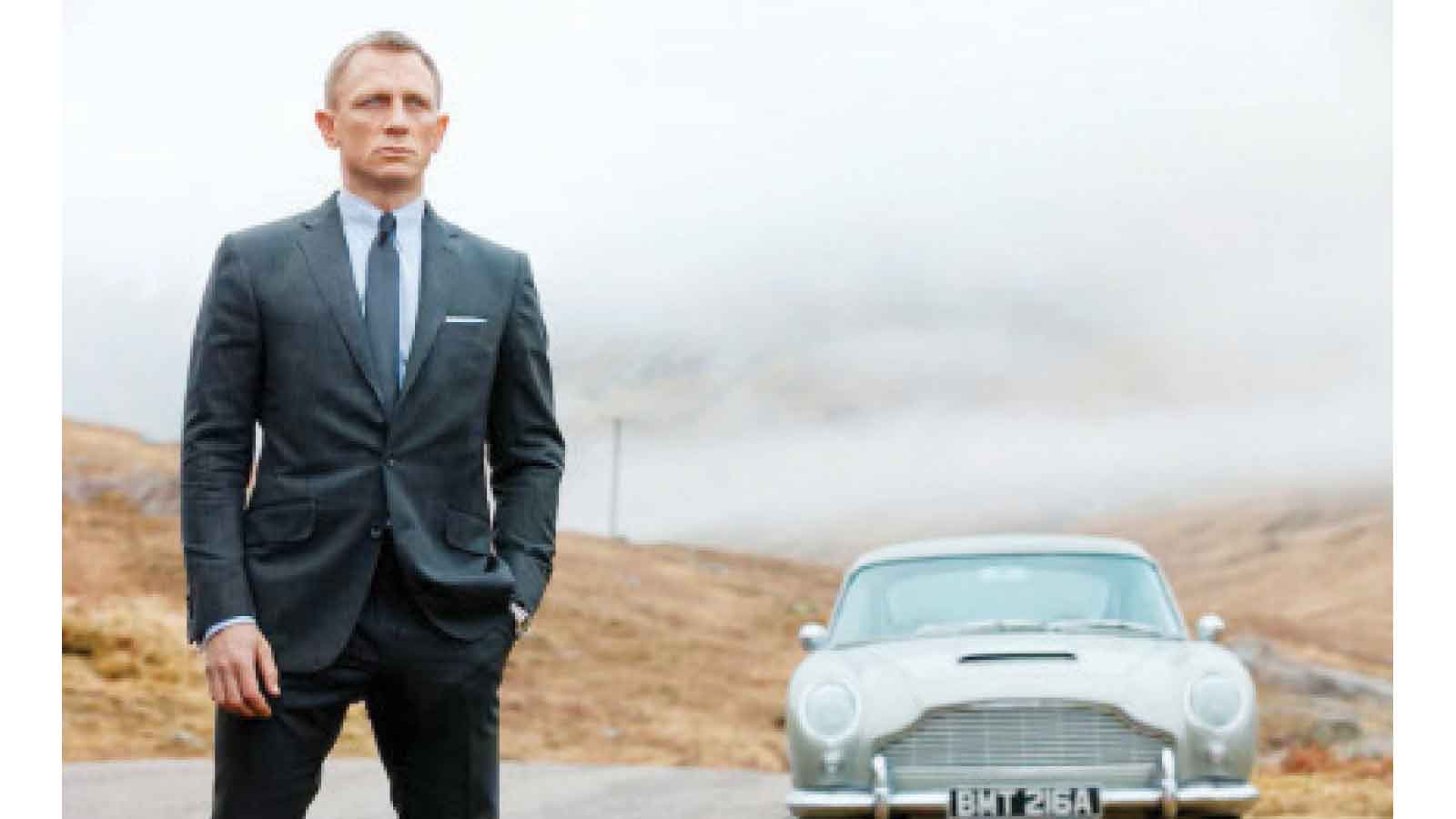
LONDON. —Twelve men have walked on the Moon, but half that number have played James Bond on the big screen.
It’s an exclusive club, and soon a new member will be admitted.
After years of non-stop speculation, Amazon/MGM Studios announced via social media last week that “the search for the next James Bond is underway”.
Since Amazon acquired 007 last year, they’ve assembled an A-list creative team to resurrect the Bond brand, including director Denis Villeneuve and screenwriter Steven Knight.
Now it’s up to veteran casting director Nina Gold to sift through dozens of handsome young men and award one of them a licence to kill — but what exactly will she be looking for, and who has what it takes?
Here are the five things the 007 needs to be, according to Bond experts:
1. BRITISH
Bond is one of Britain’s most treasured cultural institutions, and Amazon are unlikely to tamper with this identity. Although most of the actors under consideration will be home-grown in the UK, there is precedent for the part going to men from further afield. Australian George Lazenby took on the role for one film, while Irishman Pierce Brosnan played Bond in four instalments, both diluting their accents to pass for something vaguely English.
This might offer hope to Brisbane-born hunk and Oscar nominee Jacob Elordi — fresh from a brooding turn as Heathcliff in Wuthering Heights (2026), he’s currently one of the frontrunners on the betting market.
2. YOUNGER
Bond has typically been written and cast as a man of vast experience — a Commander in the Royal Navy before his recruitment into the Secret Service, he’s been around the world a few times to earn his double-o status.
Thus far, the series’ leading men have been aged between 29 and 44 at time of casting, with most towards the older end of the range. But there’s speculation that a drive for fresh audiences could produce the youngest Bond yet.
“My prediction is the new James Bond will be under the age of 30.
“Amazon has paid billions for this cultural phenomenon, so this movie must be a crowd-pleasing cash cow and the character at the heart of the story will need to relate towards Gen Z audiences,” Matthew Field, co-author of Some Kind of Hero: The Remarkable Story of the James Bond Films, tells the BBC.
“Being James Bond lasts more than four or five films. It’s a lifelong commitment, and they will forever be an ambassador for the franchise.
Brosnan hung up his dinner jacket 25 years ago, but Bond still comes up in every interview.”
3. UNKNOWN
Historically, the 007 role has eluded anyone too famous.
Original producer Albert R “Cubby” Broccoli worked on the philosophy that Bond himself was the real star, writing in his autobiography that the hero should always be “one notch bigger than the actor who plays him”.
Lazenby was a complete unknown, his primary acting experience being a series of Fry’s chocolate advertisements. While Sean Connery, Timothy Dalton, and Daniel Craig were all respected actors with lead roles behind them, and Roger Moore and Brosnan were popular TV performers, none had broken into movie stardom when they first drew their Walther PPK.
“I don’t think Amazon will go with an established name. They’ll likely cast an experienced actor who’s still somewhat under the radar but clearly on the rise,” Mark Edlitz, author of The Many Lives of James Bond, tells the BBC.
4. WITTY
Director Edgar Wright has a theory that each new Bond necessitates a change in tone from their predecessor, telling the Happy Sad Confused podcast, “… the Bonds have got to be like dark chocolate, milk chocolate, and I think you’ve got to alternate.” After the realism and introspection of Craig’s films, perhaps it’s time for a more light-hearted approach?
“Each actor is faced with the question, ‘How do I make this my own?’,” says Feirstein. “Craig was a perfect Bond for the post-9/11 era. He chose to emphasise emotional gravitas in the role, rather than wit, which I think was right for the time. I would imagine that the next iteration is going to want to imbue some of the charm that had been there before, and I’m sure Steven Knight will want to bring that to the script too.”
5. BRUTAL
Beneath every Bond’s outward charm is a dangerous brutality, and the volatile balance between the two has always been at the core of his appeal.
The literary 007 is a Judo expert who authors a handbook on unarmed combat techniques for field agents, and this proficiency in violence has become more prominent as the films have leaned further into action spectacle.
When Daniel Craig and his tiny shorts emerged from the sea in Casino Royale (2006), his chiselled body set a new standard for toughness which a successor will have to match.
“The clue is in Bond’s job description —licensed to kill,” Debbie McWilliams, casting director on 13 Bond films, tells the BBC.
“If you don’t believe he can, then the game’s up.”
With support from Hollywood’s best physical trainers, almost any actor is capable of bulking up convincingly, but the key to Bond is his confidence and insouciance in dealing out violence. Taylor-Johnson has played believable tough guys in Tenet (2020) and 28 Years Later (2025), but for a performer with genuine fighting prowess, Villeneuve could turn to Aaron Pierre. The classically trained 31-year-old has competed in Brazilian jiu-jitsu, and demonstrated a controlled but brutally effective physicality in the 2024 action-thriller Rebel Ridge.
The other big questions: Why Bond?
Picking an actor is only one piece of the puzzle in bringing the debonair spy back to screens.
With a new regime in charge both financially and creatively, the series has never had such clear break with its past.
It will take more than a fresh face to reinvent 007 for a new generation of moviegoers. Perhaps more crucial than finding a new Bond, is finding his place in the world.
“First of all, you have to answer the question: why Bond?” says Feirstein.
“What role does a British spy play anymore? How does a secret agent work in an online world, where privacy does not exist and everything leaves a digital footprint? What is the place of the UK in this? You have to start there, and make it relevant to this moment.”—BBC