Online Reporter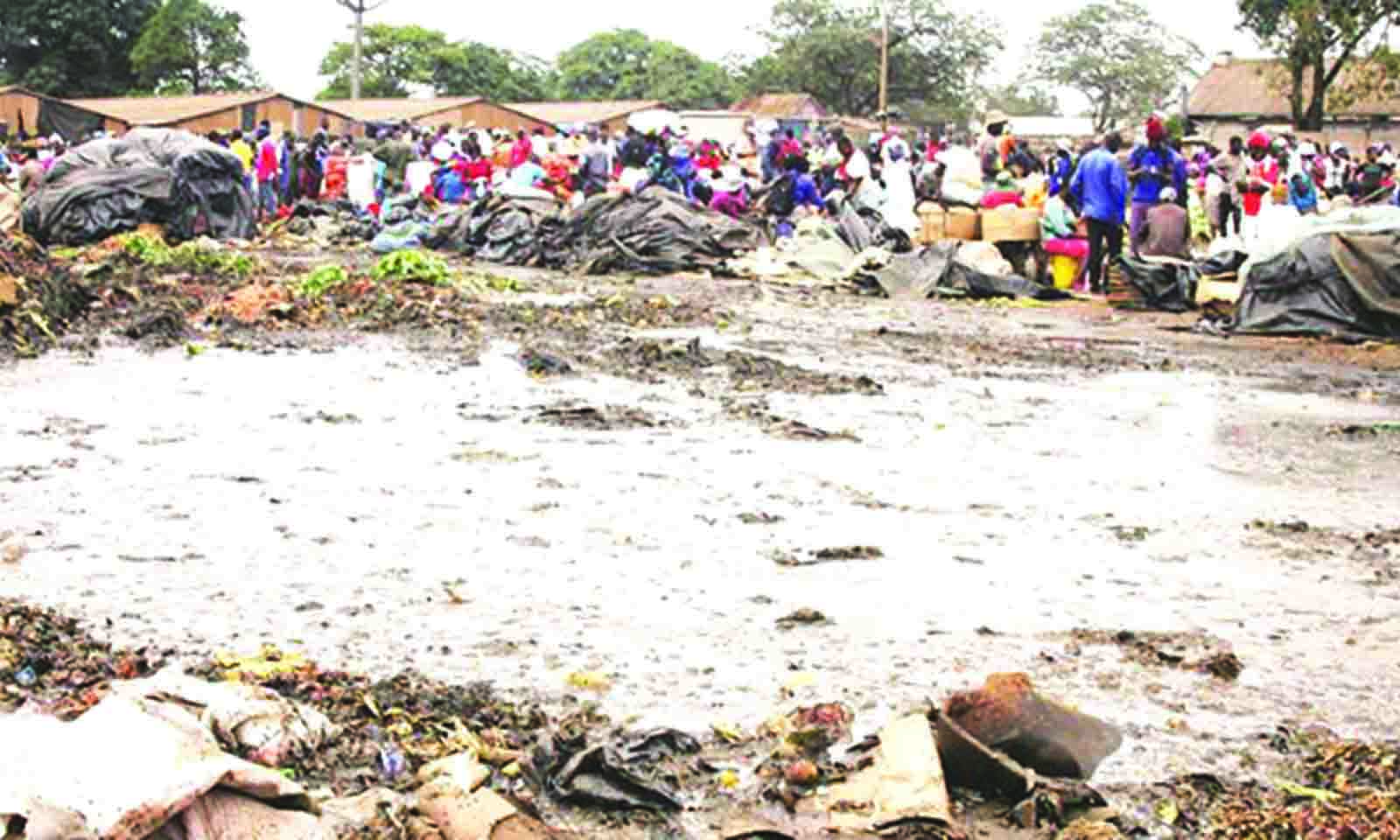
Obert Chifamba
Agri-Insight
WHILE last week’s gentle rains might have showered farmers with joy, replenishing fields and fuelling dreams of a bountiful season, that same source of joy has transformed Mbare fresh produce market into a bustling yet muddy marketplace, where agricultural produce is sold from a slick, muddied surface.
Here, vibrant greens and ripe fruits contrast starkly with the dark, squelchy earth, creating a unique tableau of resilience and abundance.
This is the new, slippery reality, showcasing the dual nature of this season’s rains — bringing both growth and a bit of grit that vendors and customers alike, have to navigate throughout the wet season with each term that passes.
Many will agree with me that this has been a perennial problem at the country’s biggest fresh produce market.
Here I am not talking of just a fresh produce market but a multi-million-dollar economy, where millions of the green back exchange hands every day.
We are talking here of a market that has over the decades been City of Harare’s most reliable cash-cow, which, with just a bit of modernisation can easily treble or even quadruple its earnings.
At its current state, many potential traders are forced to look elsewhere for more conducive in which to do their businesses.
It is this current state, which has pushed me to make this public appeal to the City of Harare and its parent ministry — the Ministry of Local Government, Public Works and National Housing to spare a thought for Mbare Musika.
Just a paved surface may be a million times better than the pools of mud through which farmers, traders and consumers must swim to access services.
If the City of Harare was to collect operation fees from all the people who do their business at the market daily for just a month, then deploy it towards improving drainage and paving the surface, I think that would be very helpful.
Selling fresh crop produce from muddy environments poses significant health risks due to potential contamination by microbiological pathogens, heavy metals, and chemical residues.
This can lead to foodborne illnesses and long-term health problems for consumers.
It is not a secret that muddy environments are primary sources of harmful microorganisms. These can cause severe gastrointestinal and other illnesses.
Bacteria such as E. coli (including 0157:H7), Salmonella spp., Listeria monocytogenes, and Campylobacter spp. can all be present in contaminated soil and water while viruses that include Norovirus and Hepatitis A virus, are readily transmitted through contaminated water and produce.
On the one hand, parasites such as Cryptosporidium and Cyclospora can also be found in produce from contaminated sources while soil and water in some areas, particularly older urban or industrial regions, may be contaminated with chemical hazards that the plants can absorb.
Naturally, buyers and inspectors reject produce coated in mud or showing signs of decay, leading to significant financial losses for the seller.
In most cases the losses hit the hardest on the resource-poor farmer who would have travelled from destinations out of Harare targeting to go back with decent pickings from their sales.
Besides the huge financial losses, farmers also lose consumer trust while there is a very high likelihood of foodborne illness outbreaks linked to the soiled products.
Bad quality produce can bring about severe reputational damage, legal issues, and mandatory product recalls for a farmer, which may be very difficult to recover from.
It fast becoming apparent that good agricultural practices (GAPs), are not only restricted to crop production processes but are vital even in minimising food safety challenges borne out of poor handling or storage.
The sad reality about the Mbare Musika situation is that the recent light showers have already left a huge legacy of sludge.
The big question is — what will happen when the season finally sets in and heavy rains begin falling?
Obviously people will be working on treacherously muddy surfaces with the ground, saturated from rains, squelching under their feet, making every step a challenge.
Clearly, they will be splattered with mud from boots to clothes with produce also suffering the same fate.
Risks of slipping are ever-present with chances of falling always looming large, as they try to keep one eye on produce and another on the ground below.
It is, however, quite disheartening to note that there is no visible effort by the custodians of the market —Harare city council, to address the situation, as it is business as usual for them.
Their officers are there 24/7 overseeing farmers paying to sell their produce daily.
Just yesterday, I was talking to an old friend of mine — Knowledge Transfer Africa chief executive officer, Dr Charles Dhewa, who told me a lot needed to be done at the big market.
“The problem is massive and likely to worsen as the rainfall season progresses. Major causes include poor drainage around Mbare because the City Council doesn’t seem to have the drainage map or the people responsible have no motivation and resources to address the issue. The proliferation of tuckshops around Mbare has brought a lot of plastic papers, which are thrown everywhere and end up blocking drainage systems.
“Another source of mud is potatoes, which come from the farms without having been washed like what happens in other countries like SA. All the mud brought by potatoes end up accumulating in the market, blocking drainage and when it’s dry it becomes dust,” he observed.
He also made another interesting observation — when there is a lot of mud at the market, consumers stay away and that means a lot of food is unsold per day leading to serious food losses.
Dr Dhewa also suggested other solutions such as clearly organising the market according to commodities with each commodity being allocated trading space like what has happened to potatoes, which are now largely traded at Coca Cola corner.
“With time, washing services should be provided for commodities like potatoes or farmers can be forbidden from bringing unwashed potatoes into the market. However, the challenge is that washed potatoes spoil much faster and losses will be much higher especially in a subdued market.
“That’s where warehousing and cold chain facilities should come in. The mega solution is a whole of government approach bringing three to five ministries to work together in sorting the market. Council clearly has no capacity.
“Decongesting the market is another solution, which is much bigger than council,” said Dr Dhewa.
Whether all these suggestions are feasible or not, it still remains to be seen how City of Harare plans to wriggle out of this one.