admin
admin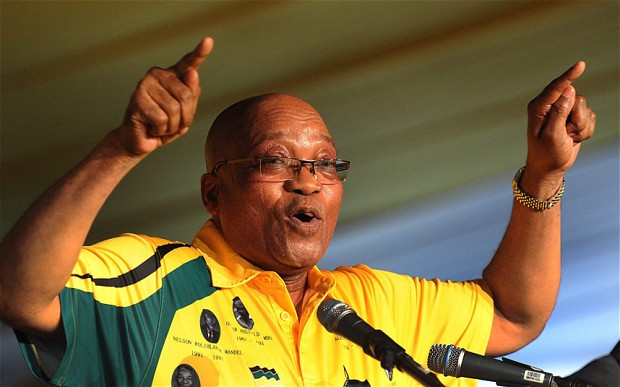
Mushtaq Parker Correspondent—
THIS fifth democratic poll was supposed to be a “Born Free” election, in which the new cadre of young first-time voters, untainted by the gross injustices of and fortunately bereft of the sheer experience of apartheid, were to vigorously participate. But at all the election rallies this writer attended in Cape Town, the “Born Free” generation of voters was alas not much in attendance. In fact, had it not been for the surfeit of party political posters strewn across the plush suburbs of Hout Bay, Noordhoek, Sea Point, Newlands, eto the middle-class havens of Crawford, Heideveldt, Belgravia, to the “Indian” enclaves of Rylands Estate and Gatesville, and to the working-class townships of the Cape Flats including Bridgetown, Hanover Park, Mitchell’s Plain, one could have been forgiven for being unaware that indeed this was vital elections’ time.
Perhaps South Africans here were resigned to the fact that the result would be a foregone conclusion and that nothing short of a major political earthquake would unseat the entrenched ANC.
Despite being plagued by a string of alleged corruption scandals; of the growing and disconcerting disparity between the haves and the have-nots which has seen the emergence (some say the fast-tracking) of a new black super-rich class at the one extreme and the proliferation of so-called informal settlements (the euphemism for unauthorised shanty towns) at the other; and the infighting within the ANC which has led to a young Rolex-clad upstart, Julius Malema, the former leader of the ANC Youth, launching the most unlikely of parties, the Economic Freedom Fighters (EFF), and Mamphela Ramphele, the erstwhile principal of the University of Cape Town, and of course the other half of the assassinated Black Consciousness Movement leader, Steve Biko, launching Agang SA, the ANC at best has emerged from the country’s fifth democratic elections with a mere nosebleed.
The results were clear and present. Some 29 disparate political parties contested the elections compared with 26 in 2009. Of these some 13 parties won seats, the same as in the last Assembly.
As is now widely known, the ANC won 62,15 percent of the vote, amassing an overwhelming 249 seats in the new National Assembly, albeit this being down on the 65,9 percent of the vote won at the previous election. In the process, the ANC lost 15 seats compared to the 2009 elections.
In contrast, the Democratic Alliance (DA), which is the nearest thing to an official opposition, increased its share of the popular vote from 16,66 percent in 2009 to 22,23 percent in the May elections, gaining 22 seats to bring its tally to 89 seats in the new National Assembly.
This is hardly the stuff that political wake-up calls for incumbent ruling parties are made of. The ANC will have gained some succour from the cautious optimism expressed over the election results by the business community and the financial markets.
Malema is “big” winner
Yet, despite the ANC’s sweeping victory,there are clear fault-lines appearing in the South African body politic, which any major party would ignore at their peril.
The “big” winner in this year’s poll was Julius Malema’s EFF, the party with the most gains in terms of absolute seats. After a very short gestation period, the nascent EFF has managed to muster 6,35 percent of the vote and 25 seats in Parliament – not bad for the “new kid on the bloc” but with a tempered attitude and a nuisance value in its constant attack on the excesses of the ANC and the economic inequalities of contemporary South Africa.
The EFF has displaced COPE (the Congress of the People) as the third largest party. COPE in 2009 won 30 seats and has managed a mere three seats in the May elections.
Whether the EFF turns out to be a one-election wonder only time will tell. Malema, whether because of his penchant for expensive houses and material goods, or his self-styled revolutionary self-belief that he is a “son of the people”, or the sheer reality of the rigours of the democratic process, is showing some signs of realpolitik, as he continues to stress that the EFF does not stand for Zimbabwe-style wholesale nationalisation and land distribution.
The weakness of South African democracy is indeed the fact that the ANC is effectively presiding over a one-party state, albeit democratically elected. But this is not unique to South Africa.
The UK under prime ministers Margaret Thatcher and Tony Blair saw the Tory and Labour governments rule for over a decade each with consecutive landslide election victories. Similarly, Malaysia’s Barisan Nasional has been in power since independence in the 1950s, with no signs of any opposition party coming near to a breakthrough.
For democracy to be effective, the requisite is both a strong government and a strong opposition. As such, the spectre of Helen Zille, the leader of the DA, ruling herself out as a presidential candidate even before a single vote was cast, suggests that democratic politics in the so-called Rainbow Nation still has some way to travel.
Yet after 20 years of democracy, South Africa does offer a model to other aspiring democracies and dare I say to even one or two of the more established ones.
The voter turnout for the national election was an encouraging 73,43 percent according to the Electoral Commission of South Africa (ECSA), a figure that is the envy of the mature democracies in the West, where some parliamentary elections have been won with a much lower turnout and where the disaffected youth seem to be increasingly shunning the democratic process.
The 2014 voter turnout is marginally lower than the 77,3 percent in the 2009 elections; the 76,7 percent in the 2004 elections; and 89,3 percent in the 1999 elections. Though the trend has marginally declined over the last two decades, the sustainability of democratic participation seems to be holding.
For more South Africans, indeed 18 654 457 of them, cast their votes in May 2014 than in that iconic election in 1999 when 16 228 462 South Africans cast their votes for a party led by a certain Nelson Mandela.
However this voter affection could very easily, over time, turn into disaffection especially if ruling parties both at the national and provincial levels fail in their delivery, especially of essential services.
The ANC has already had a taste of this in the provincial elections, especially in the two powerful and prosperous provinces of the Western Cape and Gauteng. The battleground was clearly demarcated. In the Western Cape, could the ANC recapture the province from the DA and boost its tally of seats in the provincial assembly?
In an act of seeming desperation, the ANC flew in Ebrahim Rasool, the South African Ambassador in Washington, in a flying visit to Cape Town, ostensibly to boost especially the so-called Muslim vote in the Western Cape. Rasool was the Prime Minister of the Western Cape in 2004, the last time the ANC ruled in the province.
In a statement, Muslims in the ANC stressed that “after 20 years of freedom, democracy and human rights in South Africa, we must still call on you to vote for the ANC. We know that there are problems such as the Nkandla issue – but we also know that the (ANC’s) achievements outweigh the problems. This is not the time to change drivers. This is not the time to let our anger and disappointment overwhelm our hopes and aspirations.”
Of course, Rasool and the ANC have the support of only a fraction of the Muslim vote. One Muslim engineer, who is a senior manager of the South African operations of an international oil company, for instance, explained that the lack of active engagement in the election campaign is partly explained by the fact that many voters had already made up their minds who to vote for.
He was voting for the DA because he was fed up with “the rampant corruption and cronyism” in the upper echelons of the ANC and their business partners.
On the economic front, South African Finance Minister Pravin Gordhan, in a hard-hitting article in the Cape Times, five days before the elections, attacked the DA for “misleading the public about the credibility of its economic policies and as well, putting a gloss on the performance of the Western Cape economy”.
In contrast, asset managers such as Adam Ebrahim of Oasis Holdings are upbeat about the prospects for the province going forward. “In the Western Cape, we have seen a significant rise in tourism over the last year as the province’s natural landscape, high quality facilities and a weaker rand continue to raise interest in the region. Investment expenditure is expected to be relatively robust going forward, as ongoing migration into the province generates significant population and demand growth.
“The anticipated increase in trade activity with Africa, one of the fastest growing regions globally going forward, should benefit the Western Cape due to its positioning, resulting in a rise in activity at its major ports in Cape Town and Saldanha Bay.”
The DA itself was embroiled in controversy over its party funding, some of which allegedly came from a South African businessman who also had interests in the company that built the controversial wall of separation in Jerusalem, bisecting Israel and the Palestinian Territories. This was enough to scupper any electoral pact between the DA and Agang SA.
Nevertheless, the DA carried the vote in the Western Cape, where it seems to have strong support from the Coloured population, which constitutes 43 percent of the population in the province. The DA increased its tally of seats to 26 from 22 in the 42-seat assembly, getting just under 60 percent of the popular vote. The ANC in contrast held its vote at 14 seats.
But, another disconcerting fault-line to note in the Western Cape is the growing and underlying tension between the Cape Muslims, largely of Malay and Indian extract, and the mainly Christian Coloured populations.
Not that this is new because it was prevalent in the apartheid era with its divide-and-rule ethos. But in a free South Africa this tension seems to be frothing beneath the surface fuelled by an inflow of money and support from the Middle East on the one hand and from the Bible Belt of the US and northern Europe on the other.
At an election public meeting held at the Samaj Centre in Rylands Estate where the four main political parties were represented, the DA bussed in loads of Coloured supporters, who were vociferous to say the least. While most of their anger was directed at the ANC, some of it was clearly aimed at the Al Jama-ah Party, which despite failing to win a seat in the provincial assembly came fifth in terms of the number of votes cast.
Apart from Al Jama-ah, two other faith-based parties contested the May elections, namely the United Christian Democratic Party and the African Christian Democratic Party, which won three seats in the new National Assembly.
The DA also had high hopes of upsetting the ANC in the vital Gauteng (formerly Transvaal) province. Perhaps expectations were raised too high for on the day the ANC vote held at 40 seats even though the party had lost seven seats to the DA, which mustered 23 seats in the 73-seat assembly.
But the game changer in the future could be the EFF, which won 10% of the vote and eight seats in the Gauteng assembly.
Voters such as Ebrahim Moolla are hopeful that in its second term, the Jacob Zuma government “will improve on its delivery of essential services for all South Africans. The ruling ANC has won the elections, but by the lowest margin since the first democratic election.
They say that this is proof that the people want them in power; but they also know that the people are becoming frustrated with the current situation. The increase in service delivery protests in the country just the past year is evidence of this. Further evidence is noted in Gauteng, where the ANC lost around 12 percent of the vote as compared to the previous election. E-tolls enforced in this province are one reason why people voted the way they did.”
Second term priorities
So what will be the priorities of a second-term Zuma administration? According to ANC secretary-general Gwede Mantashe, the government is committed “to restoring investor confidence with sound policies, and to prioritising the implementation of the National Development Plan (NDP)”.
The NDP, which was drawn up in 2011, puts a major emphasis on infrastructure development and rejects the nationalisation of key sectors such as mining, to the chagrin of some prominent unions and the South African Communist Party (SACP), an ally of the ANC. No doubt, the ANC hierarchy will perceive the election results as a clear mandate for the government to push ahead with the NDP, with the hope that it also gives a much-needed boost to GDP growth which is projected at a disappointing 2,7 percent in 2014, below some of the other larger sub-Saharan economies.
Oasis CEO Adam Ebrahim concurs that the key focus and priority of the South African government over the next five years will be the effective implementation and execution of its NDP.
“Indeed, the government’s R847 billion (approx US$85 billion) infrastructure programme over the next three years has played a central role in recent budget statements. State-owned enterprises such as Eskom and Transnet will also play a critical part in the development of our country.
“As Medupi, Kusile, and other power projects begin to ramp up over the next five years, South Africa’s electricity production capacity is anticipated to increase by over 25 per cent, providing a significant boost to economic growth. Transnet’s roll-out of new logistics projects should also provide a tailwind to growth, as it is projected to spend about $15bn on capital projects over the next three fiscal years,” he expounds.
These developments, stress South African businesspeople, will have important positive implications for job creation and poverty reduction in South Africa, especially as the employment-intensive manufacturing and mining sectors are stimulated.
Greater employment and aggregate wage growth of this nature have the potential to drive a virtuous cycle of consumption and output growth over the medium term. – NewAfrican.


 Online Reporter