admin
admin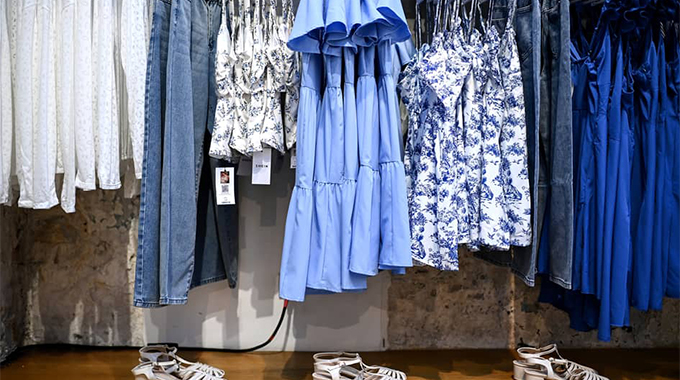
Despite growing awareness of the fashion industry’s negative impact, consumers continue to purchase affordable, trendy clothes from fast fashion brands and retail giants. Why is that? How can these two realities coexist?
The inspiration for this piece comes from a recent article published by Dutch investigative journalism platform De Correspondent: “The successful Bob (Designated driver, ed) campaign demonstrates: Above all, don’t tell people what to do.” This article, focusing on a Dutch government campaign against drunk driving, is a worthwhile read because it highlights a successful approach that didn’t rely on prohibition.
The core message is that when aiming to change behaviour, it’s more effective to focus on removing obstacles in the environment rather than trying to change the individual.
According to De Correspondent, people have always known that drinking and driving is dangerous, but a real shift in behaviour only occurred when the ‘Bob campaign’ removed an obstacle: It introduced “Bob” as the designated driver who would remain sober.
The name Bob became widely recognised through public initiatives like humorous advertising posters. This simplified the often-awkward conversation about who would stay sober. The designated driver could simply say — without needing further explanation — “I’m Bob.”
While reading this, I thought about the apparel industry.
There are countless resources circulating about the fashion industry’s unsustainable practices (I have written a few myself), yet consumer behaviour is yet to take on any tangible change.
Is awareness still the problem? Honestly, I don’t think so.
Most people are well aware that constantly buying new, trendy clothes and discarding out “old” clothing is anything but sustainable. And that those dirt-cheap fashion items aren’t produced responsibly.
So what is stopping people like you and me from making sustainable clothing choices?
Sustainable fashion needs to be more accessible and the norm
The simplest answer may be that the context within fashion is one of the inhibiting forces. To put it simply: People want to build more sustainable wardrobes, but the environment makes that difficult.
Fast fashion dominates the market and tempts us with low prices and attractive, trendy pieces.
Sustainable fashion should be cheaper and more readily available.
One way to achieve this, as sustainability experts have often advocated and was also recommended in a recently published report on a circular fashion market, is to reflect the impact on people and the environment in the price of fashion items, a concept known as True Pricing. If the social and ecological costs are factored in, polluting fast fashion becomes more expensive and responsible fashion becomes cheaper.
But beware, we cannot buy a green wardrobe. According to sustainable fashion expert Jasmien Wynants, the essence is “buy less, choose well and make it last” as the late Vivienne Westwood always said. And as Dutch newspaper NRC clearly headlined last year; the most sustainable garment is already hanging in your closet.
Extending the lifespan of products
In a circular economy — which the EU aims to achieve by 2050 — the focus is on extending the lifespan of products. How can we encourage people to cherish their garments, care for them (including through repair) and wear their clothes until they are threadbare? Perhaps we should be taught in school about how clothes are made, how to care for our items, and even how to sew on a button, darn a sock, or replace a zipper?
On a more general note: should not the fashion industry itself dictate something different? After all, the current focus on trends and “new” is contrary to the principles of sustainability. What if fashion companies were to slow down, focus on high quality and think about reuse and recycling — end of life solutions — in the design stage?
While not addressing fashion in particular, Belgian newspaper De Tijd recently investigated the rigorous circular idea: “‘Can you make money with things that last forever?”
Of course, there are also smaller things that can be done to focus on the pillars of the circular economy. You may remember Patagonia’s advertising campaign from years ago with the slogan “Don’t buy this jacket”? Campaigns like this can help challenge consumers to rethink their buying behaviour and emphasise reduce or recycle instead of constantly buying new things.
Offering or facilitating repair services is also a step in the right direction.
Making a positive difference
With large, complex problems like climate change and the negative reporting surrounding it, it can be hard not to feel powerless. The thought “what can I, as one person, change?” often leads to passivity.
Perhaps the same applies to this fashion problem.
Yes, the situation is complicated, and sustainability is primarily the responsibility of our policymakers and fashion companies/retail giants. But it’s also the responsibility of all of us. A task for you and I. Make a positive difference through small, achievable steps that you can take.
There are countless ideas for professionals: Retailers; offer more sustainable clothing in your stores.
Designers; use more sustainable and high-quality fabrics and materials in your collections.
Clothing brands; examine your supply chain and see how you can improve things in terms of people (social responsibility) and planet (your ecological impact). Investors, finance sustainable innovations, start-ups or textile-to-textile recycling companies.
And for everyone — consumers and citizens: make well-informed decisions. Think of the inspiring pioneers, entrepreneurs and slow fashion brands.
Support brands you like and let them know that you value their sustainability efforts.
Ask questions about production, working conditions and climate targets. Demand more transparency.
All of this has an impact, and collective action definitely makes a difference. —FashionUnited.com


 Online Reporter