daniel chigunwe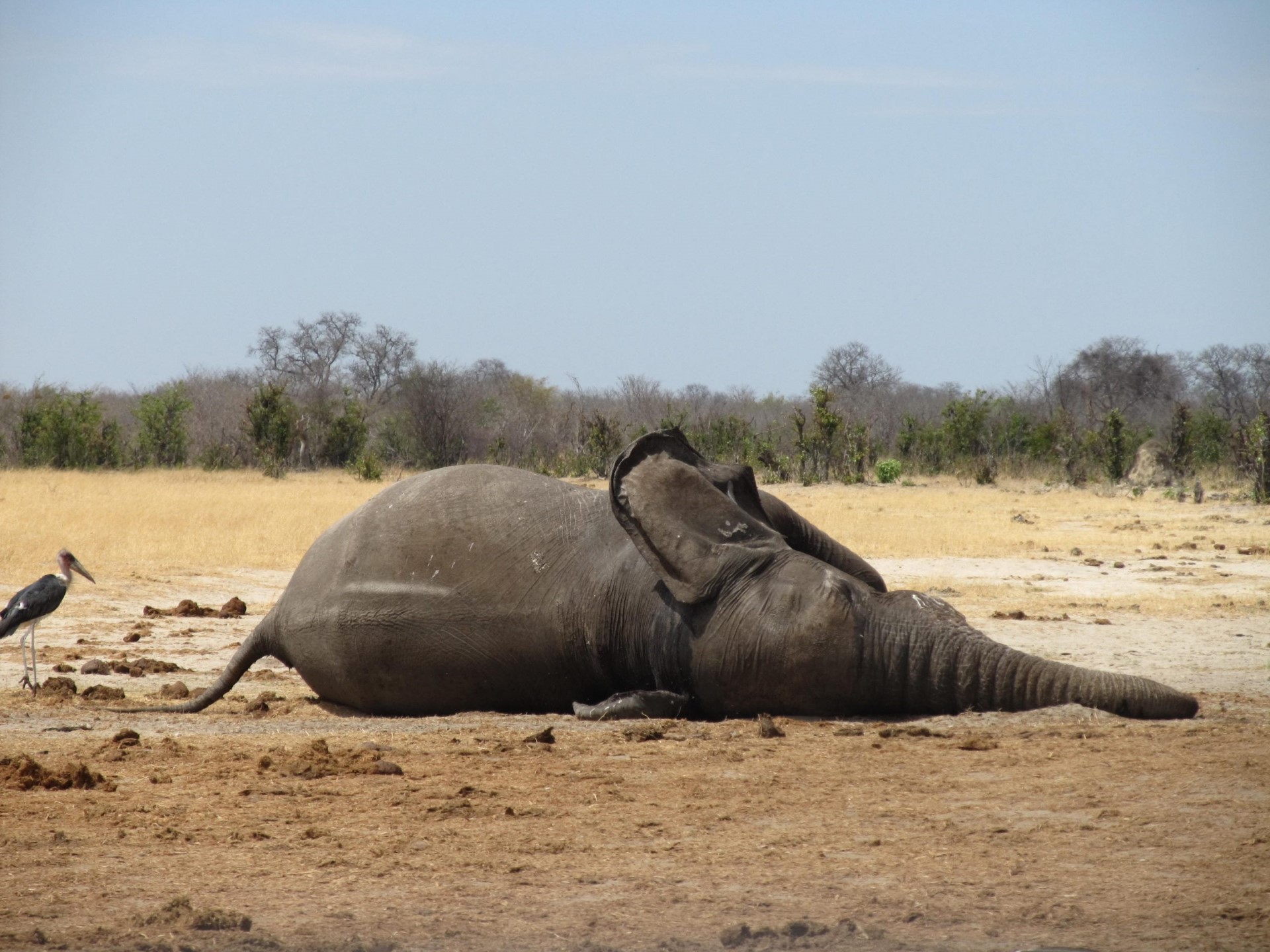
Several years ago, dozens of elephants mysteriously dropped dead in Zimbabwe, a landlocked country in southern Africa. Now, researchers finally know why.
Over several months of 2020, 35 African elephant carcasses were discovered in the Kavango–Zambezi conservation area, which encompasses five countries and is home to Africa’s largest population of elephants.
Intriguingly, the carcasses showed no signs of outward trauma or distress; their skin was bite-free, and their tusks were intact, which ruled out predators and poachers as the cause of death.
Additionally, their bodies were in “good” condition, indicating the animals had not succumbed to hunger or dehydration.
Perplexed by the elephants’ demise, researchers set out to discover what killed them, according to a study published on Wednesday in the journal Nature Communications.
With a shrinking global population of several hundred thousand, African elephants are considered critically endangered, and understanding the risks they face is paramount to the species’ conservation.
Using tissue samples collected from 15 of the carcasses, researchers ran a variety of tests, including toxicological analyses.
The tests revealed that six of the animals died from blood poisoning caused by Bisgaard taxon 45, a poorly understood type of bacteria.
It may have been detected in more elephants if not for testing delays, which can last months, researchers said.
The bacteria’s origins are unknown, but it’s previously been found in humans bitten by lions and tigers, as well as captive parrots and one chipmunk, researchers said.
How it managed to infect the elephants is unclear, but several hypotheses have been put forward.
“Intraspecific transmission via inhalation or ingestion is possible,” researchers said, “especially given the highly social behaviour of elephants, which includes contact between trunks or even placing trunks in each others’ mouths.”
The animals also gravitate toward their dead, which could have facilitated the spread of the bacteria.
“More research is needed to understand the epidemiology of Bisgaard taxon 45 in elephants and whether latent carriers or other species play a role in maintaining this organism,” researchers said.
The bacteria now adds to the growing list of “disease-related threats” imperilling elephant conservation, including anthrax, tuberculosis and the herpes virus.
Poaching and habitat loss, mostly to make way for agricultural production, also pose significant threats to the species’ conservation, according to the International Union for the Conservation of Nature. — The Spokesman Review



 Online Reporter