admin
admin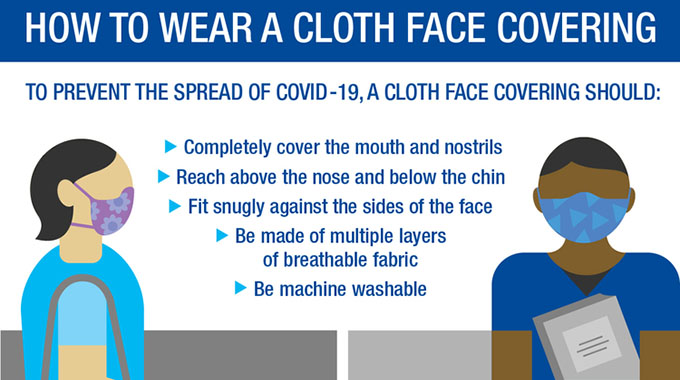
Roselyne Sachiti
Health & Society Editor
Since the beginning of the Covid-19 pandemic, non-pharmaceutical prevention measures like face masks have proven an effective measure of suppressing transmission.
Used as a part of a comprehensive strategy of measures to suppress transmission and save lives, other precautions including physical distancing, keeping rooms well ventilated, avoiding crowds, cleaning hands, and coughing onto a bent elbow or tissue, have also proved effective.
Yet in Zimbabwe, many people have developed mask fatigue and no longer wear face masks in public, especially in suburbia.
Covid-19 cases have increased, with 34 552 confirmed cases, 28 551 recoveries and 1 326 deaths as of February 7.
A total 10 deaths were recorded on February 7 alone, yet some people still choose not to follow preventative measures. Others stretch single use masks to the limit and continue using them for up to three times, sometimes after washing with soap and water.
This has raised questions on the kind of protection provided by disposable masks that have been washed.
Is it safe to use disposable masks, wash them and use them repeatedly?
As such, there is need to reinforce the need for appropriate messaging around proper use and handling of face masks.
Responding to questions by The Herald, Ministry of Health and Child acting director nursing services, Dr Lillian Dodzo, said a disposable mask should be discarded after single use.
“It should never be washed and used again because it is no longer effective,” she said.
“There is no more protection after washing it because the material breaks due to washing.”
Dr Donzo said the single use mask should not be worn for more than four hours.
She said guidelines for use of disposable face masks state that these should be worn once and discarded.
“They can be worn in public places or when you get a visitor who is not part of the household,” said Dr Donzo.
“It should be made up of three layers (outer layer should be water resistant, second layer/middle layer should be synthetic non-woven material which should retain microbes and at the same time enhance filtration and breathing and the inner layer should be moisture resistant.”
Dr Donzo said the shape of the mask should allow covering of the nose, mouth and sides of the face.
“The face mask should snugly fit and rest on the bridge of the nose without causing discomfort,” she said.
“One should wash or sanitise hands before touching the face to wear it. Always avoid touching the face mask, especially the outer part to avoid risk of transmission of the coronavirus.”
Dr Donzo said it was important to wash or sanitise hands once one happened to touch the mask.
“Remove the mask and throw it into a bin which has a lid once it’s dirty, moist or damaged,” she said.
“After use, remove and place it in a bin with a lid, away from children.”
Dr Donzo said similar guidelines apply to the reusable mask.
“For reusable mask it is the same as above, but it can be washed with soap and water,” she said.
“Dry in the sun or iron. Do not soak in chemicals or disinfectants as they may affect the respiratory system or cause some reactions.”
Dr Donzo emphasised that wearing of a face mask alone was not effective, urging the application of other preventive strategies which are physical distancing and hand washing.
Moving around public spaces, shopping centres and bus pick-up points in high density areas, most people either have their reusable face masks on their chins or in the hands, while others do not have at all.
Some wear face masks just to avoid being arrested by police on patrol, not for their own protection.
With disposable masks expensive, with a box of 50 costing US$5 or US$20 (for the N95), many households go for the reusable masks.
In some cases, family members casually share face masks.
In a household, a husband may pick up a mask, go to the shops, return and hang it somewhere.
Before it is washed, if the wife wants to go out, she too will take the same unwashed mask, wear it and go about her business.
Responding to a question by The Herald at a media roundtable ahead of the International Aids Society (IAS) COVID-19 Conference: Prevention, last week, IAS past president, Dr Linda-Gail Bekker, said wearing cloth masks cuts the risk of contracting Covid-19.
Dr Bekker is an infectious disease specialist from the University of Cape Town, South Africa.
She said face masks reduce the viral load when one comes into contact with someone who is breathing out SARS-CoV-2, the virus that causes Covid-19.
“My understanding of that is when we breathe out, we breathe out a plume of air,” she said.
“And we now know that SARS-CoV-2 is transmitted as small particles in the air. It’s airborne. That plume moves in front of us.”
Dr Bekker said it was important to wear masks as they interrupted the plume.
“It doesn’t mean you don’t breathe, but it breaks the plume, and to a certain extent, protects you from breathing directly somebody else’s plume into your lungs,” she said.
According to the World Health Organisation (WHO), a mask alone, even when it is used correctly, is insufficient to provide adequate protection or source control.
“Depending on the type, masks can be used either for protection of healthy persons or to prevent onward transmission (source control),” says WHO.
According to a WHO update “Mask use in the context of COVID-19, Interim guidance, 1 December 2020, Mask management”, for any type of mask, appropriate use, storage and cleaning, or disposal are essential to ensure that they are as effective as possible and to avoid any increased risk of transmission.
WHO also provides some the following guidance on the correct use of masks:
Inspect the mask for tears or holes, and do not use a damaged mask.
If using ear loops, ensure these do not cross over as this widens the gap between the face and the mask.
Remove the mask using the appropriate technique. Do not touch the front of the mask, but rather untie it from behind.
Either discard the mask or place it in a clean plastic resealable bag where it is kept until it can be washed and cleaned.
Do not store the mask around the arm or wrist or pull it down to rest around the chin or neck.
Do not re-use single-use mask.
Discard single-use masks after each use and properly dispose of them immediately upon removal.
Do not remove the mask to speak.
Do not share your mask with others.
Wash fabric masks in soap or detergent and preferably hot water (at least 60° Centigrade/140° Fahrenheit) at least once a day. If it is not possible to wash the masks in hot water, then wash the mask in soap/detergent and room temperature water, followed by boiling the mask.


 Online Reporter