Dr Tariro Gwandu
AS Zimbabwe prepares for the 2026/2027 agricultural season, the projected influence of El Niño presents farmers with an important challenge: How can they produce sufficient food when rainfall is expected to be erratic and below normal in many parts of the country?
The answer lies not only in how we farm, but also in what we choose to grow.
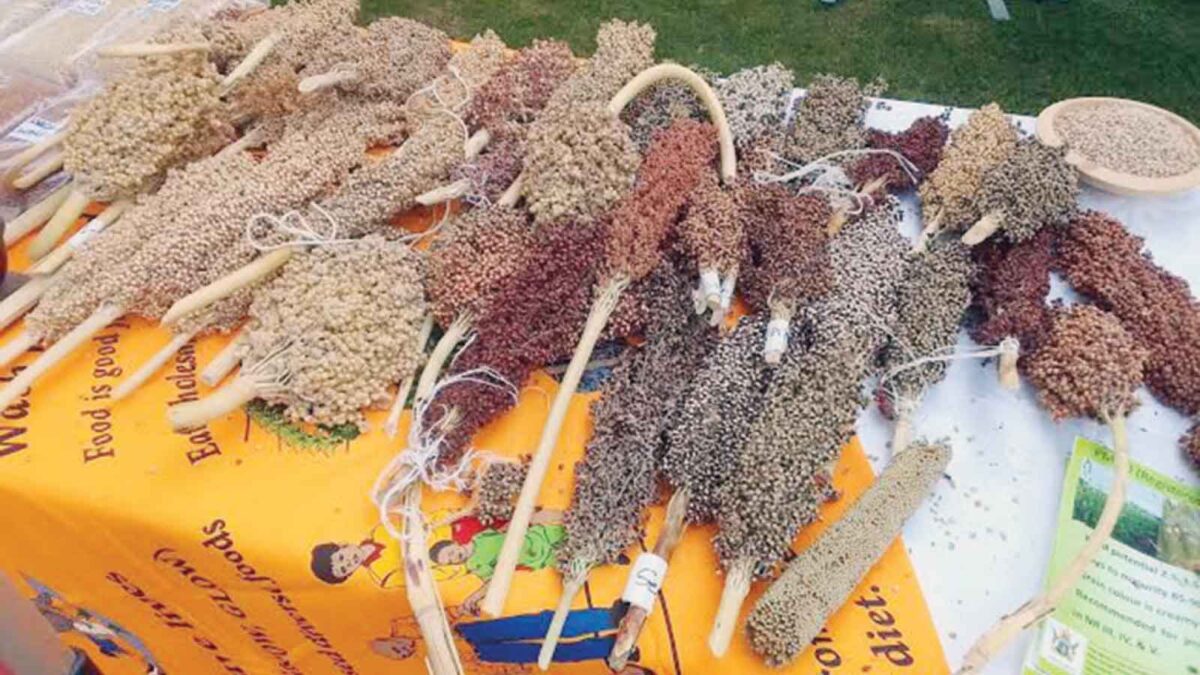
While maize remains our principal staple crop, farmers in drought-prone areas should seriously consider diversifying into traditional grains such as sorghum (mapfunde/amabele), pearl millet (mhunga/inyawuthi) and finger millet (zviyo/rukweza/uPhoko).
These crops offer an opportunity to reduce climate-related production risks, strengthen household food security and create new income streams.
The Government, through the Ministry of Agriculture, Mechanisation and Water Resources Development’s six-pillar drought mitigation strategy, is advancing a comprehensive response to the anticipated El Niño-induced drought conditions.
Central to this response is Pillar 2: Accelerated Climate-Smart Production, which emphasises the importance of climate-resilient agricultural practices, crop diversification and production systems suited to prevailing agro-ecological conditions.
Growing traditional grains such as sorghum, pearl millet and finger millet is, therefore, not merely a return to traditional farming, but a practical contribution to national efforts to strengthen food security and resilience.
Traditional grains: Small seeds, big resilience
Traditional grains are particularly well adapted to Zimbabwe’s drier agro-ecological regions, where rainfall is often limited and unreliable.
Compared with maize, sorghum and pearl millet generally have greater resilience to moisture stress, high temperatures and prolonged dry spells.
Their ability to maintain production under challenging conditions makes them valuable alternatives in areas where maize frequently suffers substantial yield losses.
Pearl millet, in particular, is well suited to hot, dry environments.
Its rapid early root development enables it to access soil moisture efficiently, while its ability to adjust growth under water stress supports survival and productivity during difficult seasons.
Sorghum also possesses several drought-adaptive characteristics, including the ability to reduce growth during moisture shortages and recover when conditions improve.
Finger millet, although generally requiring more rainfall than pearl millet, offers considerable advantages in suitable environments and is particularly valued for its nutritional qualities and storage characteristics.
Importantly, drought tolerance does not mean immunity to drought.
All crops require adequate moisture, especially during critical stages such as flowering and grain formation.
However, diversifying into traditional grains can reduce the likelihood of total crop failure when rainfall disappoints.
Nutritional powerhouses
The term small grains (traditional grains) refers primarily to the physical size of their seeds, not their nutritional value.
In fact, these crops are nutritional powerhouses capable of contributing significantly to healthier diets.
A comparison of selected nutrients per 100 g of grain illustrates their nutritional advantages to maize.
Sorghum and pearl millet generally provide more protein than maize, while pearl millet is particularly rich in iron.
Finger millet stands out for its exceptionally high calcium content, making it an important dietary source of this mineral, which supports healthy bones and teeth.
Traditional grains also contain dietary fibre and other micronutrients that contribute to a balanced diet.
Their incorporation into household meals can help improve dietary diversity and nutritional security, particularly where access to diverse foods is limited.
Unlocking value addition, new markets
The economic potential of traditional grains extends far beyond traditional household consumption.
Sorghum and millet can be processed into flour, breakfast cereals, snacks, biscuits, baked products, porridges and other convenient foods.
They also offer considerable opportunities in beverage production, including traditional fermented drinks, non-alcoholic nutritious beverages, malt products and brewing industries.
Zimbabwe’s established traditions of sorghum and millet processing provide a strong foundation for modern food innovation and commercialisation.
Emerging opportunities include improved packaging, fortified grain products, blended flours, ready-to-cook meals and health-conscious food products.
These innovations can stimulate rural enterprises, create employment and strengthen linkages between farmers, processors, retailers and consumers.
For farmers, this means that traditional grains should not simply be viewed as crops for household consumption during droughts.
They can become commercially valuable commodities with opportunities for reliable markets, improved producer incomes and rural economic development.
Growing traditional grains successfully
To realise these benefits, farmers must apply appropriate agronomic practices.
First, select improved, early maturing varieties suited to the local agro-ecological region and intended market.
Planting should be undertaken after the first effective rains, guided by local extension recommendations, rather than relying on isolated rainfall events.
Second, establish crops at recommended plant populations.
Typical seed rates are approximately 5-10 kg/ha for pearl millet, 7-12 kg/ha for sorghum and 5-10 kg/ha for finger millet, depending on variety, seed size and planting method.
Third, conserve available soil moisture through conservation agriculture, minimum tillage, mulching and timely weed control.
Traditional grains are particularly sensitive to weed competition during early establishment, and effective weed management is essential for achieving good yields.
Farmers should also apply fertilisers and organic amendments according to soil fertility requirements.
Drought tolerance does not eliminate the need for nutrients.
Crop rotation with legumes such as cowpeas, groundnuts and pigeon peas can further improve soil fertility and support sustainable production.
Finally, timely harvesting, proper drying and safe storage are critical to maintaining grain quality and reducing post-harvest losses.
A climate-smart investment
The El Niño forecast should not be viewed solely as a threat, but also as an opportunity to rethink our agricultural production systems.
Continued reliance on maize in environments where rainfall is increasingly unreliable exposes farmers and households to unnecessary production risks.
Growing traditional grains alongside maize offers a practical pathway towards greater resilience, improved nutrition and diversified agricultural income.
It also contributes to national efforts to strengthen food security and climate-smart agricultural production.
This season, let us look beyond maize.
Let us grow crops that are suited to our environments, nourish our families and create economic opportunities.
Traditional grains may have small seeds, but they offer big gains in climate resilience, food security and nutrition, and prosperity.
Dr Tariro Gwandu is head of the Agronomy Research Institute and a member of the Ministry of Agriculture’s Strategic Advisory Group.