Vusumuzi Dube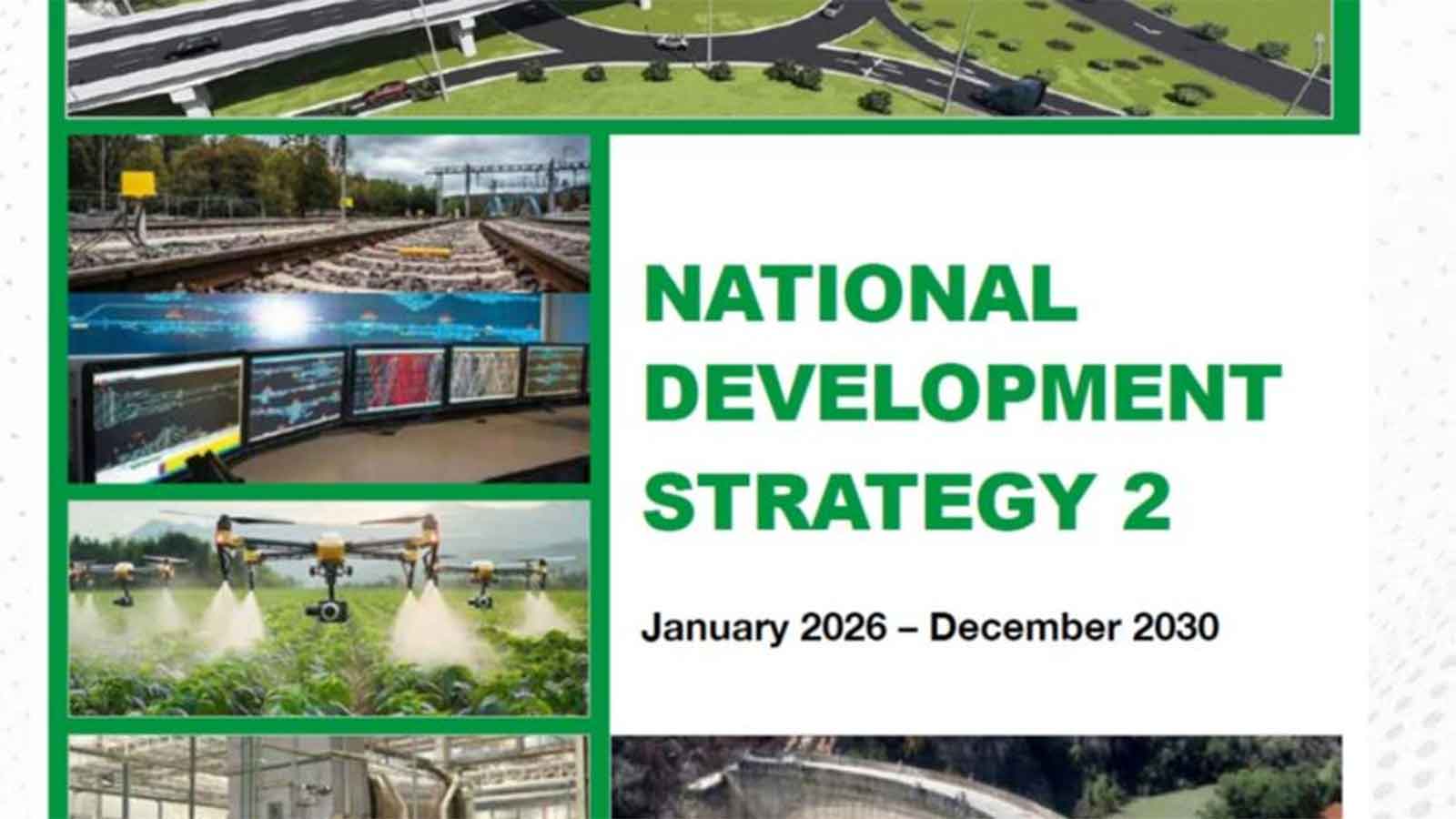
Farai Chigora
IN its breadth and ambition, the National Development Strategy 2 (NDS2) offers strong support for the expansion of Zimbabwe’s tourism sector, encouraging growth beyond any milestone previously recorded in the country’s history. This support is anchored in the provision of resources, advisory services, standards, incentives and clear guidelines aimed at ensuring sustainable operations that meet the expectations of both local and international tourists. NDS2 also goes further, shifting the focus from attraction-based tourism alone to one that emphasises revenue generation, accountability and reinvestment for long-term sectoral growth.
Within the same drive, the strategy has sought to close long-standing gaps created by misconceptions about Zimbabwe as a tourism destination, misconceptions from which the country is now steadily emerging as a globally recognised brand among the world’s best. As discussed previously, Zimbabwe has traditionally been perceived in key source markets as unsafe, limited in attractions beyond Victoria Falls, and poorly equipped in terms of tourism facilities. These narratives, often shaped by outdated or distorted information, hindered growth and confidence in the destination for years.
The transition into NDS2 has begun to reshape that narrative, particularly through targeted support for local tourism development. The Second Republic’s development trajectory is driven by the principle of leaving no one and no place behind, ensuring inclusivity across all demographics in national development initiatives. Special consideration has been given to youth, girls, young women, the elderly and persons living with disabilities, positioning tourism as a platform for shared growth.
As a cornerstone of socio economic well-being, the tourism industry is now undergoing rapid reconfiguration towards sustainability, offering tangible benefits to marginalised communities that were previously excluded from the value chain. Historically, exclusion was driven by limited access to capital, lack of technical skills and inadequate exposure to business opportunities within the sector. Under NDS2, these barriers are actively being addressed.
For decades, areas such as trophy hunting, hotel operations and travel services remained the preserve of a privileged few, largely determined by income level and access to capital. Marginalised potential tourism players were effectively locked out, with little opportunity to showcase ideas or grow as start-ups within the industry.
As a progressive outcome of NDS2, the landscape has shifted. Participation across the tourism value chain is now being opened to all, through a deliberate pro poor strategy aimed at eradicating poverty by promoting indigenous tourism business ownership and employment creation. This shift marks a fundamental change in how tourism is positioned as a development tool.
Inspired by the leadership of Tourism and Hospitality Industry Minister Barbara Rwodzi and the stewardship of tourism governing boards, the Second Republic’s turnaround has made tourism more accessible. Participation is no longer limited to those with substantial capital; even marginalised members of society can now engage meaningfully as tourists and entrepreneurs. Tourism is increasingly viewed as a viable business venture, even at a small scale.
Looking ahead, optimism is growing, particularly following the recent appointment of experienced and diverse boards at the Zimbabwe Tourism Authority and the Mosi Oa Tunya Development Company (Pvt) Ltd. These appointments bring together expertise aligned with a pro-poor philosophy in cultural heritage management, financial management, innovation, infrastructure development, hospitality and wildlife conservation. In this renewed environment, the potential for growth appears boundless.
Support for entrepreneurial ventures is clearly articulated within NDS2, with aspiring tourism operators encouraged to establish and manage their own enterprises. This encouragement is matched by institutional backing designed to turn ambition into sustainable enterprise.
Importantly, access to capital has been eased. Through targeted funding allocations, financing for tourism ventures has become more affordable and accessible, ensuring deeper inclusion of vulnerable and marginalised groups within the sector.
Complementing financial support is intellectual and skills based assistance aimed at enhancing practical knowledge in business operations and modelling. Training opportunities are available to all, regardless of prior educational attainment, ensuring that no potential entrepreneur is excluded due to background or academic history.
This support is delivered through specialised mentorship programmes run by Technical and Vocational Education and Training institutions, polytechnics, volunteers and government agencies. Institutions of higher and tertiary learning have also extended their reach into communities, offering expertise through community service initiatives that freely support aspiring tourism entrepreneurs at all levels.
Clear space has been created for indigenous tourism operators in areas such as gastronomy, where traditional dishes and beverages derived from indigenous fruits are finding new markets. Opportunities have also emerged in communal tour guiding, agri tourism, sports tourism, traditional dance and other cultural expressions.
Government’s decentralisation strategy has further strengthened local tourism management across districts and provinces. One of the defining pillars of NDS2, devolution has enabled local communities to unlock value from their own natural and cultural endowments with state support, transforming these assets into sustainable income sources.
This approach was recently exemplified when sports tourism initiatives were extended to Masvingo Province, which will host practice matches for the ICC Men’s Under-19 Cricket World Cup 2026 for the first time. The move represents a significant milestone in reconnecting grassroots communities with global sporting events, while promoting Great Zimbabwe alongside other under explored indigenous tourism products.
The integration of sports tourism goes beyond competition, contributing to the rebranding of Zimbabwe as a safe destination of first choice. In traditional markets such as the United States, England, Scotland and New Zealand, Zimbabwe is reclaiming its image, now confidently declaring that it is open for business, with sports tourism acting as a powerful catalyst.
Hosting global events across the country, particularly by indigenous tourism operators, is strongly supported by the Second Republic’s infrastructure development agenda under both NDS1 and NDS2.
Investments in roads, buildings and amenities have enabled local accommodation providers, travel services and resort operators to directly benefit as they host visitors and exchange experiences. It is no longer business as usual.
Even as Government provides a strong enabling framework for pro-poor tourism, local individuals and groups have a critical role to play in sustaining this progress. Development is a shared journey, and success depends on collective participation in this forward looking trajectory.
There remains a strong need for skills development through vocational training centres that offer practical, part-time short courses geared towards lifelong learning. Within local communities, mentors are available and willing to share knowledge, equipping aspiring operators with both soft and technical skills necessary for successful tourism enterprises.
Innovation must also define the approach of local players. Moving beyond traditional business practices allows entrepreneurs to fully exploit the support mechanisms offered through designated local hubs.
Marketing skills are particularly vital in positioning indigenous tourism businesses. Understanding the right platforms and tools to communicate a compelling tourism message is essential to attracting modern travellers.
Storytelling alone is no longer enough. Without strong audio visual support, efforts to showcase tourism products risk falling short. NDS2 recognises this, encouraging the use of accessible digital platforms to organically inform and attract tourists.
Equally important is the need for specialisation. Aspiring operators must identify specific products or services to offer, positioning themselves clearly within the tourism value chain rather than spreading efforts too thin. No one can do everything alone, but everyone can do something distinctive within the broader industry.
The tourism sector is a layered ecosystem of activities and opportunities. For those who identify a niche aligned with their strengths, the possibilities are vast. With the right focus, it becomes easier to establish oneself as a local provider within core divisions such as accommodation, travel and resorts, where, indeed, the sky is the limit.
Besides Government support in financial capitalisation, there is an equally pressing need for emerging local tourism players to embrace financial technology literacy as a foundation for sustainability. Many promising local tourism ventures fail to endure not because of a lack of demand, but because of weak financial management and the inability to reinvest earnings in ways that support growth and resilience.
It is also important to recognise that tourism operates within a global marketplace. To participate meaningfully, businesses must adopt digital financial systems capable of facilitating wire transfers, online payments and accurate reconciliation of returns. These systems are not optional extras; they are essential tools for business continuity in an industry where international transactions are the norm rather than the exception.
Ultimately, a carefully structured business model is critical for local tourism operators, as it outlines the key components required for progressive and sustainable growth. Such a model helps determine the resources that are needed, how they should be deployed and what must be maintained over time to ensure stability.
This structure also serves as a practical checklist, guiding both government support and self-monitoring from the inception of a tourism enterprise through to its maturity. Unfortunately, many local tourism operators have been found wanting in this regard, often entering the sector without clear frameworks to guide development.
These gaps connect directly to the broader issue of governance. Good governance has been identified as a core pillar of Environmental, Social and Governance (ESG) principles, and it must be embedded at grassroots level if a culture of sustainable responsibility is to take root as businesses grow. Governance is no longer simply about compliance; it is about gaining competitive advantage in an increasingly crowded space where micro, medium sized and large tourism operators co-exist.
As stakeholders, we must continually remind one another of the importance of a localised indigenous economy as a pathway to sustainable growth. Originality, authenticity and community-driven enterprise are central to rebranding the Zimbabwe tourism destination for the future, particularly through a pro-poor tourism model that prioritises inclusivity and shared prosperity.
*Dr Farai Chigora is a businessman and academic. He is a senior lecturer at Africa University’s College of Management and Business Sciences and a global business modelling practitioner. His doctoral research focused on Business Administration (Destination Marketing and Branding, Major, UKZN, SA). He is involved in agribusiness and consults for many companies in Zimbabwe and across Africa. He writes in his personal capacity and can be contacted at [email protected], www.fachip.co.zw, or +263772886871.



 Online Reporter