Chronicle Editor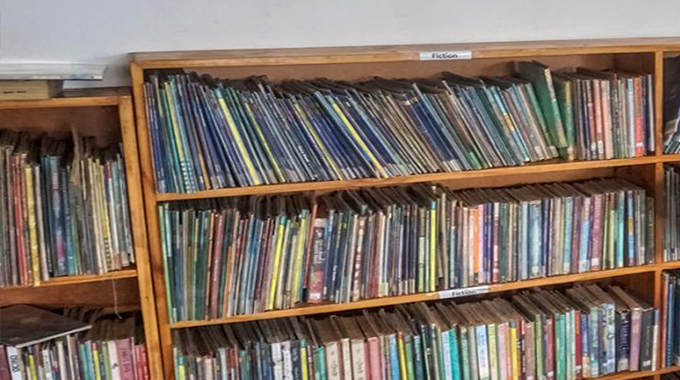
Jobert Ngwenya
In October 2018, I presented a mini-conference paper entitled, “Why I love My School Library”, as part of an event to celebrate school libraries. As a passionate advocate for education reform and a firm believer in the power of libraries, I was thrilled to share my vision for a school library that embraces the demands of the 21st century. Last week, I penned a piece that focused on the person of the school librarian in the face of technology and 21st century education. In this article, I will outline some of the key features of a Fourth Industrial Revolution library that caters to the needs of the modern learner, as initially presented during the said conference.
As I rightly stated last week, the 21st century has brought about significant changes in technology, transforming the way we access and interact with information. The Fourth Industrial Revolution has ushered in a new era of digitalisation, where learners are constantly connected to their devices and have access to a wealth of resources and peers from around the globe. To cater to this digital-native generation and to align with the competence-based curriculum, our school libraries must undergo a revolution of their own.
First and foremost, a model school library should provide a collaborative environment that encompasses both physical and virtual spaces. Traditional notions of a library as a quiet, solitary space need to be replaced with an atmosphere that fosters participatory learning. Special activity corners such as Children’s Corner, Author’s Corner, and Games Corner can engage learners in educational activities that promote creativity and collaboration. The transformation of school libraries into “active learning spaces” is a key aspect of this collaborative environment. While printed books remain important, library spaces should incorporate more open areas and common spaces that facilitate interaction between learners and teachers. By creating, sharing, and collaborating, learners can develop essential 21st century skills and construct new knowledge together.
Digital technologies play a crucial role in meeting the needs of the 21st century learner. Given that learners today are digital citizens deeply immersed in the digital realm, it is essential to reach out to them in their own environment. Digital libraries, consisting of digital objects in various formats, provide easy access to information and offer features such as word search capabilities that enhance the speed and efficiency of information retrieval. In an ideal digital library, information could be accessed as texts, images, videos, audio and through the use of virtual reality, mixed reality, and augmented reality among other emergent technologies. Needless to say, this provides more learning opportunities that meet different learner needs.
The advantages of digital libraries extend beyond accessibility. They can transcend physical boundaries, allowing for round-the-clock access and multiple users simultaneously. Furthermore, digital libraries can provide links to other digital resources, fostering a network of interconnected knowledge. Installing digital devices such as televisions, gaming devices, audiovisual equipment and extended reality within the library can encourage content creation, global networking, and inclusive learning for learners with different abilities.
Creating a participatory learning community is another critical aspect of a 21st century school library. This approach involves actively engaging learners in knowledge building and learning, allowing them to take part in the construction of their own education. The library can facilitate team-based learning, encouraging long-term commitment, trust, and collaboration among students. Through team-based learning, learners develop more positive attitudes toward the subject matter and experience greater interest and engagement. Knowledge is not only inquired for the sake of summation assessments but through socially constructed experiences, deeper learning is achieved.
Resource persons, such as experts from various fields, can also play a significant role in enriching the learning experience in our school and even public libraries. Library visits from professionals serve as valuable teaching tools, providing learners with real-world examples and making community institutions more familiar. These resource persons can provide additional content support and foster civic skills and active participation in learners. Through these activities historians, businesspeople, lawyers, medical professionals, civic leaders and leaders of various community-based organisations can be part of the student’s learning experiences in schools. Within this context, the concept of “human libraries” comes to mind. Human libraries are events or initiatives where people act as “books” that can be “borrowed” by others to have a conversation with. The “books” are people with various experiences such as discrimination, prejudice, or stereotypes based on their identity or background, such as their race, religion, or profession. The goal of human libraries is to promote empathy, understanding, and dialogue between people from different backgrounds and to challenge stereotypes and prejudices.
However, a digital library is only as effective as the staff that manages it. A professional and knowledgeable team is essential to ensure the library’s success. This team may include a head librarian, a reading specialist, a curriculum specialist, a technology integration expert, and a learner counsellor. These individuals should be equipped with the skills to serve as digital leaders, innovators, and resources for learners and teachers alike. They should continuously update their knowledge by attending workshops and conferences, keeping pace with the latest technological trends.
It is disheartening to witness the ever-growing divide between rural and urban areas when it comes to access to, and quality of school libraries. While some “elite” urban communities have tried to adapt to the digital revolution and transform their libraries, many low income urban communities and most rural areas are left behind, grappling with limited resources and outdated facilities, if at all there’s any such facilities. This neglect not only hampers the educational opportunities of learners in these communities but also perpetuates the cycle of inequality. It is high time that the powers that be, recognise the importance of equitable access to information and take concrete actions to bridge this gap.
Adequate funding, infrastructure development, and targeted support are needed to empower rural communities and other low income communities to ensure that their libraries become vibrant centres of knowledge and opportunity. Without such intervention, we risk further marginalising those who are already disadvantaged, hindering their educational growth and limiting their future prospects. Let us prioritise the construction and transformation of rural libraries, recognising their potential to empower individuals, strengthen communities, and bridge the gap between rural and urban areas.
As we embrace the demands of the 21st century, our school libraries must transform into vibrant spaces that cater to the needs of the digital-native learner, breaking the traditional boundaries and embracing the wider world of people, places, and ideas. The school library must adapt to these changing needs by transforming its physical space and design. By incorporating digital technologies, fostering collaborative and participatory learning environments, and providing responsive and skilled staff, the school library becomes a central hub for digital teaching, research, and lifelong learning.
λ Jobert Ngwenya is an award winning educator, Fulbright TEA Fellow, National Geographic Education Grantee, Citizenship Diplomacy Action Fund grantee, author, and academic audio content creator. He holds a Master of Arts in Development Studies (MSU) Bachelor of Arts (UZ) and Post Graduate Diploma in Education (ZOU). He can be contacted by email on [email protected]



 Online Reporter