

 admin
admin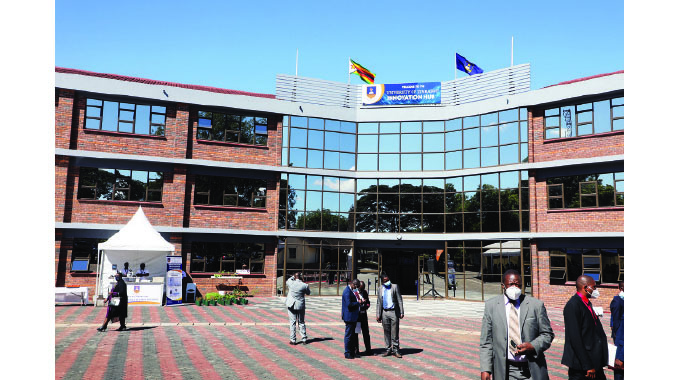
Sifelani Tsiko-The Interview
President Mnangagwa recently toured the University of Zimbabwe innovation and industrial hub and the agro-industrial park at its farm near Mazowe. The hubs are now seen as an important vehicle for finding solutions to the country’s pressing problems as well as the attainment of the country’s economic blue-print National Development Strategy 1. In this report, Sifelani Tsiko (ST), Agric, Environment & Innovations Editor speaks to University of Zimbabwe Vice – Chancellor Prof Paul Mapfumo (PM) on innovation issues at the institution.
ST: Innovation hubs and industrial parks are being developed in various universities in the country bringing hope to the country. How do you feel about the development of these institutions? What does the visit by the President to the UZ mean to you and the institution?
PM: The visit by His Excellency the President of the Republic of Zimbabwe and Chancellor of the University of Zimbabwe Cde Emmerson Dambudzo Mnangagwa and his Cabinet is historical and unprecedented. It will forever in the history of higher and tertiary education in Zimbabwe and in Africa’s global context remain a bold statement by the President on his vision and focus in the creation of a knowledge-driven economy. Nationally, and in particular to the University of Zimbabwe, the visit is a reference point on the political will that we have and President Mnangagwa’s commitment to the development of Innovation Hubs and Industrial Parks in the country. This lays a solid foundation of Government’s Heritage-based Education 5.0 Philosophy and policy. Notably, and quite critically, the visit by the President and his Cabinet gives the University of Zimbabwe the confidence that we have taken the right trajectory in our transformation to an Education 5.0 institution, and that the University is now well positioned to provide an anchor for innovation and industrialization of the country.
ST: Can you tell us briefly how the hubs work and also clarify what work hubs do for young university technology entrepreneurs?
PM: The University of Zimbabwe is building a “Research — Innovation — Industrialisation Ecosystem” that opens diverse opportunities for students, senior researchers and our partners and stakeholders in industry and commerce, including small to medium enterprise managers, to produce priority goods and services for the country.
The University of Zimbabwe Innovation Hub operations are currently underpinned by three Flagship Programmes. The Graduate Innovator Programme: Student research at faculty/institute level generate problem-driven innovative ideas that are tested and proven.
Outstanding projects are granted Innovation Hub status. Future Grains for Africa Programme. This brings Masters and Doctoral students and their supervisors into the Innovation Hub to develop new products, technologies and value chains out of traditional grains, especially rukweza, mapfunde and mhunga. The Heritage for Innovation and Development Programme — this draws from the rich diversity of indigenous/local knowledge systems and analysis of key historical events that inform and directs relevant research and innovation processes in our development. The major outputs of the Innovation Hub include the following: Prototypes that can be readily commercialised and create opportunities for new businesses and industries. Start-Up companies — innovators equipped with unique knowledge (knowhow) and skills — the “new breed” of entrepreneurs, experts and/or specialists. New value chains — new business and service models for industry, commerce and society.
ST: How does the agro-industrial work and what role is it going to play in the economy?
PM: The Industrial Parks provide for business incubation for young entrepreneurs, as well as support establishment of uniquely designed strategic industrial models.
To the young entrepreneurs and Start-Up companies, the Industrial Parks provide space, equipment, technical, financial management and legal services. The major role of these Industrial Parks is to seed or cause industry, seed companies and contribute significantly to the attainment of Vision 2030.
ST: Lack of resources and research funding are huge handicaps to the operations of the hubs and industrial parks. Does the UZ have adequate resources for these institutions? How much have you received and what amounts could be adequate to get them running?
PM: The development of innovations into usable products and services is capital intensive that’s for sure. There is no substitute for direct and meaningful investment into research and innovation by our Government and private sector if the country is to develop and realise its Vision (2030).
I want to acknowledge and applaud the President and Chancellor and his Government through our parent Ministry of Higher and Tertiary Education Innovation Science and Technology Development for supporting our research and innovation processes by funding both the infrastructure development and the research operations.
Millions of dollars have already been invested to kick start our Innovation Hub and Industrial Park and this is a first in the history of the University of Zimbabwe. The private sector is beginning to open up, with the positive results we are getting on the ground, they will find value for their investment.
ST: Does the UZ have any major innovations that have the potential to have a positive impact on the country’s socio – economic development? Can you name briefly some of the groundbreaking innovations that the UZ has for our readers to appreciate the role of hubs and industrial parks?
PM: The university has several innovations that have potential to positively alter the course of the country’s social economic development. These are spread across the areas of agriculture and nutrition, complementary medicines and pharmaceuticals, sanitisers and PPEs production, and ICT services.
ST: What role does the government, donors, policymakers, industry and other partners play in the successful transformation of the innovation hubs and industrial parks?
PM: The Education 5.0 policy opens the door for universities to work closely with government, donors, policymakers, industry and other partners. This is particularly so in our new programmatic approach to teaching and learning, research and innovation and industrialisation efforts. They now have more opportunities to participate, add value to and also derive value from the university’s business model. For example, our diverse partners can now play an integral role in the development of products and services from ideation, through prototyping in the Innovation Hub, to commercialisation.
ST: Management and commercialisation of outputs is critical for the hubs and industrial parks. How do you intend to realise this?
The University of Zimbabwe has instituted a Research and Innovation Directorate responsible for driving research and innovation throughout the institution. Models have been developed to ensure the successful management and commercialization of the products and services that are now emerging.
ST: Looking ahead, how do you see the hubs and industrial parks moving in the coming 5 to 10 years?
PM: With the successful implementation of our University of Zimbabwe Strategic Plan (2019-2025) now well on course, we envisage that the institution will be able to consolidate and advance its model of operationalising Innovation Hubs and Industrial Parks to sophisticated levels of efficiency, inclusiveness and productivity, and generating the desired breadth and depth of their impact to the lives of our people.



 Online Reporter