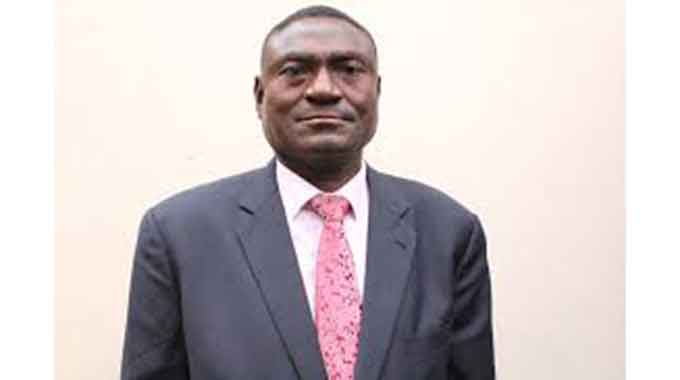
Vusumuzi Dube
IN many education systems, subject specialisation is often associated with high school, where teachers focus on specific disciplines such as Mathematics, English or Science.
However, this model should not be confined to secondary education alone. There is growing evidence and practical experience showing that subject specialisation can be highly beneficial at primary school level as well.
Traditionally, primary school teachers are generalists, responsible for teaching all subjects. While this approach promotes flexibility, it can limit depth of content delivery. Introducing subject specialisation at primary level where a teacher focuses on specific subjects like English, Mathematics or Science can significantly enhance the quality of education.
This model can be practically implemented in upper primary classes. For example, from Grade Five, Six and Seven, schools can begin to assign teachers to specialise in particular subjects. At this stage, learners are preparing for national examinations and require deeper understanding and stronger academic support. Having specialised teachers in these grades ensures that learners receive focused, high-quality instruction at a critical stage of their education.
One of the key advantages of specialisation is subject mastery. When teachers focus on a limited number of subjects, they develop deeper understanding, stronger content knowledge and greater confidence in delivery. This naturally translates into clearer explanations, better examples and more effective teaching strategies in the classroom.
Closely linked to mastery is improved learner performance. Learners benefit from teachers who are highly skilled and knowledgeable in their subjects. This often leads to better comprehension, improved academic results and ultimately higher pass rates. A specialised teacher is more likely to identify learning gaps early and provide targeted interventions.
Another important benefit is enhanced lesson preparation and delivery. Teachers, who specialise can dedicate more time to planning, researching and refining their lessons. This leads to more engaging, structured and impactful learning experiences. Lessons become more dynamic, with better use of teaching aids, practical activities and real-life applications.
Subject specialisation also promotes professional growth and accountability. Teachers become experts in their fields, continuously improving their knowledge and skills. It becomes easier for school leaders to monitor performance, provide support and ensure quality standards in specific subjects.
Furthermore, specialisation encourages consistency in teaching and assessment. When one teacher handles a subject across different classes, there is uniformity in content coverage, teaching methods and evaluation standards. This ensures fairness and improves overall academic coherence within the school.
It also helps in efficient use of resources. Teaching aids, textbooks and learning materials can be better managed and utilised when aligned with specialised teaching roles. Schools can invest strategically in subject-specific resources, leading to richer learning environments.
Importantly, subject specialisation can improve teacher motivation and job satisfaction. Teachers are more likely to enjoy teaching subjects they are passionate about and confident in. This positive attitude reflects in their teaching and impacts learners in a meaningful way.
However, for this approach to succeed, proper planning is essential. Schools must ensure balanced timetabling, collaboration among teachers and ongoing professional development. Specialisation should complement not replace the holistic nature of primary education.
In conclusion, subject specialisation at primary school level is not just a possibility it is a progressive step towards improving education quality. Starting from Grades Five, Six and Seven, schools can gradually implement this model to strengthen both teaching and learning. By embracing this approach, schools can nurture both teacher excellence and learner success, laying a stronger academic foundation for the future.
Dr Manners Msongelwa is an author, teacher and youth coach. He can be contacted on +263 77 101 9392


 Online Reporter