Chronicle Editor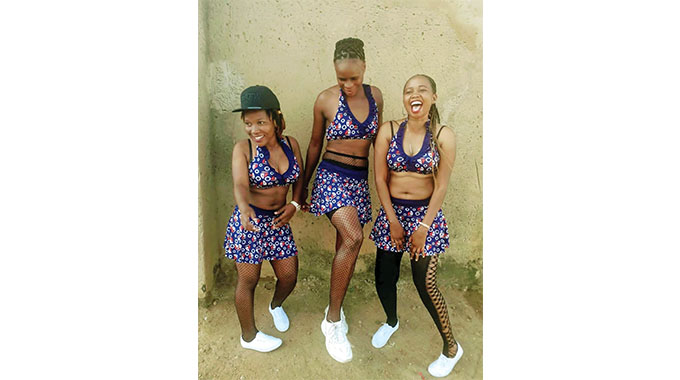
Mkhululi Ncube, Showbiz Reporter
Rhumba music has remained the patriarchal beat which relegates women to the lightweight role of dancing and stage cheering while men strum the guitars.
From Ndux Malax to the days of Ndolwane Super Sounds and others, women have not been part of the glitz and glamour of the genre.
Could it be that rhumba is more dominant in rural areas where the conservative culture and traditionalists frown on women who are into guitars or is it because we are a male chauvinistic society where “umfazi” has her role and in rhumba, it is clearly to dance and nothing else.
A rhumba fan, Mthokozisi Moyo, said very few families support their “girl-child” to venture into rhumba music.
“The journey to being a rhumba maestro is a male-guided one. In my view, it happens across very difficult and dangerous terrains as it involves moving from one place to another. This makes it very a difficult or ‘socially unacceptable’ undertaking for most women,” Moyo said.
He said because some of the music shows are held at places like bars and stadiums at night, very few parents can allow their daughters to go there.
Another fan, Greatman Nkomo said women usually join bands when they are adults and their role is basically to feminise dance.
He said he feels women are brought into the band to attract men to watch the bands, more than anything else.
ZBC Radio Zimbabwe producer and presenter, Newman Xaba said rhumba music seems to present a challenge for women.
“Women seem to be comfortable with gospel music where the dancing is not that tiresome and there is decency. There is a difference when people dance to gospel music as opposed to rhumba. Rhumba music presents a challenge to female artistes in that regard,” he said.
Xaba said in his two decades in the music industry, he has never come across a lady who is a lead vocalist of a rhumba outfit.
Former National FM and now Khulumani FM producer and presenter, Maria Nombulelo Masoka, said rhumba music is popular in bars and clubs which are male-dominated.
“There’s only one lady that I came across who does rhumba and her name Lady Zinhle. The music is okay, but it’s not up there that you can compare it with her male counterparts,” she said.
Masoka said the problem could be emanating from the fact that in the traditional set up, society confined women to the home. She said those who ventured into music were given tags and viewed as loose hence many women found themselves being pushed to do gospel music which is viewed differently.

“There is certainly room for women to sing rhumba music as it is at the moment dominated by men. There must be competition so that the genre grows,” she said.
Masoka bemoaned lack of good producers who can understand and assist aspiring female rhumba musicians saying the majority are just interested in money and not a good product.
She also urged women who want to partake in the genre to learn how to play the guitar as this will give them room to influence their music.
Respected rhumba artiste, Madalaboy said women have not taken up the genre because they cannot meet its demands.
“Rhumba requires a lot of artistry as one has to create everything from scratch so that it lasts in the hearts and minds of the people. This is unlike other music genres like gospel where you can extract text from the Bible, something that is already there.
“With all due respect to our women, I feel they cannot meet the demands and intricacies of rhumba music,” Madalaboy said.
There are however, women who are creating a revolution and breaking new ground by venturing into this male-dominated genre. One of these is Faith Ayibophe “Slender” Mlotshwa who fronts Amavika Nkani band. Her only undoing at the moment though is that she also sings disco music under another name, Express Girls.
Slender who comes from Ntoli Village in Bulilima District said she has been doing music for a long time, working with rhumba bands as well.
“I started music at a young age and worked with Themba “Boyoyo” Mathe, Mxolisi “Mr Bones” Nldovu, Abafana BakaMlotshwa, Tsheba Boys and Alois Zibani who is the one who introduced me to the studio. I later formed my own band in 2016 and sing rhumba and disco music.
“I have a six-track rhumba album titled Abafana Bama Soviet and in the coming months, I’ll be producing another one titled Banginyathel’izithende,” she said.
Slender, however, said she has received more airplay from national radio stations for her disco songs compared to her rhumba music. She said this confirms that even DJs are not yet ready to embrace female rhumba musicians.
“It’s very difficult to be a female musician and worse a rhumba one because people call us names. I have learnt to be strong hence I continue to sing rhumba despite this negativity. The reception of my first rhumba album was good and it was men mostly who loved it,” she said.
Slender said she has performed live on stage even though she feared being pelted with cans.
Rhumba musician, Clement Magwaza is introducing his wife Pah Magwaza to the genre and already she has two albums to her name.
Pah said it has been a long-cherished dream for her to venture into rhumba music.
“It’s not common for women to sing rhumba but I deliberated on the issue with my husband and we agreed that we needed to change this narrative. So far, I’ve two albums. The first was Imini Iyeza in 2017 and last year I released AmaThalenta Ethu,” Pah said.
She said she is composing the songs with assistance from her husband.
Pah said she hopes her venture into rhumba music will inspire other women to join.
“I’ve done a number of shows here, in Botswana and South Africa. I wish we could get more gigs at big music events like festivals as we’re very good on stage just like my husband and his team.”
Pah said in order to motivate women to sing Rhumba, organisers of music awards should come up with awards for female Rhumba musicians. – @themkhust



 Online Reporter