admin
admin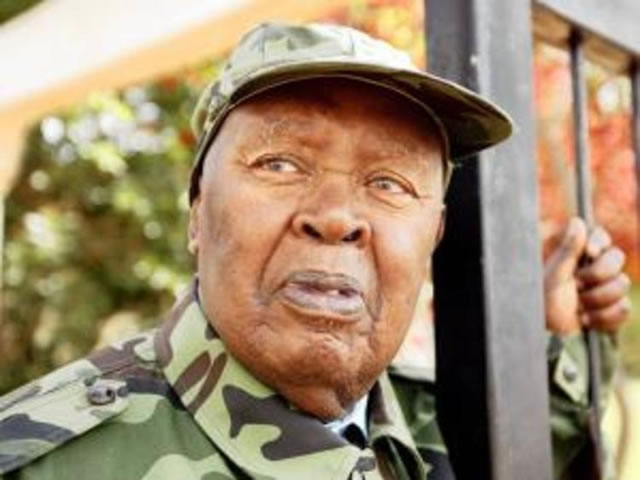

Dr Gatsha Mazithulela
It was my privilege to have the opportunity to grow up in a household in Bulawayo which hosted a South African guerilla of uMkhonto WeSizwe.
I think my immediate politicisation beyond the simplicity of understanding that we often had South African guerillas at home was why they had to be in Zimbabwe. When I asked, Tata Ike, a guerilla that stayed with us for some time under cover of being a cattle hand, why his unit was called the Luthuli Detachment and what it was doing in Zimbabwe, his answer was simple.
He said, “Chief Albert Luthuli was born just outside Bulawayo at Solusi Mission. He later became the greatest president of the African National Congress (ANC) in South Africa and when we entered Rhodesia, to start the armed struggle, Oliver Tambo named us the Luthuli Detachment just before we crossed the Zambezi, for we were treading into Luthuli’s birth place”.
I was stunned. I am still stunned. What would the xenophobic people say about this in Johannesburg? Sometimes when I look at Luthuli House in Johannesburg, the headquarters of the ANC and ponder about how fate places a boy born in Solusi, Zimbabwe, to become the ANC President in South Africa, inspire an invasion of Rhodesia by South African guerillas, win the Nobel Prize, and lead to my early political education under General Isaac Lesibe Maphoto, Order of Luthuli, while we were herding cattle in Norwood.
Since today is Heroes Day, a time when the political link between South Africa and Zimbabwe are at their highest, I want to share with you the story of “The General” or simply as Ike as he is fondly known in uMkhonto weSizwe circles up to today. If he was not ailing in bed, I would accompany him to that unassuming crossing point of the Luthuli Detachment 15km east of Victoria Falls.
Ike joined the ANC in 1952 and his political activities culminated in him leaving the country in 1961 as a result of the clamping down of political expression in South Africa. He was one of the first volunteers of the military wing of the ANC, uMkhonto weSizwe (MK), to leave for Botswana and eventually to the founding of the first ANC refugee camps in Tanzania. In 1962, he was awarded a study scholarship to Lebanon but instead heeded the call by MK for volunteers to take up arms against the then racist South African Government.
This was a path that would lead him to a death sentence in Rhodesia, later commuted to life in prison, without the possibility of release. He spent 13 years at Khami Maximum Security Prison and was only released after Zimbabwe’s independence by our new government.
Military training facilities secured by the ANC were in Egypt, Algeria, Tunisia and Morocco, but it soon became clear that the training offered was inadequate. Therefore, in about August 1963, Ike Maphoto and others were selected for advanced military training in the Soviet Union. Further, he was selected to be the commissar of this group of recruits that was to train in Odessa Ukraine, where they arrived on the 10th of October 1963.
Their journey from Tanzania had led them by truck from Dar-es-Salaam via Nairobi, through Kampala then Juba in Southern Sudan, where by ferry they went to Corsica then by train to Khartoum. The reason for the complicated route was burgeoning Cold War politics involving the landing of Soviet military aircraft in Africa.
The Maphoto group was trained in urban guerilla warfare including handling of all weapons from pistols up to machine guns, as well as in the making of homemade explosives. Advanced training was received in infantry war formations, communication, engineering, commanding units, artillery pieces and specialised political tutelage.
In 1964 the group was enlarged with the addition of Max Sisulu (current speaker of Parliament of South Africa), Patrick Molawa (ANCYL president at the time), Moses Mabhida (national commissar at the time, Ronnie Kassrils (former minister). The commander-in-chief at the time was Joe Modise (former and late minister of defence)
With training complete, Ike Maphoto and the rest of the group moved to Kongwa, Tanzania, where they camped with the Zimbabwe People’s Revolutionary Army (Zipra), the military wing of the Zimbabwe African People’s Union (Zapu) under Joshua Nkomo (late Vice-President of Zimbabwe), Frelimo (led by Samora Machel), and Swapo (led by Sam Nujoma).
However, there was a significant problem in finding the most suitable route to launch military attacks on South Africa.
Initially, the Bechuanaland route seemed to be the obvious choice, having served since the formation of MK in 1961 as a major route both for ANC members leaving the country for military training, and for returning guerillas. Since independence in 1966, however, Botswana came under sustained pressure from the South African government to stop its territory being used as a conduit by members of the ANC and other liberation movements.
As a result, the government of Botswana was placed in an invidious position. It could not afford to be accused of harbouring “terrorists” whose aim was to overthrow the governments of its powerful neighbouring states, for fear of antagonising them, but at the same time, the newly independent country had to appear supportive of the struggle for liberation by fellow Africans.
Economic factors played an important role in determining Botswana’s position. The country relied heavily on the Rhodesia-South Africa railway line; the custom tariffs it enjoyed from the two countries were favourable; and migrant labourers from Botswana worked on South African mines. Unlike other countries in southern and Central Africa, Botswana had no option but to cooperate with its white-ruled neighbours for the sake of economic survival.
The country thus adopted a policy of granting asylum only to political refugees, not members of the liberation movement’s military wings. Despite this, however, the Botswana route was the only viable option for the ANC at the time.
Early attempts to infiltrate guerillas through Botswana in 1966 and 1967 failed, largely due to the vigilance of Botswana’s own security forces. The Botswana police made other arrests in 1966, including nine insurgents – two MK and the rest members of Zipra, who had crossed the border on 26 September 1966. They were declared prohibited immigrants and deported to Zambia on 25 October of the same year.
In an official statement two days later, the Botswana government stated that:
“We will not permit Botswana to be used as a base, overtly or covertly, for violent operations against neighbouring states, however unacceptable to Botswana the policies of those states might be. Although the government of Botswana has on this occasion returned the men concerned to Zambia, the government wishes it to be clearly understood that if, in future, any more armed aliens whose purpose appears to be to commit acts of violence against neighbouring states are discovered in Botswana, they will be more severely dealt with.”
The leadership of the liberation movements did not take the warning seriously and on 28 February 1967, the Botswana police clashed with 10 Swapo guerillas near Saronga on the Caprivi-Botswana border. The guerillas managed to escape, but had to leave their weapons, ammunition, medical supplies and food behind. The Botswana government was incensed, and doubled the size of its crack mobile police unit, which at the time had 750 members.
Reservations
Meanwhile, Ike Maphoto and the cadres in the MK camps were expressing their reservations about the Botswana route because they were reluctant to get involved in a fight against the newly independent country’s security forces.
This, together with the failure of the 1966 infiltration operations and the treatment of other insurgents by the Botswana police, convinced the ANC that alternative routes had to be found by which guerillas could return to South Africa.
In May 1967, a group of MK cadres led by Josiah Jele was sent to northern Mozambique to investigate potential infiltration routes. According to Jele, pressure from the MK cadres like Ike Maphoto forced the ANC leadership to explore every possibility for sending guerillas back to South Africa, including a route through South West Africa (now Namibia), even though Swapo considered that impossible in the light of escalating armed conflict in the region.
Jele’s unit was to seek a passage via Mozambique to the north-eastern corner of South Africa. Joachim Chissano, chief representative in Tanzania of Frelimo, briefed Jele and his unit prior to departure about liberated zones, semi-liberated areas and dangerous terrain in his country.
The MK cadres were driven in a vehicle from Dar es-Salaam to the Frelimo camp at Netzingwe, near the border with Mozambique, where they met Samora Machel, the Frelimo commander. He brought them up to date on the situation in the war zone and accompanied them to the crossing point on the Rovuma River, where they entered the Niasa province and linked up with Frelimo soldiers under the command of Amando Pangwene.
It was a five-day walk through the bush to the nearest guerilla base, and on the way, a Portuguese aircraft attacked them, but none of the MK cadres were wounded.
Liberated
It soon became clear that MK would not be able to reach South Africa through Mozambique, as the southern provinces, which bordered on South Africa, had not yet been liberated. Nor were the Mozambicans in the south sufficiently politicised to offer the logistical support MK cadres would need in order to survive. Jele and his men used their time in Mozambique well, however, observing the organisation and strategy of Frelimo and gaining permission to take part in some operations in order to gain field experience.
During their six-week stay, they visited several Frelimo bases, some located deep inside those parts of Mozambique in which the Portuguese forces held sway. After a hazardous journey back to Tanzania, the unit briefed the ANC leadership about the mission.
Impracticable
Another attempt later that year also failed when an MK unit had to return to Tanzania after spending five weeks in the Cabo-Delgado district. The ANC leadership decided that infiltration through Mozambique was impracticable. MK soldiers would have had to cross hundreds of kilometres of territory controlled by the Portuguese forces, and their inability to speak the local language would have vastly added to the possibility of discovery.
The only practical route that remained was through white-held Rhodesia, as Zimbabwe was known before Independence in 1980.
The idea of a military alliance between the ANC and Zapu, first mooted in 1966, was supported by the governments of both Tanzania and Zambia. An alliance between the ANC and Zapu was a natural development, given the similarities of the white minority regimes they opposed.
Oliver Tambo described the alliance as follows:
“We have had close political relations with Zapu and these developed into relations at the military level until we were in a position to fight together. We are facing a common enemy, fighting for a common purpose, hence a combined force for a common onslaught against the enemy at every point of our encounter as we march down for the liberation of our respective countries”.
The ANC leadership saw Rhodesia as the most suitable infiltration route because of common political, cultural, religious and linguistic ties. As the language spoken in Matabeleland was similar to Zulu and Xhosa, the South African guerillas would be able to communicate with the local population and gain assistance from them while in transit.
Venda, a South African language spoken mainly in the far northern province of Limpopo, is similar to Shona and made communication between Shona-speaking Zapu cadres and their MK colleagues easier.
Alliance
The Khezi, Plumtree and Gwanda areas in the far south west of Rhodesia had seTswana speaking communities which were an obvious choice in this matter.
According to James April, the first indication of an ANC/Zapu alliance came from a speech by JB Marks in late 1966, when he suggested that southern Africa was one region, and that the various liberation movements in the region should therefore wage one struggle.
The enemy forces — South African, Rhodesian and Portuguese — were reinforcing one another, Marks argued, and the liberation movements should therefore cooperate and stand together as well.
Eric Mtshali, MK’s chief of personnel at the time, recalled that a meeting was held in Zambia to discuss a joint operation with Zapu, prompted by the fact that Zipra had begun to engage the Rhodesian forces militarily, and the ANC saw this as an opportune moment to set up an infiltration route for MK.
Senior ANC leaders, including Tambo, Duma Nokwe (secretary general), Moses Kotane (treasurer general), Tennyson Makiwane, Moses Mabhida and JB Marks, travelled from Tanzania for the meeting, which was marked by tension and took an entire day.
At about 5 pm Tambo, who had done most of the talking until then, turned to Mabhida and said: “All of us have spoken today, Moses, but you have not said a word. What is your view on the matter?”
Mabhida said just one word: “Mayihlome!” (Arm and prepare yourself for attack!). Later, Tambo requested Joe Modise to accompany him to Kongwa to explain the mission to the soldiers. Ike Maphoto and others were ordered that their task was to open the route to South Africa via Rhodesia for MK, as part of a joint campaign with Zipra.
Following Rhodesian Prime Minister Ian Smith’s Unilateral Declaration of Independence (UDI) from Britain on 11 November 1965, opposition to his white minority regime increased, and many Africans left the country to seek military training abroad. As Smith’s rebel regime was not recognised by Britain or the United Nations, independent African states had no qualms about assisting freedom fighters who sought to overthrow the Rhodesian government. The MK and Zipra military high command moved to the Zipra camp outside Lusaka, Zambia to start planning a coordinated attack on Rhodesia as it was realised that to liberate South Africa, Rhodesia had to be independent.
Ammunition
Tambo and James Chikerema, the head of Zapu in exile, directed the political level, while Joe Modise (MK commander), Akim Ndlovu (Zipra commander), Archie Sibeko (Zola Zembe, MK chief of operations), Dabengwa (Zapu chief of intelligence), Mjojo (General Tshali, MK chief of staff), Walter Mavuso (Mavuso Msimang, MK chief of communications) and Chris Hani (MK commissar) assumed responsibility at the military level for personnel, reconnaissance, intelligence and logistics.
The latter involved the acquisition of ammunition and food supplies for the mission, as well as the means to transport them. Intelligence was left to Zapu, due to their knowledge of the terrain and its people.
Zapu also undertook to conduct an awareness campaign in the area of the proposed operation so as to ensure a good reception for the MK guerillas by local residents.
Modise and Joe Matthews began to assemble the MK fighting units. For the attack of the western front of Rhodesia, Chris Hani was to be the commissar, while John Dube of Zipra would command the joint MK and Zipra units.
For the attack on the eastern front, the group included Ike Maphoto and was led by a Zipra commander Moffat Hadebe and this group included Joe Modise, Dumiso Dabengwa, Report Mphoko (current Zimbabwe High Commissioner to South Africa).


 Online Reporter