Online Reporter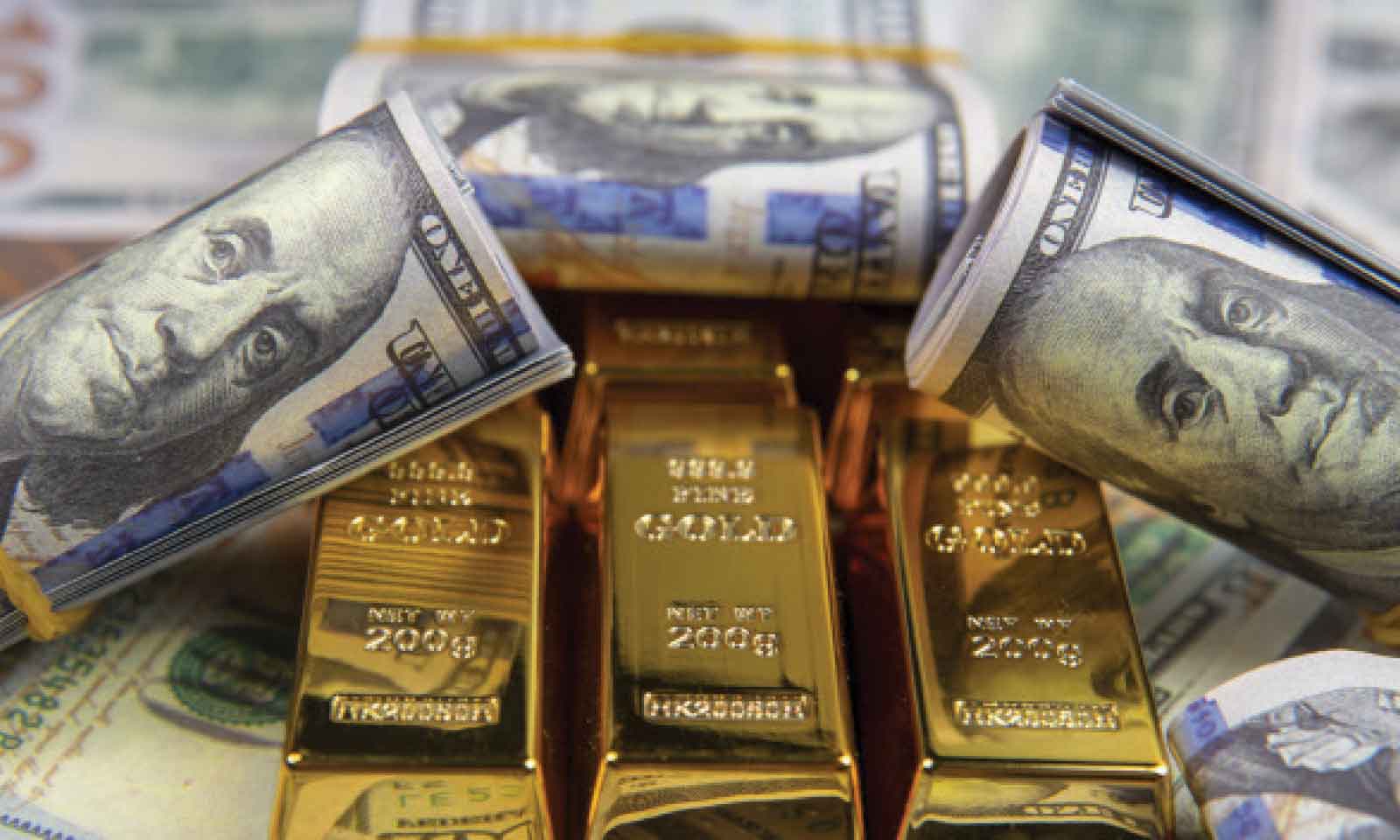
Henry Johnston
The odd convergence of a focus on sanctions risk as opposed to the fraying economic foundation of dollar hegemony serves the interests of both sides of the geopolitical divide
There is a strange paradox at the heart of the whole de-dollarisation trend. Both the BRICS upstarts seeking alternatives to the dollar and the aging hegemony trying to forestall this process have, at least officially, coalesced around a similar but not entirely accurate narrative: that the gradual pivot away from the dollar is primarily driven by Washington’s weaponisation of its currency.
The sanctions on Russia in 2022 certainly did mark the definitive moment when Washington gave up on any notion of being the benevolent custodians of the global dollar system and decided to use it instead as a bludgeon against geopolitical adversaries. Geopolitically, this was a watershed moment, and historians of the future will almost certainly see it as such.
But is it really the singular reason countries are scurrying to find alternatives to the dollar? The claim that de-dollarisation is ultimately a response to US coercion sounds like something akin to a BRICS version of a Niemöller-style warning about indifference in the face of persecution: “First they came for Russia; next they might come for us.” The implication is that any country could be the next victim of Washington’s capricious wrath.
But hardly anyone stops to ask how realistic this actually is. Is China — a systemically central economy — really at risk of Russia-style sanctions? Would the US really dare to impose hardcore sanctions on India, Brazil, or BRICS-adjacent Türkiye?
If the US can’t even get away with Trump’s Liberation Day tariffs without nearly blowing up the Treasury market, does anybody really believe it could freeze China’s reserves without five minutes later ushering in a financial crisis that would dwarf 2008?
Frankly, even sanctioning Russia, which by 2022 was already considerably decoupled from the US market, hasn’t gone all that well.
The quiet expropriation of wealth that nobody is supposed to notice
The real underlying driver of de-dollarisation is economic in nature: the US will need structurally negative real rates in light of its high and rising debt load. For reserve holders, that implies a systematic erosion of purchasing power.
In that sense, de-dollarisation is not a political statement so much as an investment decision. This is a process that began well before the Russia sanctions and would have continued even in their absence.
Since 2014, foreign central banks have stopped buying US Treasuries on a net basis, while US deficits have continued to grow. This little-known pivot point will surely have a place of honour when the final account of the transition to a new system is someday written. In other words, even by 2014, the handwriting was clearly on the wall. The long-term trajectory of US fiscal and monetary policy was signalling trouble. US deficits were no longer episodic and induced by recession, but had become a permanent feature of the landscape.
Let’s fast-forward to 2022 — the year casually cited as the launching-off point for de-dollarisation.
Certainly, this was an important year and a number of statistics bear that out: central bank buying of gold — essentially a de-dollarisation of reserves — spiked that year. But was it all because of the sanctions on Russia? It turns out there was something else going on around that time that may well have spooked a lot of players — especially China.
Over 2020-2022, US federal debt jumped from $23 trillion to over US$30 trillion, an unprecedented rise outside of wartime, while the Fed’s balance sheet more than doubled from US$4 trillion to US$8,9 trillion. Meanwhile, the ostensibly exotic and temporary policy tool of quantitative easing introduced in the wake of the 2008 crisis turned out to be quite permanent. In other words, the troubling signals of 2014 now sounded as if blared through a megaphone.
By 2022, it had probably dawned on most of the world that the US has no credible path to fiscal sustainability and isn’t lifting a finger to find one, so it will almost certainly have to run negative real rates in order to erode the burden of the debt over time. To understand how negative real rates help manage debt levels, think of an extreme example: if you owed a sum of money in Weimar Germany, you would have found it a lot easier to pay it back once the deutschmark hyperinflated — just sell a pair of shoes and you can cover what was before a huge debt.
In fact, during this period of 2020-2022, real US yields were deeply negative: inflation was running around 7-8 percent (officially), all while the US 10y paid around 1,5 percent. Such a state of affairs decreases the purchasing power of the dollar. This is not a great option if you are holding a whole bunch of Treasuries.
Analyst Luke Gromen called this an “expropriation” of a nation’s wealth by the Americans. If you have to buy commodities in a currency that is being debauched — and commodities aren’t getting any cheaper — you have a serious problem.
You don’t have to have a PhD in economics to understand that debasement of the dollar and massive inflation is the eventual end-game.
The only other option for the US is to let interest rates remain high and then suffocate under the burden of servicing its debt at higher rates — thus also inviting a massive credit crisis. When choosing between a quick death and a slow death, governments tend to choose the latter.
So, in 2022, holders of US debt the world over were staring at a significant loss in real terms. For a private investor, that’s unpleasant. For a central bank holding hundreds of billions in reserves, it’s existentially unsustainable. Deep within the bowels of economic policymaking circles in certain countries, I dare say this state of affairs focused minds no less than the repercussions of the Ukraine crisis.
Even though in 2023 real rates did return to positive territory (barely), the US hasn’t shown the slightest inclination of moderating its fiscal recklessness. It will continue to issue Treasuries at a high rate to cover ever wider deficits and pressure will remain on the Fed to monetize more debt in the next downturn. The problem is now structural and permanent.
Washington and BRICS agree: ‘Let’s not go there’
So, in light of all of this, why all the emphasis on geopolitics? Part of what is going on is the entirely natural mechanism of narrative creation in a world of short news cycles, shorter attention spans, and media-hyped geopolitical drama. Negative real yields and reserve composition don’t make good television, as they used to say. Dramatic geopolitical confrontations certainly do.
However, there is also deliberate obfuscation at play – and it comes from both sides of the geopolitical divide.
It hardly needs to be said that Washington makes every possible effort to downplay or deny the de-dollarisation process. Most American and other Western institutions prefer to modestly divert their eyes from the palettes of gold being shoved into the central bank vaults of other countries. They go out of their way to quote statistics that show dollar use holding steady (such statistics can certainly be found).
But insofar as the theme of de-dollarisation has to be addressed, Washington prefers what it sees as the lesser of two evils: acknowledging some collateral damage associated with the weaponisation of the dollar rather than admitting the entire economic foundation of the dollar system is eroding before our eyes.
In April 2023, Janet Yellen conceded that “there is a risk when we use financial sanctions that are linked to the role of the dollar, that over time it could undermine the hegemony of the dollar.” For her, it is merely a question of calibrating a geopolitical tool to minimize the extent to which the rest of the world gets wild ideas about preserving the returns on their investments.
The cost of pursuing America’s foreign policy agenda has to be acknowledged – but it mostly amounts to “modest levels of de-dollarisation.”
Clearly, the US has a tremendous vested interest in keeping its teetering dollar hegemony going and doesn’t want to probe its weaknesses too deeply. Saying “we admit the Russia sanctions made some people uncomfortable” works a lot better than saying “we hope nobody notices that holding dollars in your coffers is a good way of eventually going broke.” — RT.com