Online Reporter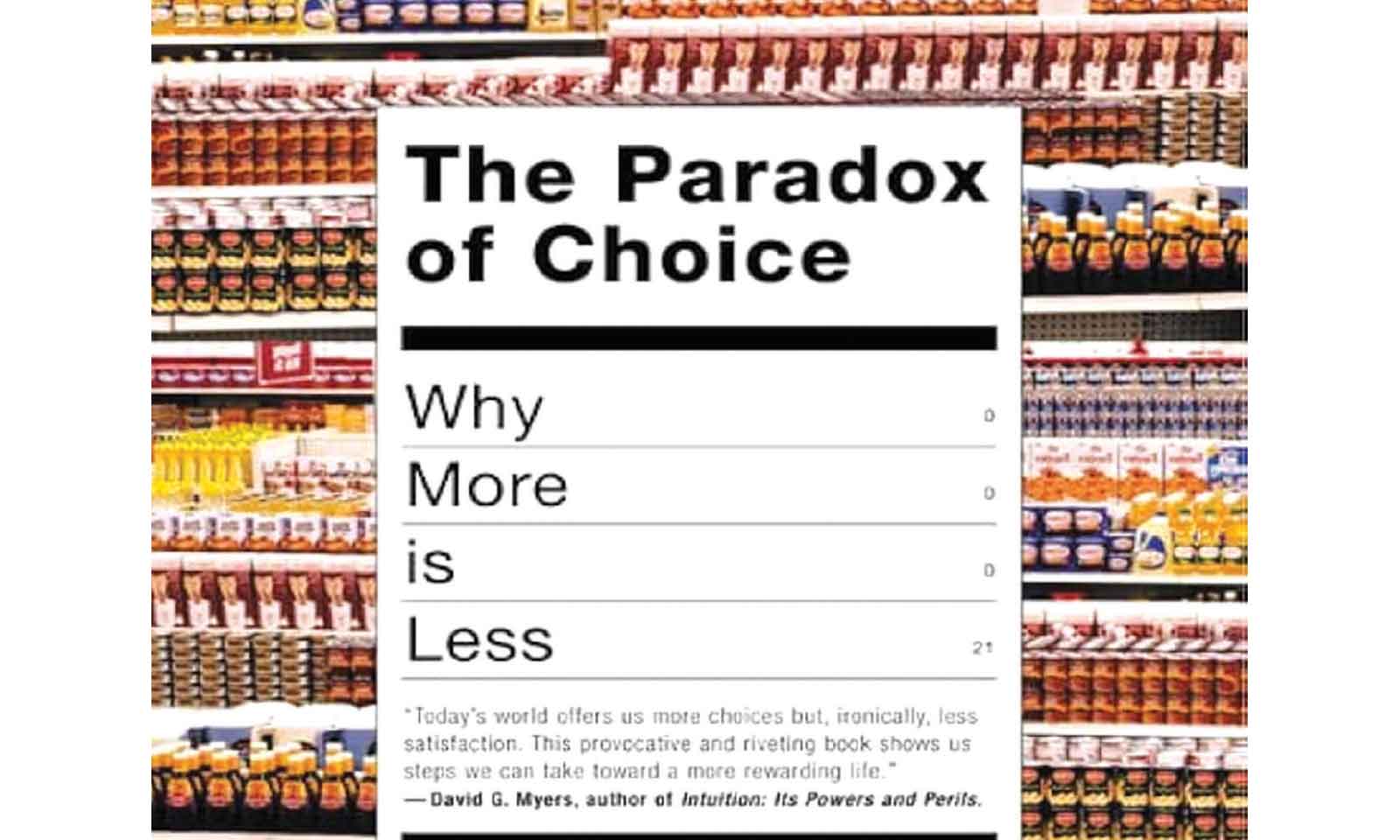
Arthur Marara
Point Blank
We move through our days as architects of invisible prisons.
Consider the woman standing frozen in the fluorescent glare of the supermarket aisle.
Before her stretches a battlefield of abundance—fifty-seven varieties of toothpaste, each promising transcendence through whitening power or charcoal infusion or enamel resurrection.
Her knuckles whiten around the shopping cart handle.
This is not freedom of choice; it is cognitive warfare. We inhabit an age where more has become our religion and excess our liturgy.
We swim in oceans of data, drown in rivers of options, and gasp for air beneath the weight of perpetual availability. The modern world whispers a cruel lie: that complexity equals sophistication, that busyness signifies importance.
Yet in our bones, we feel the truth—we are building mazes with no centre, constructing lives of magnificent clutter where peace goes to die.
The Seduction of Too Much
Human consciousness evolved to track the rustle of predators in tall grass, not to process thirty-four gigabytes of daily information.
Our minds, exquisite instruments honed over millennia, now falter beneath the onslaught. We suffer a peculiar modern affliction: choice paralysis.
The psychologist Barry Schwartz named it the “Paradox of Choice”—the disturbing reality that beyond a certain threshold, options cease to liberate and instead imprison.
That ten minutes spent agonising over toothpaste erodes the willpower needed for decisions that shape destinies: whether to leave the soul-crushing job, whether to repair the fractured relationship, whether to confront the quiet desperation humming beneath the surface of our days.
Every trivial choice steals energy from the essential ones. We mistake the illusion of control for actual sovereignty, not realizing we’ve become servants to the very systems promising liberation.
The Alchemy of Artificial Scarcity
Money, that neutral tool of exchange, transforms into an instrument of torture when severed from meaning. We chase promotions not for security, but to finance lifestyles manufactured by advertisers and curated by influencers.
The machinery of consumerism runs on a brilliant deception: the manufacture of inadequacy. We finance cars whose monthly payments eclipse our ancestors’ annual wages, homes whose empty rooms echo with absence, gadgets that obsolete themselves before the warranty expires. Debt becomes a shadow self, trailing us through life like a hungry ghost.
Consider the brutal arithmetic: seventy-eight percent of full-time workers live paycheck-to-paycheck not because of poverty, but because of artificially inflated needs. The luxury watch gleaming on your wrist, the leased SUV gleaming in the driveway, the designer bag displayed like a trophy—these are not assets.
They are Faustian bargains, monthly reminders that you’ve traded irreplaceable life energy for the hollow validation of strangers. Thoreau understood this alchemy of false necessity when he wrote at Walden Pond: “The cost of a thing is the amount of life required to be exchanged for it.” We pay in heartbeats for illusions of status.
The Theatre of Connection
Human bonds once grew from shared soil—the rhythms of neighbourhoods, the solace of communal spaces, the interwoven narratives of multigenerational kinship. Today, we collect relationships like digital trophies.
We endure performative friendships—drinks with colleagues we secretly resent, weddings of distant acquaintances whose names we struggle to recall, group texts vibrating with the hollow percussion of obligatory banter.
We say “yes” to parties that drain us, committees that exhaust us, reunions that haunt us—all while our souls whisper no. This is friendship as theatre, connection as commodity.
We mistake the cacophony of busyness for the symphony of belonging. Yet loneliness persists like a chronic ache: sixty-one percent of adults report feeling profoundly isolated. Why? Because authentic connection drowns in shallow waters. We curate personas, not presence. We polish our digital avatars while our true selves gather dust.
The result is a gallery of ghosts: friendships that demand more than they give, leaving us scrolling through contacts in the blue glow of midnight, utterly alone in a crowd of pixels.
The Betrayal by Tools
The smartphone—that sleek rectangle of promised efficiency—has become the greatest betrayer of human potential. Designed to hijack dopamine pathways, it fragments our attention into glittering shards. We touch our devices 144 times daily, interrupting our thoughts every six and a half minutes. Social media platforms become theatres of comparative suffering, where we measure our unedited reality against others’ curated highlight reels. We mistake filtered perfection for lived experience, pixels for truth. Notifications aren’t gentle reminders; they are psychological landmines, engineered detonations fracturing focus into irrecoverable fragments.
The tools meant to connect us leave us craving depth in oceans of superficiality. We’ve outsourced memory to clouds, navigation to algorithms, wisdom to search engines—and in the transfer, misplaced something essential. The very technology promising liberation has become the warden of our attention, the thief of our presence.
The Sacred Wound Beneath the Clutter
Beneath the crushing weight of possessions, commitments, and digital noise lies a trembling human question: What if I am fundamentally insufficient? Complexity becomes armour against this primal fear. We accumulate objects to prove our worth, obligations to feel needed, distractions to avoid the terrifying silence where self-doubt whispers loudest.
The clutter in your closet, the debt on your ledger, the exhaustion in your bones—these are not personal failures. They are symptoms of a civilization that monetizes unrest. The machinery grinds on, whispering its liturgy: More. Faster. Louder. Newer. But in the cathedral of your being, another voice persists, softer but insistent: Enough. Breathe. Release. Be.
The Moment of Seeing
True change begins in the unlit hours. When you lie awake tracing the cracks on the ceiling, when the notifications cease and the world goes quiet—that is when the questions rise like ghosts:
- What have I carried for years that no longer serves my soul?
- Where have I mistaken busy for alive?
- When did I last feel unburdened by the weight of my own making?
- What might bloom in the cleared space where clutter once grew?
Complexity is not destiny. It is a choice—made unconsciously, decision by decision, yes by yes, purchase by purchase. But consciousness can unravel it.
The journey toward simplicity begins when we finally recognize the chains we’ve polished like jewellery. When we see with terrible clarity that the prison has no locks. That the door swings open. That freedom waits not in adding, but in letting go.
The first revolution is this: realising you were never meant to carry so much.
“Man is born free, and everywhere he is in chains. One thinks himself the master of others, and still remains a greater slave than they.” — Jean-Jacques Rousseau
Arthur Marara is a corporate law attorney, keynote speaker, peak performance and corporate strategy speaker. With his delightful humour, raw energy, and wealth of life experiences, he captivates audiences and inspires them to unlock their full potential. He is also a leadership expert with extensive experience in leadership development and coaching. He is passionate about developing effective leaders and empowering individuals and organisations to achieve their full potential. Through his engaging talks and workshops, he imparts invaluable insights and practical strategies that empower individuals to lead with confidence and make a lasting impact. Arthur is the author of “Toys for Adults” a thought-provoking book on entrepreneurship, and “No One is Coming” a book that seeks to equip leaders to take charge. Send your feedback to [email protected] visit his website www.arthurmarara.com or contact him at +263772467255.