admin
admin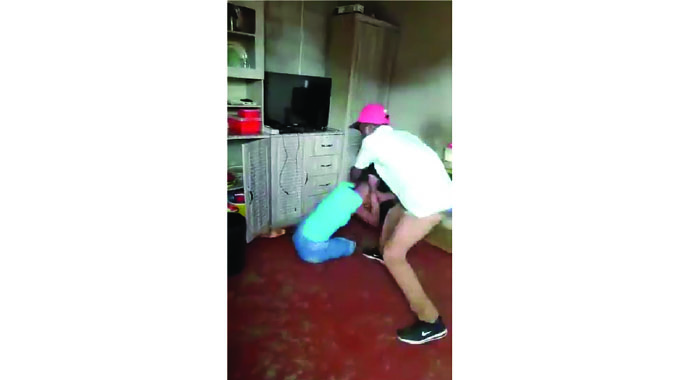
Fungai Lupande-Mashonaland Central Bureau
Chandafira Kamayamba-Muparaganda, was notorious among the Doma community in Mbire as a wife-clobbering man, which cost him his family.
Now a transformed man, Kamayamba-Muparaganda has become the darling of the community that once shunned him owing to his violent nature.
He has become the voice of reason against domestic violence, using drama as a vehicle to raise awareness against the vice.
The use of drama to convey awareness messages encouraging a shift of attitude on gender-based violence and child marriages has become a powerful learning medium for the Doma folks of Mbire.
For years, this unique ethnic group was a closed community with little contact with the outside world. Very little was known about them.
As the Doma people open up to the world and modernity, drama has become a strong and influential medium to challenge cultural norms that infringe on women and children’s rights.
With assistance from Katswe Sistahood, the community is implementing the SASA (Start Awareness Support Action) programme.
This has seen drama clubs being part of the peer-based learning mediums aimed at enhancing social inclusion.
Kamayamba-Muparaganda from Chikwapura Village said dramas have become a source of knowledge for the Doma people, who for generations had little access to formal education, thus, condemning them to illiteracy.
“We were lagging behind in terms of development and access to formal education. The majority of the community cannot read and write.
“Giving them written material is not an effective way to communicate with them, hence, dramas have come in handy,” he said.
“Our drama club is often engaged to perform at every event in the community, such as the Chief’s meetings, and at schools. That way our message is getting across the community.”
The one time wife-basher said domestic violence was rife among the Doma, and young children were married off.
“Change begins with the community activist. I was one of the people who physically abused spouses due to lack of knowledge. This enlightenment on the negative effect of domestic violence on society came late to the Doma people, ” Kamayamba-Muparaganda said.
“My wife left me because of abuse. Now I am one of the community’s anti-domestic violence activists.
“There are 35 villages here, and we move around counselling each other on good practices and how to preserve our cultural and moral values without necessarily being violent.”
Another community activist, Dzidzai Jasi said the SASA programme has created a better collaboration platform between the police and the community.
“In the past, the community lacked knowledge on criminal procedures and court processes. These are some of the messages packaged in our plays to raise awareness,” she said.
“Girls as young as 13 were being married off. Sadly, most of them died during childbirth.”
Jasi said poverty was the major driver of child marriages and domestic violence, adding that Katswe Sistahood availed funds for income generating projects for victims of gender-based violence.
“We have goat rearing projects among others. As women we can now contribute financially to the upkeep of the family.
“We thank Katswe sisters for coming to our rescue, liberating us from being married off at a tender age.”
Katswe Sistahood’s intervention has brought a huge change, with cases of child marriages drastically declining.
In the past young girls were raped and nothing happened to the perpetrators, Jasi revealed.
“Things have changed and rape cases are attended to quickly,” she said.
“Katswe Sistahood has introduced transport vouchers to victims of rape to travel to and from hospital and the courts.”
For the Doma folks the nearest court is in Guruve with the regional court situated in Bindura, which is almost 300 kilometres away. Thus, transport challenges resulted in most cases being left unreported in the past.
The Doma community was a closed one with rigid patriarchal beliefs. Women were not allowed to stand before men to share their ideas.
“Our parents did not believe in sending girls to school. They preferred educating the male child. Today we are aware of children’s rights. Every child has equal opportunity to education. We thank this programme for challenging such beliefs,” Jasi reiterated.
Survivors of gender-based violence were trained in entrepreneurship skills, and received sewing machines and goats to start income-generating projects to reduce dependency on men.
In Kumira Village, a group of eight young women raised the number of their goats from four to 17. They used the opportunity to share problems and give each other advice.
Katswe Sistahood project manager, Mrs Fadziso Fadzisai Maunganise said the SASA programme started in 2019. They established community activists, some of whom were perpetrators of domestic violence.
“We targeted the perpetrator, so that the change we wanted in the community starts with them. The community is now at the awareness phase through dramas and soccer tournaments. We also encourage them to get tested for HIV/AIDS,” said Mrs Maunganise.
“We are getting support from United Nations Women here in Mbire. We are supporting victims of gender-based violence, especially rape, through issuing transport vouchers to travel to the hospital and courts.”



 Online Reporter