Chronicle Editor
Angela Sibanda, Chronicle Reporter
VENDORS are making good business through selling wild fruits in Bulawayo’s central business district.
There is an abundance of the indigenous fruits such as the bird plum (umnyi/nyii), wild medlar (umviyo), chocolate berry (umtshwankela/tsubvu/hubvu) and umqokolo, amongst others at this time of the year.
Demand is high as well.
They are being supplied in bulk from rural communities and sold at wholesale price at the market for onward retailing by vendors, who have mastered the art of positioning themselves strategically on places where there is more public traffic.
Often these are street intersections and outside the entrances of major retail outlets where they sell the wild fruit, alongside apples, bananas and oranges.
The market for these comprises mainly of those with a rural background, who grew up eating wild fruits and some with an urban background.
A snap survey conducted by Chronicle revealed that a number of vendors were now into selling wild fruit as it is a lucrative business.
The operators, who include the youth, flock to the market to order wild fruit from suppliers who bring large containers of the commodity early in the morning and take these to their different vending spaces.
A customer easily notices these dealers as they sell their wares in open spaces, packaged or measured in small and large quantities to give the customer variety.
They, however, are prone to running battles with municipal police as they usually sell their produce in undesignated areas.
Two young women who identified themselves as Praise and Tariro share a stand at the market along 5th Avenue where they sell umnyi with lowest price of US$0,50 or 10 Rand and US$10 for a 20-litre bucket.
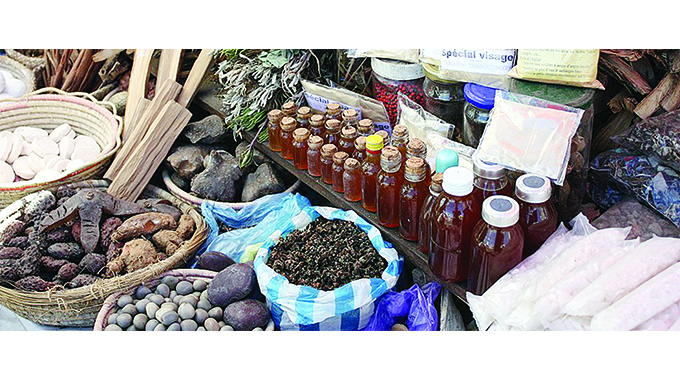
“We just discovered that there is a huge market for these and we make fast cash as compared to other products like cosmetics and clothes,” said Praise.
“The business is good especially during the early morning and by evening we would have finished our stock and we send money to someone who then orders for us.
“I am not really sure where exactly they gather the nyii but I know it’s in the countryside,” said Tariro Other vendors were skeptical of the news crew and refused to comment.
Contacted for comment, Forestry Commission Matabeleland South extension manager, Mr Bekezela Tshuma, said communities have the right to use fresh indigenous products but if they are to be sold, there were legal steps to be taken, which are often overlooked by many.
“People are encouraged to use fresh produce from their natural resources, that is trees.
But when the issue of selling is introduced, there is a need for people to have harvesting permits,” he said.
“The permit is stamped by the local Rural District Council and the Forestry Commission so that people pay something to the local authority.
“There is also a movement permit that is required for one to be able to transport these fruits from one place to another.”
Mr Tshuma said a few people come forward for permits but it was up to communities to monitor and control how their resources are distributed and make sure that they get something from everything that is harvested from their communal lands.
“In some places people follow these requirements but, in most instances, people are not aware of such requirements.
We get a few people coming through for clearance but many still don”t abide by the laws of the community as it is in the nature of humans,” he said.
“Some places follow a Campfire program that requires a certain percentage of the harvested product to be given to the local authority to sell and use the money for local development.
“Communities are also encouraged to set by-laws that govern the harvest of indigenous resources in their area.
The by-laws should clearly state what and when and how the harvest is supposed to be carried out in their area,” said Mr Tshuma.



 Online Reporter