Online Reporter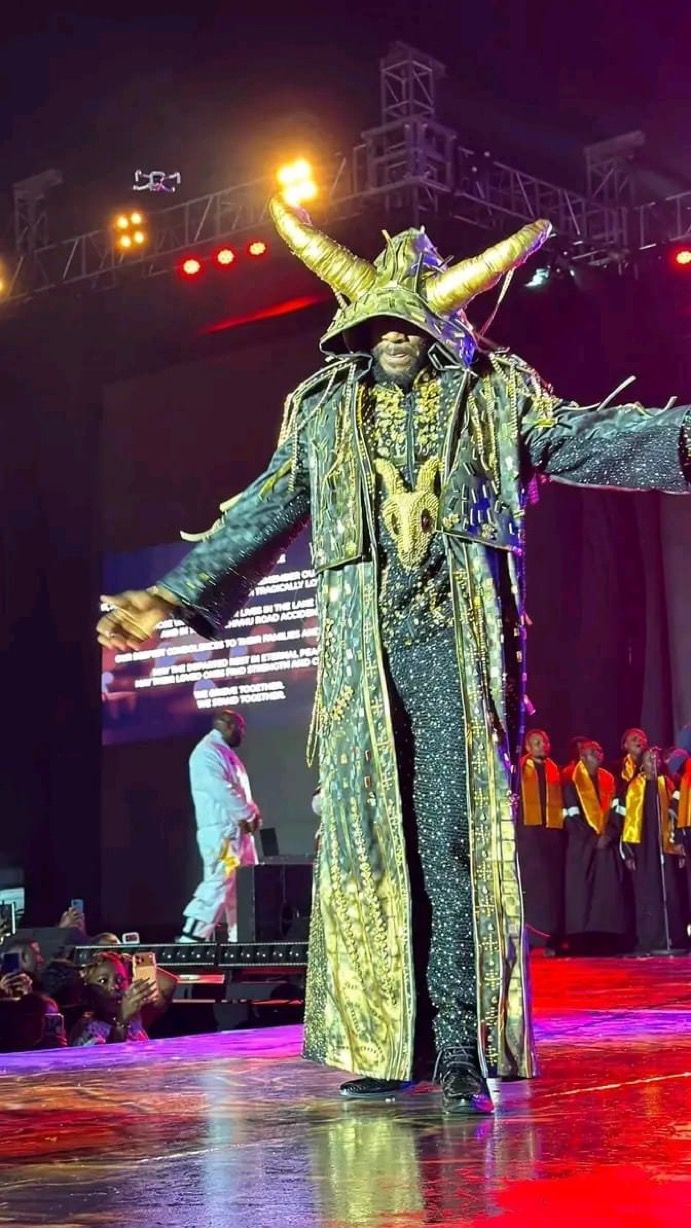
Langelihle Dube Zimpapers Arts and Entertainment Hub
Winky D once again proved that his artistry stretches far beyond music when he turned the Tête-à-Tête Season 2 stage at Alex Sports Club in Harare into a visual spectacle on Saturday.
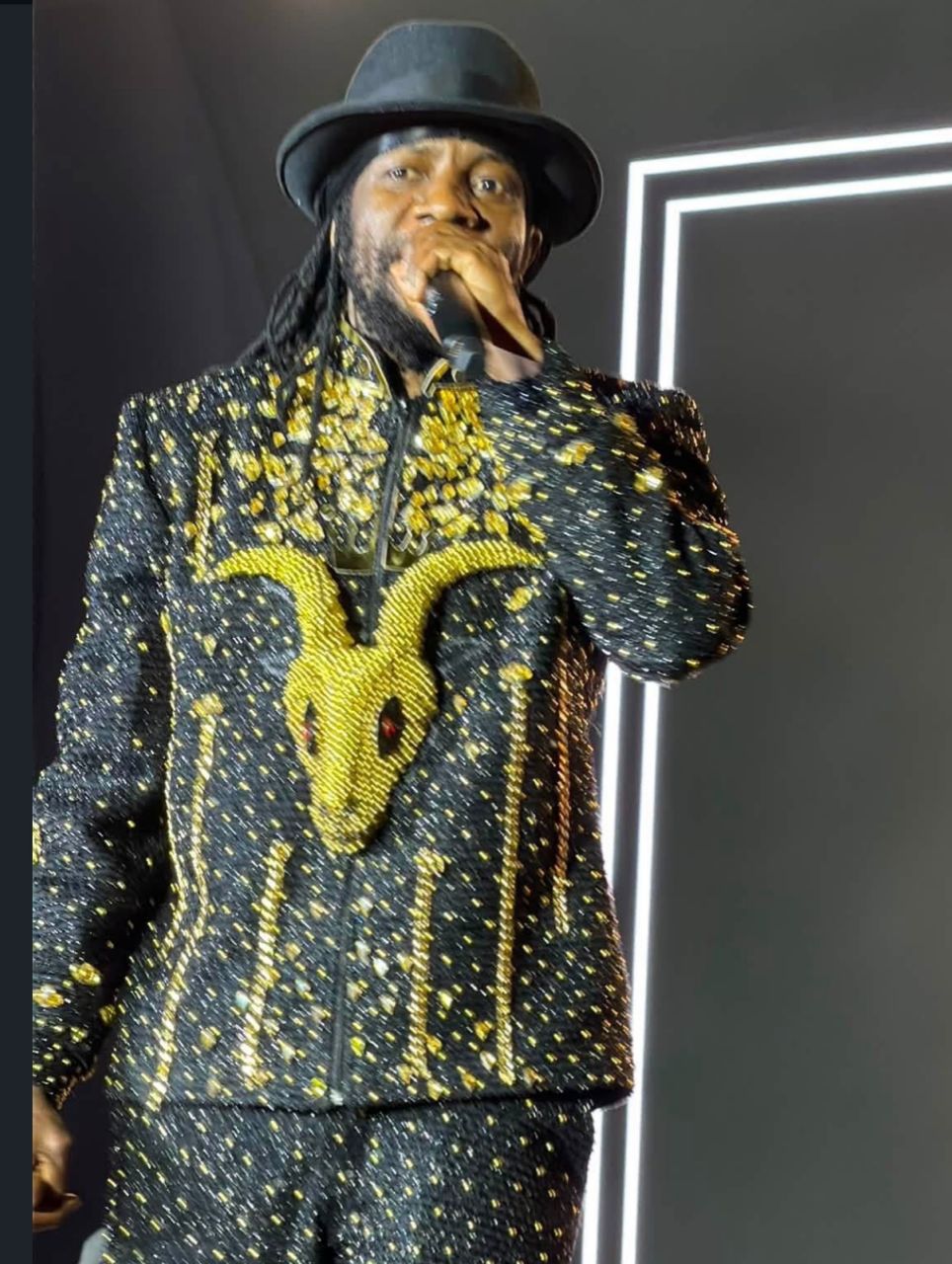
The Gafa’s performance was punctuated by a series of striking costume changes, with his elaborate black-and-gold ensemble emerging as one of the night’s biggest talking points. Complete with a dramatic horned headpiece, intricate detailing and a prominent goat-like motif across the chest, the outfit immediately sparked debate on social media.
Some social-media users drew comparisons between the imagery and Baphomet, while others questioned the religious symbolism behind the striking design. The debate quickly became part of the wider conversation surrounding the performance, with fans offering different interpretations of what the outfit represented.
However, there has been no confirmation from Winky D or his team that the outfit was designed to represent Baphomet or any occult figure. As a result, the symbolism remains open to interpretation, with the outfit equally capable of being viewed through the lens of fashion, theatre and Winky D’s penchant for creating visually arresting performances.
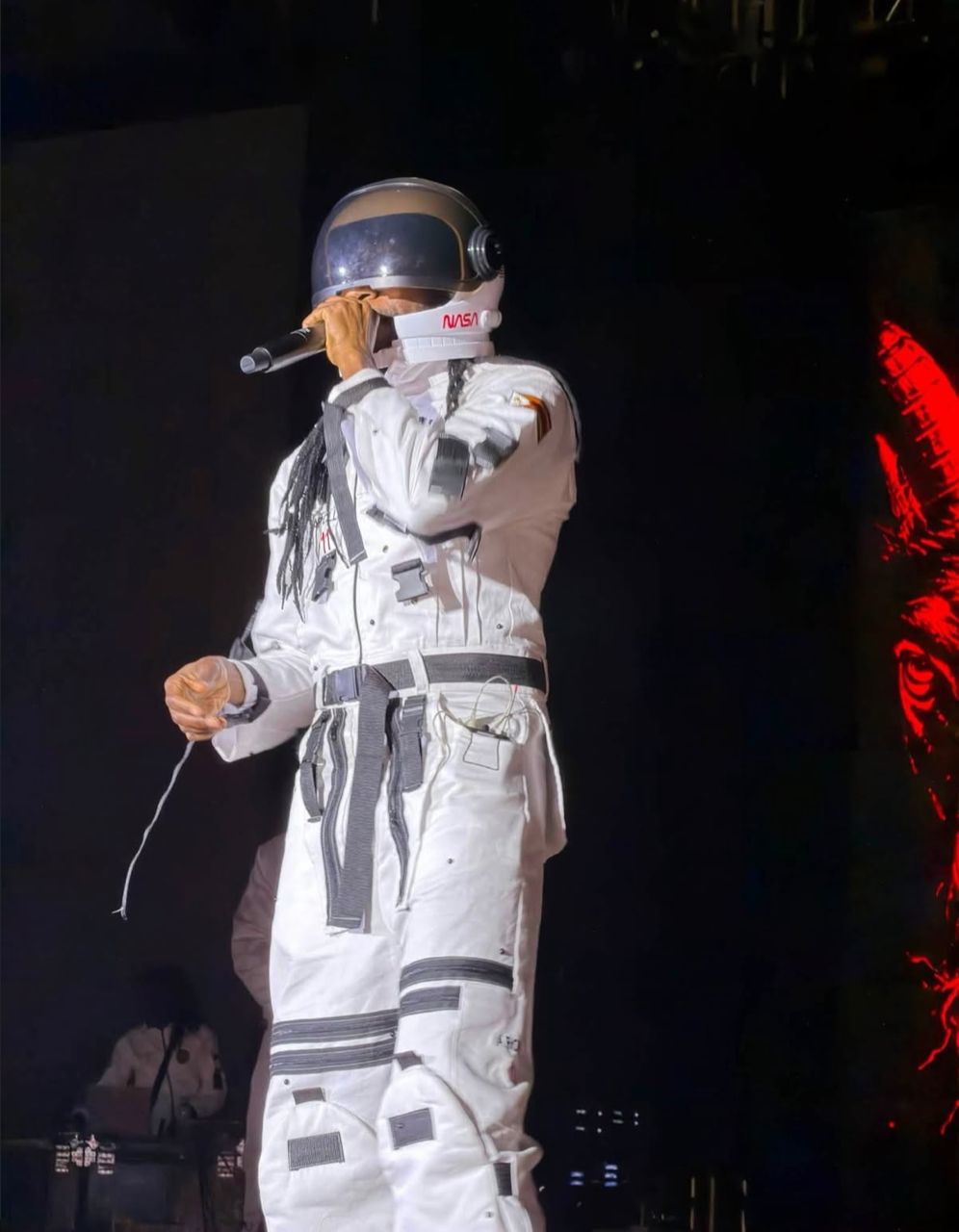
But the black-and-gold ensemble was not the only look that captured attention. Earlier in the performance, Winky D appeared in another futuristic outfit that resembled an astronaut or space suit, immediately reminding fans of the extraterrestrial themes that have featured prominently in his artistic world. The look sparked references to his songs “Extraterrestrial” and “Area 51”, with fans connecting the futuristic styling to the artiste’s long-established fascination with space, UFOs and otherworldly imagery.
In particular, “Area 51”, from his Njema project, explores themes of UFOs, teleportation and extraterrestrial encounters, making the astronaut-inspired costume appear less like a random wardrobe choice and more like a visual extension of an existing chapter of Winky D’s artistic identity.
The costume changes also fitted neatly into the broader visual language of Tête-à-Tête Season 2, a production that has placed considerable emphasis on symbolism and storytelling.
Even the concert’s promotional campaign drew on historical figures such as Mbuya Nehanda and Sekuru Kaguvi, signalling from the outset that the event would be about more than music alone.