peter
peter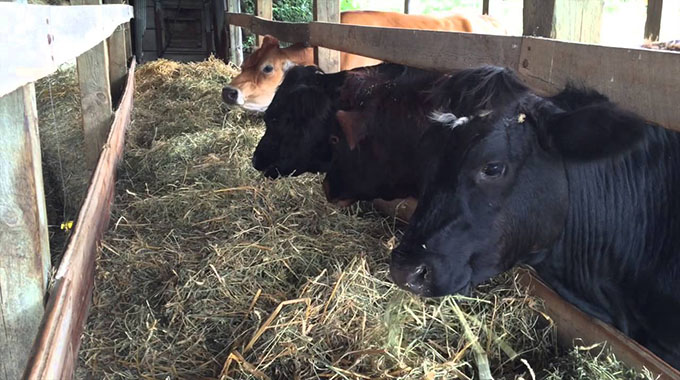
Farming issues, Mhlupheki Dube
WE have just gone past mid-April and will soon gallop past the last half of April.
This means we are almost one foot into winter and this is a usually busy season for livestock farmers in terms of handling animals.
This is the time when most animal handling happens for one reason or another.
Chief among the reasons for animal handling during this period, is for activities such as hot iron branding and dehorning.
I therefore want to counsel livestock farmers to ensure that they do their entire animal handling at once so that this stressful activity to your livestock is not repeated again and again for one reason or another.
It is prudent management decision to make sure that when you plan an activity that involves handling your animals, you get to do all the actions on that animal and when it comes out of that handling race or pen, it is done for the year.
You don’t want to handle your animals this month because you are branding with your hot iron, then two months down the line you bring them in for dehorning, then the other month you need them in for castration!
As livestock farmers let’s plan to have all our activities at once and you let the animal to deal with stress at once.
We do most of these actions that cause injuries to animals, in winter because it makes wound healing much easier than in summer.
So for livestock farmers who received their first calves in October last year like I did, your crop of calves is due for all the management actions that you want done on them, from next month.
The calf will be seven months old then.
This means you can now wean it, castrate, dehorn and brand it. It is old enough to handle that kind of stress at once.
Talking of animal handling, this is one activity that most smallholder farmers are usually ill equipped to do.
The farmers simply do not have the right infrastructure to handle animals when the need arises.
Handling animals becomes a life threatening rodeo, more so if they also happen to be temperamental animals.
Livestock farmers need to develop a culture of constructing cattle handling facilities to make the whole process less involving and less risk to the farmer.
A simple cattle race with a crush to restrain animals by the neck, is a very hand tool when handling animals for routine management actions.
Another important aspect regarding animal handling, is to get them accustomed to using the handling facilities.
This means you need to routinely use the handling facilities such as the cattle race for regular activities like spraying the animals.
This will make your animals to be accustomed to using the handling facilities and you won’t have to struggle to get them in.
This is the same with taking your animals to the dip tank.
Always make sure that all your animals attend the dipping sessions and they go through the plunge.
There is that animal that will make you run all over the bushes around the dip tank trying to drive it in.
Always make sure you finally get it in, so that it gets used to the plunge dip.
The tendency is for farmers to give up on the animal and never make an extra effort to get it through the dipping session.
Bit by bit the animal develops an aversion for using the dipping infrastructure and before you know it, you will need a battalion of people to get it into the dip tank.
The same principle applies to regular kraaling of animals.
Farmers should ensure that they kraal their animals regularly and get the animals accustomed to the holding pens.
If you let your animals stay in the bushes for a long time without interacting with you, they develop some wild antics.
You won’t even be able to drive the animal home from the veld, because the moment it sees a person, it gallops away like some wild kudu.
Now how do you deal with such an animal for routine management practices?
I have seen farmers failing to take the animal to the market because it can neither be hoofed to the auction sales nor to the loading ramp.
What good is your animal if you can’t sell it when you want to?
UyabongaumntakaMaKhumalo. Mhlupheki Dube is a livestock specialist and farmer.
He writes in his own capacity.
Feedback [email protected]/ cell 0772851275


 Online Reporter