mbulelo smpofu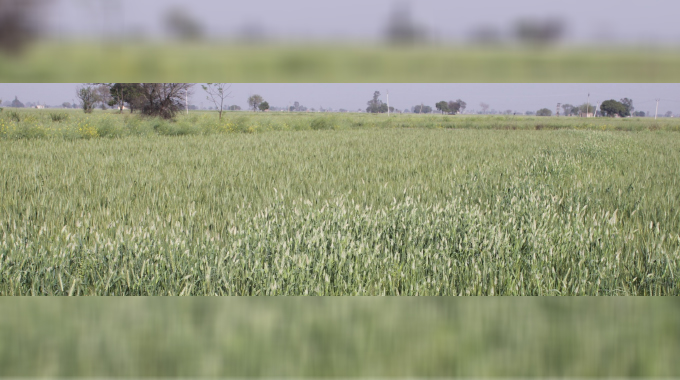
Nqobile Bhebhe , Zimpapers Business Hub
IN a determined effort to continue achieving self-sufficiency in national wheat production, the Government is exploring every possible avenue with climate-resilient wheat seed varieties capable of adapting to adverse weather conditions poised to enter the market soon.
Farmers have also been assured of adequate water supplies as most dams nationwide were reported full during the just-ended rainy season, while electricity has been ring-fenced for the sector to ensure uninterrupted supplies.
Similarly, potato farmers have been urged to scale up production to take advantage of a surge in consumption.
Agricultural and Rural Development Advisory Services (Ardas) Matabeleland North director, Mr Mkhunjulelwa Ndlovu, said the preparations for winter wheat farming were progressing well across the country.
He made the remarks during the Winter Crop Revolution Conference hosted by Zimpapers in partnership with the Ministry of Lands, Agriculture, Water, Fisheries and Rural Development in Bulawayo last week.
Mr Ndlovu said both Matabeleland North and Matabeleland South provinces were poised to scale up wheat production this season.
“Matabeleland North has the potential to cultivate up to 5 000 hectares, while Matabeleland South is targeting around 2 500 hectares. Nationally, we are looking at commanding 120 000 hectares,” he said. He also confirmed that fertiliser distribution will begin soon, with supplies already being received by the Government.
“We have started engaging key players in wheat production. Fertiliser is being delivered and distribution will commence shortly. Preparations are well underway and everything is in place to ensure we meet our national targets,” Mr Ndlovu added.
Seed suppliers at the conference assured farmers that adequate stocks of improved wheat seed varieties would be available for the season. Quality seeds are crucial for achieving high yields and ensuring that wheat production meets national demand and seed houses said they are investing substantial resources in research.
Particularly, four new wheat seed varieties were highlighted at the conference, these varieties have been developed with climate resilience in mind, ensuring that they can thrive under changing weather conditions.
Farmers were encouraged to stick to these approved, high-quality seed varieties to ensure maximum productivity.
“Using the right seeds is key to achieving better yields. The new varieties are designed not only to increase output but also to withstand the stresses of climate change.
“It is critical for farmers to be adapt to genetics and management in line with their contribution to yields,” said Mr Gilbert Goto from Valley Seeds.
The conference was held in the wake of a historic agricultural achievement — a record-breaking national wheat harvest of 563 961 tonnes in the previous season, surpassing the 2022 output of 467 000 tonnes.
This marks the highest yield since the introduction of commercial wheat farming in 1966 and secures Zimbabwe’s wheat self-sufficiency for the third consecutive year.
Building on this momentum, the Winter Crop Revolution Conference aimed to replicate this success across other critical winter crops in the upcoming 2025 planting season. Key sessions at the indaba focused on sustainable wheat production, the expansion of potato farming, the diversification of winter crop varieties, improved post-harvest handling, and local processing opportunities. Particular emphasis was also placing growing potential of potatoes as a flagship winter crop.
Other focal areas include policy and regulatory frameworks, crop insurance, and risk management strategies.
The Zimbabwe National Water Authority (Zinwa) also noted that there is enough water available to meet the country’s winter wheat production goals.
Zinwa spokesperson, Mrs Marjorie Munyonga, stressed the importance of registering with Zinwa to secure water allocations for the upcoming season.
“We are currently in the process of registering farmers for water allocation. We encourage all farmers to register, and many have already done so, signing agreements for their water usage.”
Mrs Munyonga explained that Zinwa uses an allocation system where farmers apply for the amount of water they require.
“For example, if a farmer applies for 20 megalitres, we reserve that amount in the dam they requested,” she added.
She also noted that Zinwa is actively conducting awareness campaigns to ensure farmers are fully informed about the registration process. When asked about the availability of water for the winter season, Mrs Munyonga reassured the conference attendees: “We have enough water in our dams to meet the wheat production target set by the Government. Our National dam level average is at 89 percent, which is far more than we expected during this time, which is usually around 71,4 percent.”
The conference heard that potato production is a highly lucrative venture for farmers, but it also carries significant risks of loss if not properly managed.
The Government has recognised potatoes as a strategic crop crucial for enhancing food security at both the household and national levels. To support this, the government introduced several measures, including a ban on the import of table potatoes since 2010.
This policy was aimed at shielding local farmers from unfair competition posed by cheaper potato imports from neighbouring countries.
During the conference, renowned investor and farmer, Mr Brent le Reux, who operates in Jotsholo, Matabeleland North, discussed the challenges and rewards of potato farming.
Speaking on the topic of potatoes as a major winter crop, he emphasised that while potato farming can be profitable, it requires careful management.
He warned of the significant risks involved, especially if farming practices are not followed closely.
“It is a very lucrative crop, but it is an expensive crop if you borrow money and it is not a success. If you miss a spray, plant at the wrong time, or let a disease take hold before you catch it, the potato crop will be a disaster,” Mr le Reux said.
He added; “So it is got to be approached in small parts, and many of the challenges revolve around that.”
One of the main issues identified by Mr le Reux was the quality of seed potatoes.
He pointed out that despite the growing demand for potatoes, the country faces a major hurdle in sourcing quality seed. “Many of the challenges revolve around seed, and unfortunately our country does not have a good seed base. For all farmers, large and small, getting good quality seed is a problem. Unfortunately, the seed that we get into the country, from South Africa is prone to disease,” he explained.
Ministry of Lands, Agriculture, Water, Fisheries, and Rural Development, Chief Director, Mr Leonard Munamati, said Government is planning to expand the record winter production attained last year to other vital winter crops with the aim of sustaining food security and setting Zimbabwe on the path of being a major agricultural base in the region.
“The country has made remarkable strides in winter crop production, securing its place as a formidable agricultural force. Building on this success, the Ministry, in collaboration with Zimpapers and other key stakeholders/partners, now seeks to expand this achievement to potatoes, barley and other vital winter crops in the upcoming 2025 planting season,” he said. He said the consumption basket now largely includes potatoes, essential to Zimbabwe’s food security, offering nutritious and affordable food nationwide. Potato production is set to cover 8 750 hectares, with an ambitious yield target of 27t/ha culminating in 236 250MT. “Achieving these production goals requires critical enablers, including a reliable power supply, with wheat production clusters ring-fencing 150 megawatts for winter cropping, adequate water resources, with Zinwa ensuring seasonal billing and efficient irrigation management.”
The conference also addressed the significant issue of post-harvest losses, with participants noting that many farmers struggle due to a lack of proper harvesting equipment and limited knowledge on the optimal time to harvest.
A representative from the Agricultural Finance Corporation (AFC) shared that there are 56 combine harvesters available for leasing, along with 22 cluster centres across the country, which could help mitigate this challenge.


 Online Reporter