admin
admin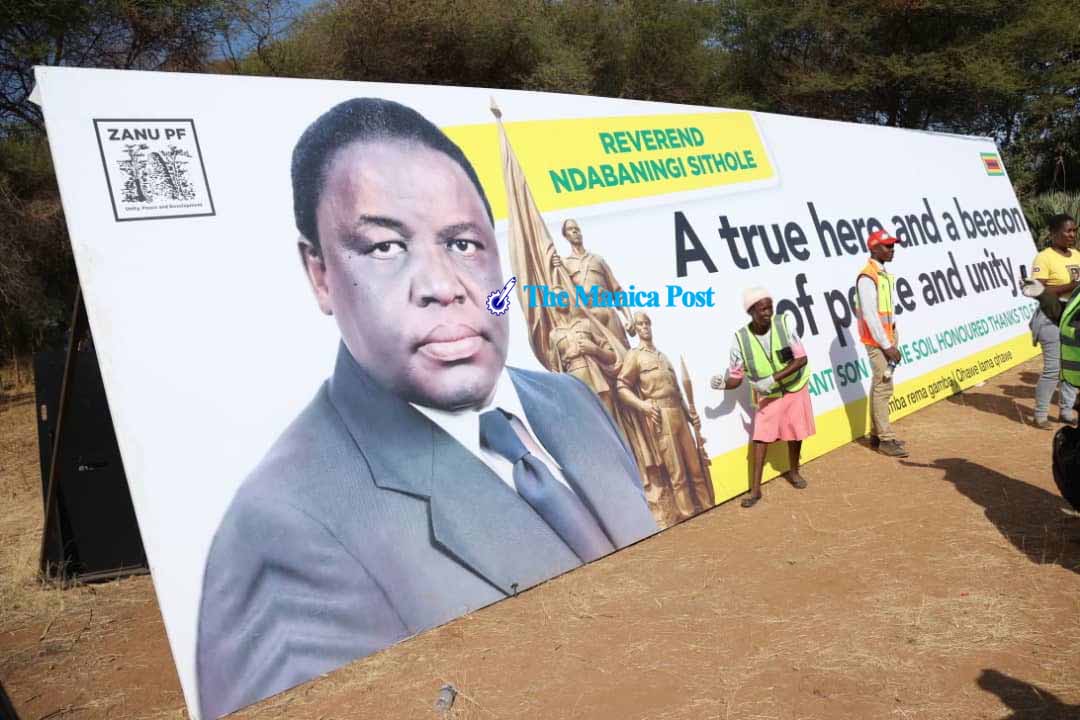
Freedom Mutanda
Post Correspondent
THEY came, saw and conquered.
These are ‘the boys and girls’ who sacrificed their lives to combat an intransigent regime fronted by the late Ian Douglas Smith who had vowed that the majority rule for colonial Zimbabwe would not come in a thousand years or in his life time.
In a few weeks’ time, Zimbabweans will celebrate Heroes’ Day.
This day seeks to show gratitude and appreciation for the selfless spirit that liberation war veterans exhibited in skipping the border to go to an unknown land in pursuit of liberty for Zimbabweans.
Sadly, in some quarters war veterans are treated with disdain.
This is unfortunate because everywhere else across the world, those who fought for their nation’s freedom are revered.
Indeed, some people have a short memory.
It is a mere 44 years ago since ceasefire was agreed upon at the Lancaster House and every Zimbabwean is expected to remember those who made it possible.
In Zimbabwe, the combined forces of the Ndebele and Shona people fought the BSAC forces in 1896 in an effort to drive away the marauding land grabbers.
However, their strength lay in the maxim gun which was too good for the African warriors who relied on spears, knobkerries, bows and arrows and swords.
Seventy years later, the blacks took up their weapons and resumed the fight for self-determination.
This time, Africans used the white man’s guns to dislodge him from power.
Official records say in April 1966, the armed struggle in Zimbabwe began.
However, by 1962, ZAPU, the nationalist organisation at that time, had begun sending young men and women to be trained outside the country for the armed struggle to commence.
Among those early trainees was the current President of Zimbabwe, Dr Emmerson Mnangagwa.
Later, after the split in 1964, the late national hero, Cde William Ndangana, led his Crocodile Gang in killing a white man, Mr Pieter Oberholzer, in the then Melsetter (Chimanimani).
The gang left a note on the murder scene, stating that the killing had been executed by the Crocodile Gang.
One may therefore argue that this killing marked the onset of the liberation struggle.
Soon after the killing of the white man, Rhodesian security forces were on high alert.
They were determined to catch the culprits.
Two of the gang members were caught and executed.
It must be noted that sabotage activities were already taking place in various areas of Zimbabwe.
Consequently, Emmerson Mnangagwa was arrested and tried for treason. He escaped death by a whisker.
He was among a number of youths who were caught up in the euphoria of nationalism in the 1960s.
The late national hero, Reverend Ndabaningi Sithole, ZANU’s founding president had exhorted Zimbabweans to free themselves in his statement: ‘We are our own liberators.’
Cde Wilson Chibhaahlengwe of Chipinge, now a war veteran in his late 80s, said he was driven by the racist regime’s deliberate actions to oppress blacks.
He, however, said he was particularly irked by the Pass Laws which restricted the movement of blacks in urban areas.
If they were to move in those white areas, they had to walk around with a pass, yet the white man had unlimited freedom of movement.
“I visited my brothers, Allison and Albert in the then Salisbury (Harare) where I witnessed how the black man was a second class citizen in his own country.
“When I returned home in 1975, I kept on complaining about the harsh white rule until I went to join the other young men and women at Chibawawa Training Camp in Mozambique.
“The late national hero, Cde Kumbirai Kangai, was our commander,’’ said Cde Chibhaahlengwe.


 Online Reporter