

 admin
admin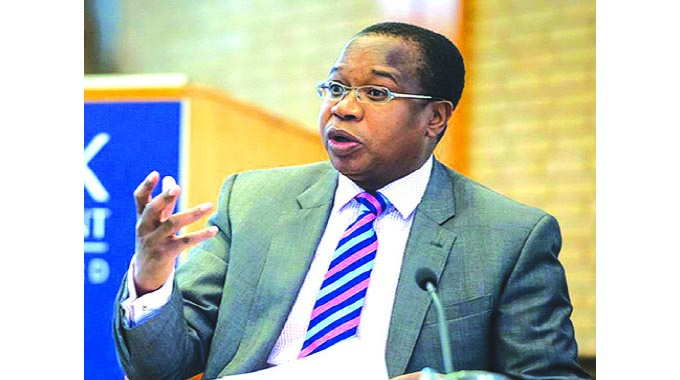
Gibson Nyikadzino-Correspondent
POLITICAL economists have always argued that there are problems presented in the international finance system in the relationship between politics and finance.
From this understanding, there has been an economic debate on whether Zimbabwe should adopt the US dollar as the sole currency or maintain a multi-currency basket.
The debate should not be understood from an economic point of view, but rather a political economy angle.
This also raises underlying political economy intricacies ordinary people neither see critically nor comprehend using the “inner legal eye.”
The excitement people have in wanting to see the full adoption of the US dollar in Zimbabwe should be rebuked and deterred because the consequences are not good for fundamental long-term economic reconfiguration.
It is from this approach that while ordinary people think the greenback is “money,” for the circumstances we have it cannot be seen as “real money.”
This argument is sustained by the understanding that there are more resources whose value has been reduced because it has been pegged against America’s currency.
There are dangers to pegging everything against the dollar currency.
Coming out of the two world wars, the US was the least affected country.
Britain, France, Germany, Italy and other European nations wanted financial help through the Marshall Plan (European Recovery Plan) to rebuild their countries.
The US gave these nations loans through what was then known as the International Bank for Reconstruction and Development (later World Bank).
Because many European economies had faltered resulting from the war, countries like France had suggested that some of ‘their’ wealth accumulated in gold value through their conquest of countries like Mali be fixed against the US dollar because of its “stability”.
This meant all these nations and many others would sell their gold to the US and have it stored at the Fort Knox depository in Kentucky.
The first gold deposit at Fort Knox was done in 1937.
Post-1945, instead of working on stabilising the gold standard, the US got involved in many wars in Latin America, Vietnam, Korea and other proxy wars in Africa.
This meant the US was spending more money than what was in the reserve at Fort Knox depository.
France started demanding its gold that had previously been backed by the US currency.
In all these arrangements, France, Britain and Germany, among other states, did not use the US dollar solely as a “transactional currency”, but made it a reserve one.
Their local currencies continued to be used in their daily transactions.
Finance and Economic Development Minister Professor Mthuli Ncube has provided clarity on how Zimbabwe can do better without fully adopting the US dollar as a transacting currency because it makes Zimbabwe’s exports uncompetitive.
Zimbabwean economists with little appreciation of how the market works in our circumstances have based their submissions on the view that to stabilise our currency, the ‘invisible hand of the market’ dominated by the US currency should not be regulated.
These arguments are meant to foster the liberalist economic school that once the greenback currency is adopted, the market will self-regulate.
This view has much been influenced by the thoughts of Scottish economic philosopher, Adam Smith.
But another key economic thought presenting an anti-Smith position emerged after the 1929 Great Depression in the US.
The Keynesian thought, by John Maynard Keynes, rose to address the inadequacies of Smith’s liberal economic thoughts.
According to Keynesianism, the 1929 Great Depression was a consequence of Smith’s liberal economic views. The economy had to run on state intervention and guidance.
This meant that the market should not have been left to its case.
Besides the Great Depression, the 2008 global financial crisis was also a product of the Smith economics gone out of hand.
An unregulated market has problems for the people.
The biggest danger of the Smith view is that when problems occur in a “free market economy” the corporate world will always look up to the government for a “bailout package.”
This is evident in the 1929 case where US President Franklin Roosevelt after assuming office in 1933 came up with the New Deal initiative.
The New Deal was a government led initiative meant to bring stability in the economic sector by promoting job creation, affordable housing and social services.
In these difficult economic times, the private sector was nowhere to be seen.
Similarly, the crisis presented by the 2008 global finance crash made every economist became Keynesian because they needed government to act as Roosevelt had done: State Leadership.
In all great economies, states have provided incentives to their nation’s labour force, encouraged hard work and entrepreneurship, this gave rise to the growth of financial services, marketing and distribution, components that make economies viable.
The founding leader of the People’s Republic of China chairman Mao Zedong emphasised that the Chinese “will not succeed without discipline.”
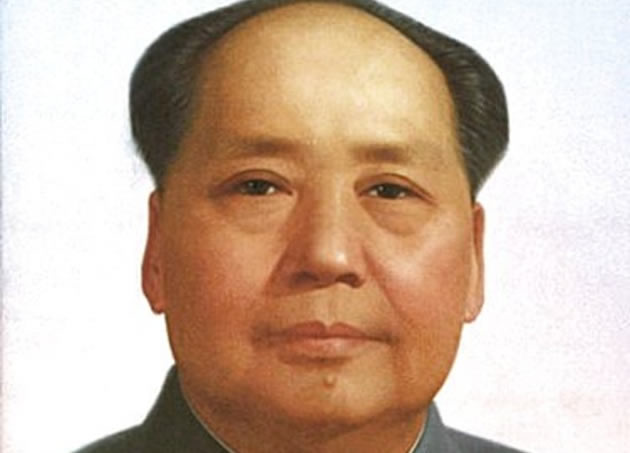
The Chinese have not at any historical time lobbied for the adoption of the US dollar as a major currency in their economy.
It has only been a reserve currency.
The Asian giant today enjoys the dividends of its discipline in all spheres.
At the same time, countries like Cuba and Iran have also maintained their discipline for state survival after great animosity from the US since the victories of their respective 1959 and 1979 revolutions.
Innovation and technological investments should be led by the state through public-private partnerships.
The private sector alone, while advocating for a free-market economy, has not invested in innovation at the foundational level to rejuvenate the state.
It is imperative for Zimbabwe to maintain the US dollar as a reserve currency in the multi-currency basket while it rebuilds the strength of its local currency through deliberate policies that promote exports.
More needs to be done by the authorities to instil fiscal discipline.
The RBZ auction rate should be supported with extreme determination in order to nip all negative forces stimulating the parallel exchange rate to turbulent levels.
Political and business leaders need to understand that widespread prosperity is not only a matter of economic efficiency or business success, but also state leadership.


 Online Reporter