Online Reporter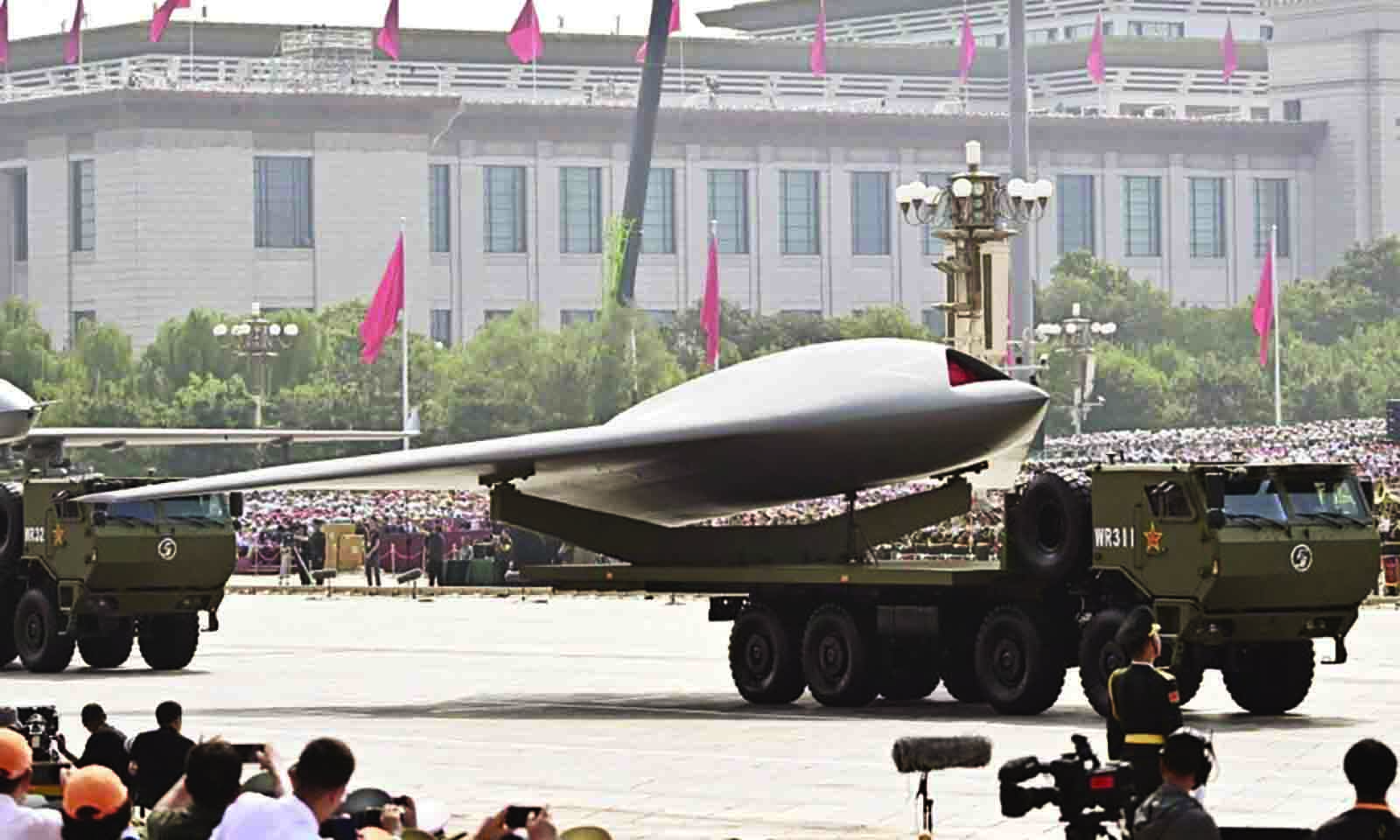
Kuda Bwititi
in BEIJING
THE memory of Wednesday, September 3, is one I will guard jealously and cherish for the rest of my life.
As a journalist, I have covered my share of major events, but the scale and spectacle of China’s grand military parade held last Wednesday was one of a kind.
The event marked the 80th anniversary of the Chinese People’s War of Resistance Against Japanese Aggression (1931–1945) and the World Anti-Fascist War.
Having earlier covered Russia’s 80th Victory Day celebrations on May 9 in Moscow, which marked its World War II triumph, I found it to be a twin titan of historical tribute.
September 3 was a day of historic firsts, a meticulously choreographed display of national pride and a rare glimpse into a new era of military power.
The day began long before the sun rose. The city of Beijing, usually a bustling metropolis, was eerily still. The streets were silent, a testament to the extensive security measures in place. I was among more than 1 000 journalists from around the globe, and for my group, our day started at 2:30 am, when we embarked from our residence, heading to the Media Centre for security checks.
The path to the venue was lined with national flags, flown from balconies and windows in a public expression of the Chinese people’s pride for the country’s World War legacy.
By 5:00 am, we had arrived at the iconic Tiananmen Square, the heart of the day’s events.
As we made our way to take our seats, we passed the monumental mausoleum of the founding father of the People’s Republic of China, Mao Zedong. I was among the privileged few to secure one of the front-row seats, as the opportunity was afforded to me by my hosts on account of President Mnangagwa’s attendance as one of the 26 heads of State at the event.
The anticipation was palpable among media colleagues as the exhaustion from being up all night melted away, replaced by an electric energy.
Heads of State entered the venue just after 8:30, led by the host, President Xi Jinping and the guest of honour, Russia’s President Vladimir Putin, whilst North Korea’s Kim Jong Un was also at the front. President Mnangagwa was also among the leaders as they walked to take their seats.
Images of the leaders swiftly circulated online, accompanied by captions identifying them as the architects of a new global vision. They greeted some of the remaining WWII veterans, most of whom are now centenarians.
President Xi then delivered the keynote speech, in which he highlighted the need for peace around the world.
The military parade then started at about 9am, with an 80-gun salute, a flag-raising ceremony and the performance of the national anthem.
The proceedings included a flyover by helicopters carrying banners that read “Justice Prevails,” “Peace Prevails,” and “The People Prevail.”
A total of 45 formations and echelons were involved in the grand parade, which lasted about 70 minutes.
The parade featured soldiers marching in formation and columns of new military equipment, including tanks and artillery.
It was an absolutely exhilarating experience. The meticulous nature of the march was a sight to behold as the boots of thousands of officers struck the pavement in a single, flawless rhythm, moving with such uncanny synchronisation. As they marched, the soldiers displayed hypnotic precision, a wave of motion so perfectly unified it defied belief. You could assume that it was digitally orchestrated.
What stood out immediately were the new additions to the military such as the Space Force, Cyberspace Force and Information Support Force, a clear signal that China is adapting its military to the demands of modern warfare.
The parade was a series of stunning visual chapters, with weapons formations divided into eight sections, showcasing the latest in Chinese military hardware. I took notes furiously as the official commentary highlighted the technological advancements.
The parade featured a counter-drone combat group — a direct response to the evolving nature of air defence. These troops displayed their ability to not only neutralise, but also destroy enemy drones, a capability that feels ripped from a science fiction movie.
Also, the parade had the systematised display of unmanned combat groups across all three domains: land, sea and air. There were mine-clearing and explosive-disposal unmanned vehicles for the army, unmanned submarines for the navy, and sophisticated reconnaissance-strike integrated UAVs (unmanned aerial vehicles) for the air force.
Also on show was China’s triumvirate of land, sea and air-based strategic nuclear forces. The official commentary drew special attention to the DF-5C liquid-fuelled intercontinental nuclear strategic missile, a weapon with a strike range said to cover the entire globe.
Amid the tanks and missiles, a smaller, more human detail caught the eye: a hot-food support vehicle, complete with cooking stoves. It was a surprising and charming sight, a testament to the Chinese military’s dedication to ensuring its soldiers are well-fed, even on the battlefield.
The event was a masterclass in organisation. The precision, power, and planning were on full display, from the latest generation of stealth fighters and tanks to the ballistic missiles — all made in China. It was more than a show of strength but a vivid demonstration of unity and discipline that looked almost unreal in its perfection.
As the curtain fell on this historic event, the final act was both simple and profound.
A total of 80 000 doves were released into the skies, followed by thousands of colourful balloons.
An expert on the ground explained the symbolism, saying it represented the act of spreading peace around the world.
Walking away from Tiananmen Square that day, I felt a deep sense of fulfilment. It was a day that transcended a simple news story. It was a witness to history in the making, a showcase of a nation’s ambition and memories that will be carried forever.