Online Reporter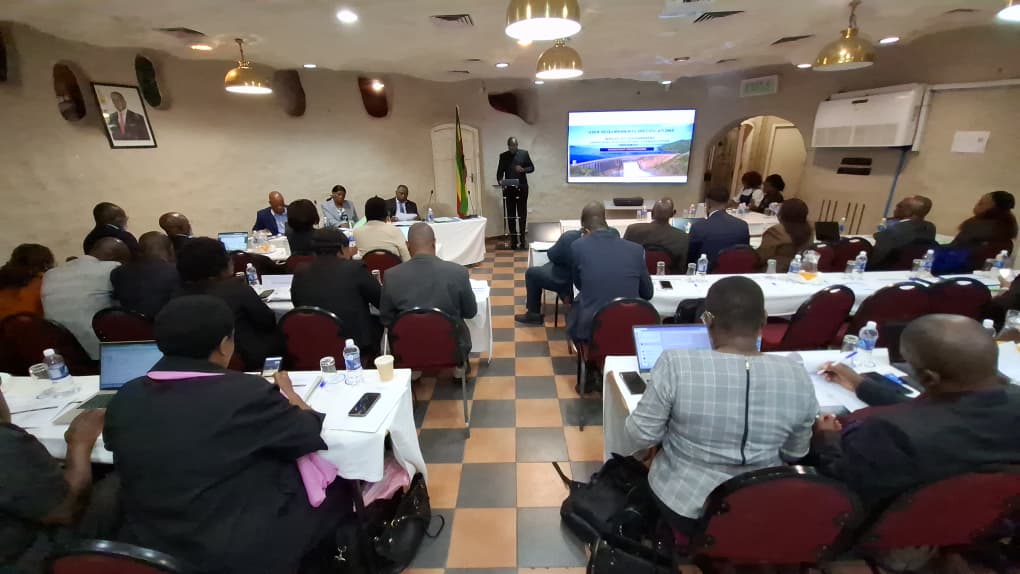
Walter Nyamukondiwa in KARIBA
THE Government is intensifying its digital transformation agenda through the development of an Integrated Whole-of-Government Monitoring, Evaluation and Learning System (WOGMELS).
The flagship platform is expected to strengthen accountability, improve service delivery and provide real-time insights into national development.
Speaking at a user requirements workshop in Kariba, E-Government Technology Unit head Dr Tafara Matekaire said the initiative represents a major milestone in Zimbabwe’s transition toward a digitally integrated state.
Convened by the National Monitoring, Evaluation and Learning Department, the workshop aims to design a system that will serve as the backbone of the Government’s performance management framework, central to achieving Vision 2030 and the National Development Strategy 2 (NDS2).
“The theme, ‘User-Driven Digital Transformation: Co-Creating WOGMELS,’ reflects the Government’s recognition that digital transformation must be designed around the operational realities and decision-making needs of institutions and citizens,” Dr Matekaire said.
The initiative aligns with the Government’s broader Integrated Results-Based Management framework. By moving toward data-driven governance, the Government seeks to equip itself with real-time monitoring capabilities, eliminate institutional silos, and accelerate high-impact services.
The development of WOGMELS builds on the E-Government Strategy (2021-2025), which established the Government Enterprise Architecture Model—a blueprint for harmonised systems development across ministries, departments, and agencies (MDAs).
Dr Matekaire stressed that WOGMELS will align implementation bottlenecks early, support adaptive governance, and reduce duplication with this framework to ensure interoperability and value for money.
“Digital transformation executed in the absence of a robust architecture inevitably breeds systemic fragmentation, redundant data silos, and unsustainable ICT investments,” he warned.
Once fully implemented, the platform will integrate planning, budgeting, personnel performance, and evaluation into a single system.
This will provide leadership with the tools to identify ICT investments.
Dr Matekaire noted that resolutions from last month’s inaugural Government ICT Directors Workshop already highlighted the need for centralised ICT procurement.
“We cannot continue to allow MDAs to duplicate systems which waste resources,” he said, noting recommendations to establish a Government Digitalisation Taskforce.
Participants were challenged to draw lessons from successful local digital projects, such as the Integrated Electronic Case Management System (IECMS) in the justice sector, the Zimbabwe Electronic Single Window in trade, and home-grown innovations like Bindura University’s Chiringa system.
“The measure of this workshop’s success will not simply be a comprehensive requirements document,” Dr Matekaire concluded.
“It will be a document that could only have been written by a Government that has done this before, learned from the experience, and resolved to build the next system better.”
OPC head of National Monitoring, Evaluation and Learning, Ms Fananai Madambi, said the WOGMELS system would help in improving the effective implementation of NDS2.
“This workshop comes at a defining moment in our country’s development trajectory as our nation is moving from NDS1 to NDS2, which is the last leg towards the attainment of a prosperous and empowered upper middle society by 2030,” she said.
Ms Madambi said the system would enable monitoring of all tiers of Government and the impact of its interventions, underpinned by a focus on users of its services.
In a speech read on her behalf by Provincial Secretary Mr Josphat Jaji, Mashonaland West Provincial Affairs and Devolution Minister Marian Chombo said Government had consistently championed modernisation, innovation, digital transformation and results-based governance as they were critical pillars for sustainable socio-economic transformation.
The WOGMELS system, she said, would improve how the Government measured progress, tracked results and identified implementation gaps and strengthen institutional learning.