Online Reporter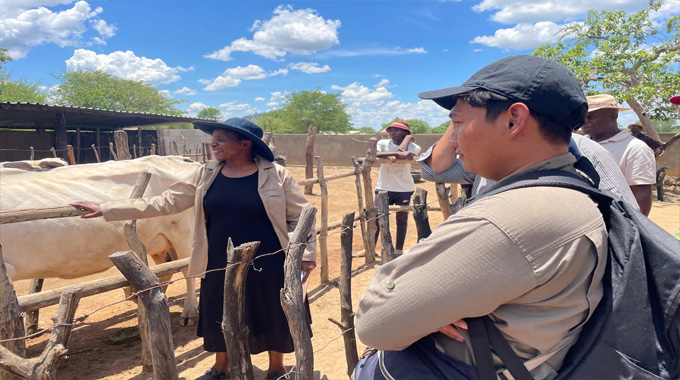
Raymond Jaravaza, [email protected]
FROM her humble home in Msizini Village, 60-year-old Mrs Anele Mnyandu is quietly leading a milk production revolution that started three years ago, and has attracted the attention of researchers as a model of a commercial farming venture that can be operated in a communal area with limited land.
In 2023 Mrs Mnyandu started with just three Friesland cows and today her herd has grown to 11 pedigree dairy cattle and operates a striving milk production venture at her homestead in Msizini Village in Mawabeni, Matabeleland South Province.
The enterprising woman caught the attention of researchers from the Matopo Research Centre when she crossbred a Simmental breed with a Friesland cow, which produced a calf that she hopes possesses improved milk and beef production – a rare trait in pedigree cattle.
She is part of hundreds of farmers across the country that have benefited from a collaboration between Zimbabwe and Indonesia that was sealed last year to boost livestock production in the country with 1 000 semen straws harvested from five top quality Indonesian breeds that are being infused into the local genetics pool through Artificial Insemination (AI).
The Asian imported breed semen straws are being introduced to the local gene pool of Simmentals, Angus, Brahman, Limousin and Holstein through a robust AI programme for cross breeding.
AI is a process that involves mechanically introducing bull semen into a cow’s reproductive tract to achieve pregnancy, and it has been proven to have a higher success rate.
Based on the estimated 65 percent conception rate, the 1 000 semen straws donated by Indonesia could give the country 650 to 700 new genetics in the local breeding pool and that number translates to an improvement in the cattle industry, industry experts.
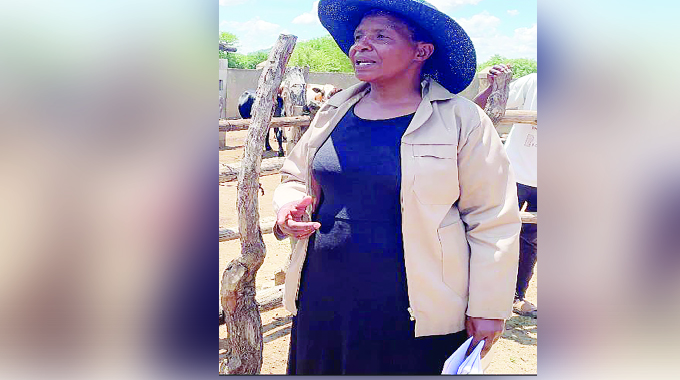
Zimpapers caught up with Mrs Mnyandu at her homestead in Mawabeni on Saturday where she shared her journey in the dairy industry after years of trying and failing.
Her journey is that hard work, perseverance, picking up the pieces after failure and never giving up.
“Many years ago I bought six dairy cows and because I knew nothing about the business but I was just driven by my love and passion for dairy cows, I lost all the animals to diseases in just one year,” she said.
“I even tried my hand in goat rearing and it was another failed project after the goats either died or were stolen,” said Mrs Mnyandu.
“For three years I made the bold decision to try venturing into the dairy business but this time around I did my research and read anything that I could find on dairy farming.
“I could not afford to lose the cows to diseases again so I researched on common ailments that affect dairy cows, how to prevent them and the right nutrition for the cows to get optimum milk production.
“The cows now produce an average of 20 litres of milk per day and we milk them twice at 6am and later in the evening. The milk levels can decline a bit depending on the weather conditions or when the animals are stressed.”
Mrs Mnyandu said she was motivated to cross breed Simmental and Friesland genetics to get a breed that will give farmers more milk and beef production.
“The calf is just three months old but is big in stature. We had to assist the Friesland cow to give birth because the calf was so big. The Indonesian artificial insemination team can give you the option to choose if you want the calf to be male or female and they give you the semen straw that you opt for,” she said.
“Farmers must take up the artificial insemination project and increase their herds. My herd is growing and soon I’ll have challenges with land for pastures and to grow fodder for the cattle,” she said.
Mrs Mnyandu said that she relies heavily on pan feeding the animals due to limited gazing pastures.
“We are in a communal area where grazing land is limited. Depending heavily on buying stock feed cuts down on our profit margins.
“Dairy farming demands that you keep learning everyday and to be on the lookout for potential diseases as Friesland cows are very fragile,” she added.
“It’s been a difficult but very rewarding journey and I encourage farmers to take up dairy farming.”
Artificial insemination is slowly taking root in the country after Zimbabwe commissioned a livestock Gene Bank for the region, housed at the Matopos Research Institute on the outskirts of Bulawayo.
The animal Gene Bank is expected to provide for the harvesting of around 1 500 to 3 000 semen straws per bull per season for AI.
Under natural mating, a bull can only service around 25 to 30 animals per season.
Mr Daniel Satriyo Utomo, an artificial insemination expert who is leading the Indonesian project in Zimbabwe said in his native country innovation has taken a leading role in helping grow that country’s national herd.
“The biggest challenge faced by Zimbabwean communal farmers is that they are still relying on natural mating and can have only one bull in the whole village,” he said.
“Having one bull in one area can result in in-breeding. In Indonesia artificial insemination gives farmers a larger pool of genetics to choose from, which in turn improves the quality of their herds,” said Mr Utomo.
In-breeding in cattle is when animals that are more closely related breed and the practice can have negative effects on the offspring including lower growth rates, higher mortality rates, poor reproductive efficiency and higher frequency of hereditary abnormalities.
The Matopos Research Institute’s animal Gene Bank laboratory will also aid in the preservation and conservation of indigenous breeds through artificial insemination.
Artificial insemination is the cheapest method the country can adopt to improve the national herd, as buying bulls can be expensive for farmers who are not able to buy the best breeds.
Official data from the Ministry of Lands, Agriculture, Fisheries, Water and Rural Development indicate that Zimbabwe’s national herd in 2021 stood at 5,5 million.
Following the launch of the Livestock Growth Plan in 2020, the Government targets a national herd of six million by 2025.
Msizini villager Mrs Margaret Moyo said Mrs Mnyandu’s dairy farming project is an inspiration to locals.
“We are inspired to see one of our own running a successful dairy project right here in our village. Growing up here in Mawabeni we used to see dairy cows in farms owned by white farmers and we believed that it was a business that only white people can do,” she said.
“She started with a few cows but now her herd has grown and she is a living example that even villagers can run a dairy project,” said Mrs Moyo.