

 admin
admin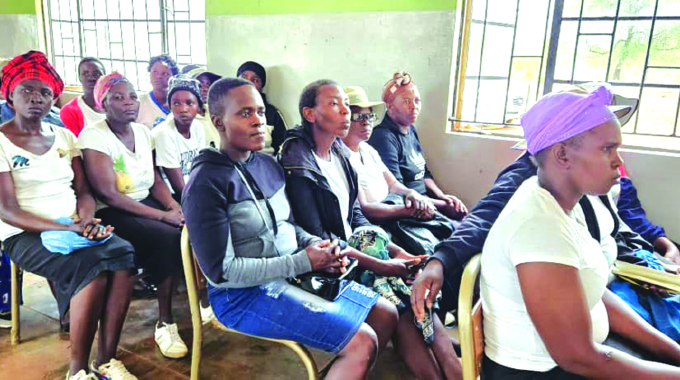
Rumbidzayi Zinyuke recently in BUBI
The Women at the Centre programme is empowering survivors of gender-based violence (GBV) in Bubi district to break free from the cycle of abuse by providing tools and resources to help them overcome the root causes of this harmful behaviour.
Launched in February 2023, the programme is a joint effort by the Government of Zimbabwe through the Ministry of Women Affairs, Community, Small to Medium Enterprise Development in partnership with the United Nations Population Fund (UNFPA) and other partners, through funding from Japanese pharmaceutical company, Takeda.
It seeks to ensure increased and sustained accessibility and availability of essential services for GBV survivors, through enhanced GBV case management and system strengthening.
In Zimbabwe, the project is being piloted in Bubi district with the establishment of safe spaces and mobile one-stop centres, among other initiatives that are enhancing referral pathways, and connecting survivors with services.
Speaking during a visit to one of the safe spaces being run by the World Vision, survivors said the programme was empowering women to be economically independent and address some of the economic challenges that were the leading cause of GBV in the area.
Ms Delight Phiri from Mahlabathini Village 5 said when the company she was working for closed, her husband had walked out on the family, leaving her to care for five children.
“I got assistance through Musasa and went to court to sue him for maintenance and he paid for a few months.
“During the Covid-19 pandemic he was nowhere to be found and we were back to struggling to get something to eat.
“I asked myself for how long I would chase after him.
“I joined the Women at the Centre programme which encouraged us to be actively involved in income generating projects and we are doing well now.
“Not only are we getting money from selling our products, we have also cut our grocery costs significantly.
“I do not need to keep following my husband to take care of his children, but I can do everything on my own until they finish their school,” she said.
Chenai Thula of Ward 8 in Mahlabathini Village in Inyathi said she had been physically assaulted by her husband for 10 years.
“The cause of our problems most of the time was lack of money in the home.
“Whenever I asked him for money for food and he couldn’t provide, he would get violent.
“Sometimes he would come home drunk and demand conjugal rights but because me and the children would have gone the day without a meal, I would get angry and deny him.
“This usually resulted in getting violent.
“I started coming to the safe space and met other women who helped me to open up about my situation and I got help to become financially independent through these projects we are doing here,” she said.
She encouraged other women to work hard for their families to avoid relying on their husbands for everything as this could bring peace in their homes.
Statistics show that at least 49 percent of married adolescent girls and women aged 15-49 years have experienced some form of emotional, physical, or sexual violence committed by their current or most recent husband or partner.
District development officer in the Minister of Women Affairs, Community Small and Medium Enterprise Development Mr Davidson Mawarire, said Bubi had a high incidence of GBV, reporting at least 30 to 40 cases of rape every month.
“Since we started implementing this programme, we have had about 824 cases of GBV (including rape) that have been reported during the mobile one-stop centres.
“What is also interesting is that we also now have men that are reporting.
“We have about 32 cases of men that have reported cases of GBV, where women are also perpetrators,” he said.
He said the programme had reached out to all 23 wards in the districts and was making significant impact.
World Vision programme coordinator Ms Rudo Tinarwo said safe spaces were creating awareness about GBV and were creating a demand for the mobile one-stop centres and the safe shelters for GBV survivors.
“A safe space is a walk-in centre where women and young girls can come through. They receive psychosocial support from a trained mentor and they also benefit from group sessions with other women as they discuss their different challenges in terms of GBV and other issues that affect them within the community.
“Within the safe spaces they also have economic strengthening activities where they have projects that range from rearing chickens, making beads, making vaseline. “The reason why the economic strengthening component is important, it has been realised that most of the GBV cases emanate from financial issues,” she said.
She said the economic strengthening activity was meant to empower the women so that they could contribute to the family’s upkeep as well and help reduce the chances of GBV.
The involvement of men has been crucial in effecting a change in the way they deal with challenges that arise as a result of financial challenges.
Mr Busani Ngwenya, a behaviour change facilitator said the involvement of men in the programme was slowly bringing change in the communities.
“We realised that most men do not want to be part of programmes that have women leading them.
“So I engaged the village head so that we can have a men’s forum where we discuss various issues happening in our area.
“I then take the advantage of having them there to discuss issues of gender based violence.
“We realised that there are some men who are also being abused in the homes. We teach each other about ways to report and get assistance for those men.
“We also advise those who perpetrate GBV against women against such acts,” he said.
While the four year programme is currently being implemented in Bubi district, there are plans to scale up in other provinces to ensure the country gains momentum in the fight to eliminate GBV., empower women and bring hope to communities plagued by the plight.



 Online Reporter