Chronicle Editor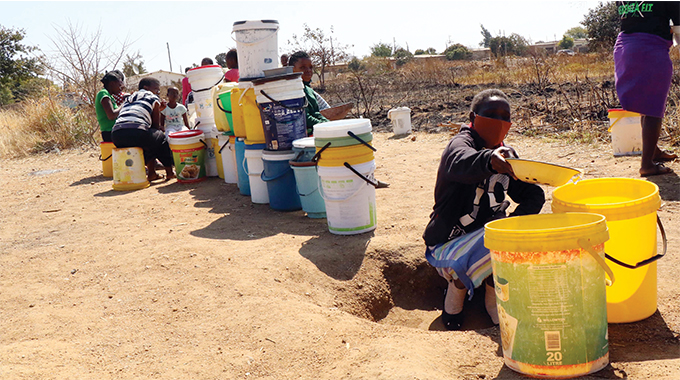
Andile Tshuma
THE Bulawayo water crisis is directly affecting women.
Mothers and girls, carrying buckets on their heads, are the poster child of the water crisis in the city.
Go to any borehole anytime around the suburbs, 80 percent or more of the population there is female.
Women are the face of the crisis and the water situation is impacting their lives in many told and untold ways.
The absence of nearby water sources increases the burden on women. They walk long distances to access water and they face health problems due to lack of adequate, clean water.
This publication ran a story this week on how Bulawayo’s perennial water challenges are putting unimaginable stress on women.
Some women are spending up to eight hours queuing at boreholes and other water points, while some try to go from suburb to suburb looking for water.
Due to water shortage and dwindling dam levels, Bulawayo City council implemented a 144 hour water shedding programming and many women cannot cope.
Vulnerable women such as the elderly, expectant mothers and women with disabilities are most affected, more than the average woman.
After trekking an average five kilometres a day, looking for their precious resource, household chores await, families need to eat, need to bath and be taken care of.
Due to the assigned gender roles that unfairly burden women with house work, they are already swamped with work and with the water situation, it just got worse.
Due to the 144 hour weekly water shedding programme, women are at an even bigger risk of contracting Covid-19 at ever congested communal boreholes, where social distancing is usually an alien concept, and there is a lot of human contact, and fights break out too, quite often.
It is not only the physical torment that comes with the laborious work of looking for water. Women also get affected emotionally and psychologically when family members do not offer assistance to share the burden of ensuring water is provided for families.
During this time, menstrual hygiene management also presents another headache to women when water is scarce. Women need to be extra hygienic during this time to avoid infections and odours and general discomfort. But when there is no running water for extend periods of time, it is a real stress for women.
Chronicle this week spoke to women who shared how they now have to wake up as early as 2AM to join long winding water queues as there is no way they can survive a day without water.
Some unscrupulous people are now taking advantage of the situation by fetching water from boreholes to resell it to vulnerable women who cannot manage to queue due to various conditions.
Spare a thought for a granny who can barely comfortably carry a five litre container of water, but needs about thirty litres just for herself for a day to cook, wash up and for her hygiene needs.
It calls for community members to identify such vulnerable people and extend a helping hand. However, people will rarely think of their neighbours when they are in a crisis themselves.
So, our vulnerable members in communities are on their own. Unfortunately.
Responsible authorities, such as city council could help solve this dilemma by having dedicated bowsers for the vulnerable such as elderly men and women who have no able bodied people to help source water. The same can be done for people with disabilities and expectant mothers.
Gender and media activists have since said the water crisis in the city is a humanitarian crisis, putting into consideration the Luveve suburb deaths case, where 13 people died after allegedly drinking contaminated water.
All a woman’s chores and needs can now not be fully met as her life revolves around the availability of water.
It would be practically impossible to fight Covid-19 in the community especially in high density suburbs where families do not have personal boreholes installed in their homes and they have to leave home to go and congregate with others to get water. The global pandemic needs a lot of water so that people maintain the highest standards of hygiene possible. However, without running water, it becomes difficult to continuously wash hands.
Water is essential for all, other basic needs such as energy have alternatives, but water does not have an alternative and it is needed by all.
Increasing water scarcity is compounding the myriad hardships which the people in the city are already facing, such as loss of work and income due to Covid-19 lockdowns and other regulations.
The shortage of clean, affordable water threatens individual and community health in the city and countrywide. Policy makers must just ensure that the vulnerable are taken care of during this crisis.


 Online Reporter