

 admin
admin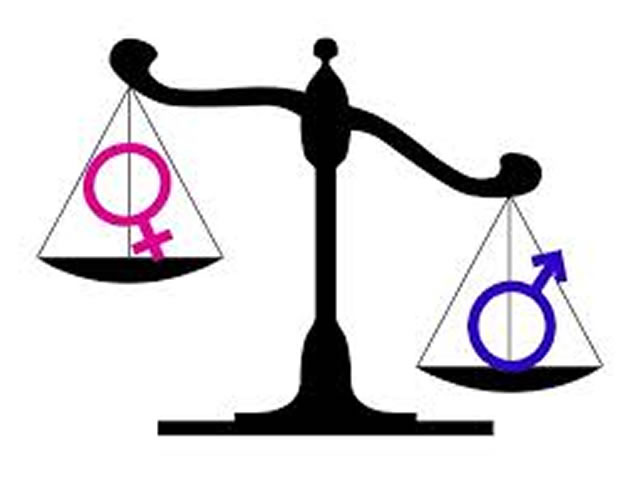
 Perspective Stephen Mpofu
COME to think of it, Zimbabwe is celebrated in the global village – even in the western corner of the village – along with two other African countries pushing women beyond the red line of the parochialism of traditional African society and towards gender parity in practically all affairs of state.
The other states are South Africa and Rwanda, the latter leading the pack reportedly with 60 percent of the country’s women occupying seats in the legislature.
African traditional societies per se designated the kitchen and its utensils as a woman’s place with her concomitant role of producing the labour force to work the fields before the advent of mechanisation which has drastically transformed agricultural production to try to meet burgeoning populations around the globe.
Yet right down at the bottom in postmodern Zimbabwe primitive traditional beliefs remain the basic essence of the Cinderella-ring of the girl child in spite of a massive educational programme mounted at independence to give equal opportunities to both the girl child and the boy child to rise to equally important roles in the political, social and economic affairs in the new Zimbabwean state.
But what is the picture that meets the eye today, more than three decades after the attainment of our statehood?
Women still lag behind men in most walks of life – witness a woman in the countryside on a journey walking behind her husband instead of side by side with him – a tip of the iceberg of the discrimination of women generally, with President Mugabe’s repeated appeals for gender equality to be read as a call to the hearts, lips and the determination of Zimbabweans to launch a crusade to promote women to their rightful place in Zimbabwean society, commensurate with their numerical superiority.
Actually, is it not a tragic irony that a people that closed ranks and waged a revolution that vanquished foreign oppression and racial prejudices against it should appear so reticent ridding itself of centuries-nurtured prejudices against its own women who — and come to think of it — are key to family units? If that is not an absurdity of absurdities then this pen wonders what it is.
President Mugabe made a call this week for Zimbabweans from all walks of life to wage a campaign intended to liberate the girl child as a way of bringing about gender equality, a value much vaunted around the globe today. In essence the president is calling for a thorough going cultural revolution — one similar to the armed revolution — to transform beliefs that remain steeped in ancient traditional society that regards educating a girl as premeditated enrichment of her husband and his family, while educating the boy child is viewed as the right investment for the security of parents in their old age.
That being the case, does it surprise anyone that when the girl child drops out of school, say, for lack of school fees, there is quite jubilation among parents – albeit, probably not all of them — that she becomes handy labour at home or for early marriage to bring home to her parents much needed lobola/roora?
Yet every effort is made by parents to sell a goat or a cow or even to borrow money, for the boy child to continue with his education rather than let him drop out, even though it is common knowledge that because of his inborn hunting and gathering instinct a young boy out of school has a better chance than a girl does to land a job or engage in self employment for his support and that of his parents.
Under the circumstances, there is a crying need to socialise adults through an educational campaign to make them realise the important role that the girl is capable of playing in both domestic affairs as well as lifting the social and economic status of our country.
Once that new realisation sinks in the minds of parents and guardians they will in turn play an important role themselves in the socialisation of their own offspring by regarding the education of the girl child, for instance, as an unimpeachable family and national asset, and not the other way round.
Considering the poverty, some of it quite grinding, to say the least, should not the state consider setting up a fund to go to the rescue of the girl child’s education where that is threatened by a genuine pecuniary poverty?
This pen humbly believes that such financial support by the state-or free education for women right up to high school can go a long way in speeding up the rise of women to parity with men in all the important sectors of Zimbabwean society, not excepting the home.
Gender inequality also manifests itself in the home where domestic violence accounts for the brutalisation of innocent women, or of women provoking violence upon themselves by demanding their inalienable rights but, unfortunately, from chauvinists who will have none of that.
President Mugabe probably put it more poignantly a few days ago when he said no amount of laws punishing men who brutalise women and the imprisonment of the offenders will by themselves end domestic violence but that a campaign to educate people against resorting to primitive behaviour held out any hope of sanity in that area.
This pen believes that an intensified educational campaign complementing custodial sanctions by the courts will go a long away in curbing an upsurge in rape cases, particularly of young girls, including babies, by men often at the behest of traditional doctors who tell them incestual sex, or carnal knowledge of young girls provides a cure for HIVAids or that it is a doorway to riches. Of course, nothing could be further from the truth.
Which also makes educating those involved with the occult an imperative necessity accompanying the incarceration of the ones indicated over their connivance with the rapists. Moreover, fathers who rape children left in their custody forfeit their role as family priests.
All in all education would appear to have the answer to the challenges sighted above and which are an abomination to civilised standards about which most Zimbabweans brag.



 Online Reporter