

 admin
admin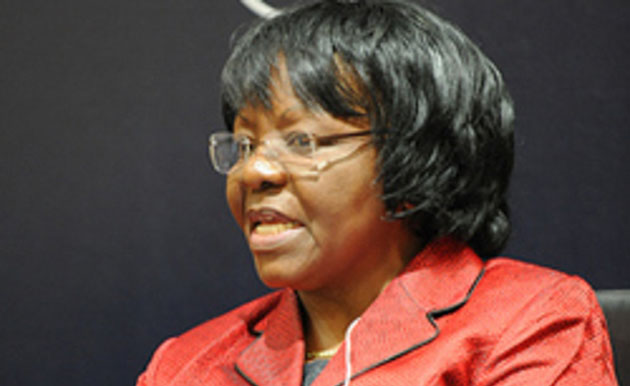
Tina Musonza Herald Correspondent
Government has launched a women in leadership and decision making strategy in an effort to create a detailed roadmap that aims to provide women with exposure to all spheres of influence such as academia, economic development and politics.
This came out at the launch of the women in leadership and decision making strategy in Harare last Friday.
Government officials, parliamentarians and delegates from Malawi, attended to embrace the strategic plan.
Speaking during the event, Minister of Women Affairs, Small and Medium Enterprises Development Dr Sithembiso Nyoni said the strategy was a tool that could equip women in leadership and backed by the quest to achieve gender balance of 50:50 men and women representations in leadership according to the constitution.
“Gender equality creates the conditions to boost economic development and contribute to economic growth,” she said.
“Women represent a crucial positive value for the economy and they contribute substantially to economic growth.
“The female leadership style also contributes to the benefits of diversity: women are better able to deal with difficult personal relationships; they pay closer attention to people’s needs; they are inclined towards the prevention and solution of conflicts; they more readily share views with other people and make efforts to reach agreements; and they monitor and give feedback more intensively.”
Dr Nyoni said it was crucial to fully implement the plan and urged women to take up positions.
“For private companies this can include a shift towards less risky decisions, or towards sustainability and policies with longer time horizons,” she said.
It was important to breach gaps in the private and public sector to achieve remarkable women representation in decision making.
Speaking at the same occasion, Malawi parliamentary women caucus chairperson Roseby Gadma said the launch of the plan was a vibrant campaign for women to realise full potential in decision making.
“Today’s event marks the range of a vibrant campaign towards raising women into decision making positions,” she said.
“My fellow women, let us take this opportunity by making sure that we realise our full potential as accorded to us in human rights which are every day protected by the Zimbabwean constitution.
“Let us realise that there are those who single-handedly can achieve their goals, however, most important is to realise that in unity there is power.”
Ms Gadma urged men to support women in decision making positions.
“Let us, therefore, desist from the pull-down syndrome which is a result of jealous,” she said.
“To our male counterparts, this document urges you to be partners so that we together build.”
United Nations Development Programme country representatives commended the Government for putting its strides forward to uplift women.
The development of the women in decision making strategy marked the commitment to operationalise the gender equality provisions in the constitution of Zimbabwe, international and regional policy frameworks.
Zimbabwe has ratified a number of international and regional instruments that promote gender equality and women’s empowerment.



 Online Reporter