Online Reporter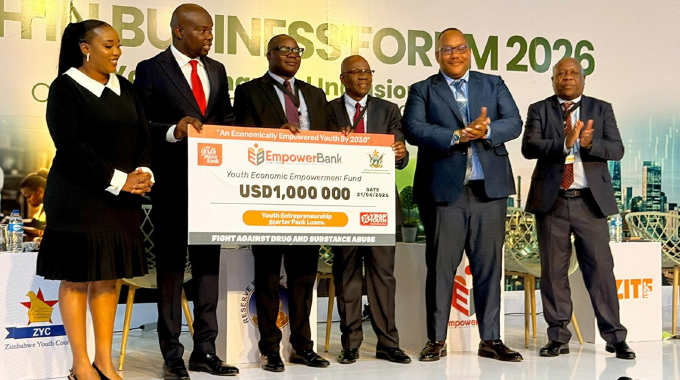
Nqobile Bhebhe, [email protected]
WOMEN working in artisanal and small-scale mining say this year’s Zimbabwe International Trade Fair in Bulawayo felt different, like a moment where things finally began to shift in their favour. For many of them, it was not just another exhibition filled with stands and speeches, but a space where new ideas opened up, where they could see possibilities that had long felt out of reach.
Mining has always been central to life in provinces such as Matabeleland North and South. It shapes livelihoods, defines communities, and offers one of the few steady ways of earning an income in areas where formal jobs are limited. Yet for many young women, taking part in this sector in a meaningful way has always come with challenges.
At this year’s exhibition, especially during the Innovation Symposium, there was a sense of change in the air. Women who attended spoke of seeing modern equipment for the first time — machines designed to improve output, reduce waste, and make mining safer. For some, it felt like stepping into a different world, one where their work could be easier, more productive, and more respected.
Alongside these conversations, the Government’s announcement of a US$1 million support package through the Ministry of Youth Empowerment, Development and Vocational Training drew strong interest. Many young female miners saw it as more than a promise — they saw it as something that could finally help them move forward.
The fund, launched during the Youth in Business Forum 2026 under the theme “Youth Financial Inclusion —Closing gaps in connected economies,” is expected to support youth-led enterprises and improve access to finance. For women who have spent years struggling to secure funding, this announcement felt like a door opening.
Minister Tinoda Machakaire made it clear that the intention was not just to talk, but to act.
“This US$1 million Youth Economic Fund is not just about money; it is about unlocking the potential of our young people and ensuring they become active drivers of economic transformation,” he said.
He spoke about a future where young people are not on the sidelines, but fully involved in shaping the economy.
“Through EmpowerBank, we are creating opportunities for youth in all provinces to start, expand and sustain businesses that contribute meaningfully to national development and the attainment of Vision 2030,” he said.
For many women in mining, those words touched on a reality they know too well — that although mining is important, they are often left out or pushed to the edges. Some only take on low-value tasks, while others struggle to even get a chance to join the field.
Stakeholders say this is not only about money, but also about deep-rooted barriers. Cultural expectations, limited access to resources, and lack of opportunities all play a part in holding women back.
Miss Nombeko Ncube from Bubi spoke plainly about one of the biggest problems.
“Access to finance is a major challenge. Financial institutions require collateral, which many of us do not have. As a result, we cannot invest in proper equipment or scale up our operations,” she said.
Without proper funding, many women are forced to rely on informal sources, which are often unreliable and too small to make a real difference. That is why the announcement at ZITF brought hope.
“Funding has always been our biggest setback, so hearing about the US$1 million support package gives us hope that things can finally change. If it is implemented properly and reaches women on the ground, it can help us access equipment and grow our operations,” she said.
Money, however, is only part of the story. Training also remains a major gap. Many women feel that the programmes available are not designed with them in mind.
Mrs Anna Maininga from Gwanda shared her frustration.
“Many workshops and training sessions are not designed with young women in mind. Sometimes they are held in places or at times that are not convenient for us. We need targeted programmes that deliberately include women,” she said.
There is also the issue of knowledge — understanding geology, safety standards and mineral processing. Those with these skills have a better chance of succeeding, yet access to such training is not equal.
Another concern raised during the exhibition was the lack of representation in decision-making spaces. Many women feel that important decisions are made without their input, even though those decisions affect their lives directly.
Ms Dube spoke honestly about this imbalance.
“Decisions are made without us, yet they affect us directly. We need a seat at the table, not to be spectators,” she said.
Cultural attitudes continue to play a role as well. In some communities, mining is still seen as work for men, making it harder for women to step in without facing judgement.
“In some communities, mining is still seen as a man’s job. Young women are discouraged from joining the sector, and those who do often face stigma,” said Ms Dube.
Changing this requires effort from many sides — government, financial institutions, community leaders and the mining sector itself.
“We need policies that promote equal access to resources, funding tailored for women, and deliberate inclusion in training and leadership structures,” said Mrs Maininga.
Despite these challenges, the mood at the trade fair carried a sense of possibility. Many women said the exposure they received at the exhibition had already started to shift their thinking.
Walking through the exhibition stands, they encountered modern tools, new processing systems, and safer ways of working. They saw what was possible when technology is applied, and how it could make their work more efficient.
Ms Monalisa Nare described how the experience changed her view.
“I have always relied on basic tools, but what I saw here shows that we can do better and increase our output. Some of the equipment improves gold recovery and reduces waste, which is very important for us as small miners,” she said.
Beyond machinery, there was also exposure to new ideas. Talking to other women, she learned about the use of artificial intelligence in business.
“I interacted with other women who are already using AI in their businesses, and it opened my eyes to how we can also use it in mining for better decision-making and efficiency. We need more engagements and training on AI at grassroots level so that women miners are not left behind as technology advances,” she said.
But even as hope grows, reality still remains.
“These machines are expensive, and without financial support it is difficult for women like me to access them. We need funding models that specifically target women miners,” she said.
Around the exhibition, universities and colleges also showed what they have been working on — innovations, new ideas, and solutions that could support industries like mining. Their presence showed a shift towards practical work that connects education to real-life needs.
Minister Frederick Shava expressed satisfaction with what he saw. “After touring these stands, I am quite impressed with what our institutions have done because their innovations speak to industry needs. A lot of research ideas have been converted into innovations that are now ready to be taken up by commerce and industry and integrated into daily operations,” said Minister Shava.
For women in small-scale mining, this kind of engagement matters. It brings them closer to people who make decisions, to those who provide funding, and to those developing new technologies.
These interactions begin to close a gap that has existed for years — the distance between those working on the ground and those shaping the future of the sector.
There is a growing sense that if these connections continue, and if the promises made are followed through, real change could take place. Women who have long worked quietly in the background may finally find themselves fully included, not just as participants, but as leaders in their own right.
And in places where mining is not just an industry but a way of life, that could mean something much bigger — stronger communities, shared opportunities, and a future where no one is left behind.



 Temba Dube