Online Reporter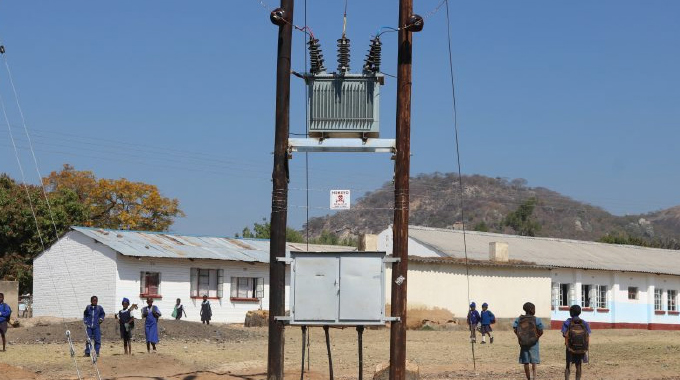
Sukulwenkosi Dube-Matutu, [email protected]
MATABELELAND South is moving steadily towards a point many communities have waited for over the years. Most rural schools and clinics in the province are expected to have electricity by November this year, as Government pushes to complete the programme within a fixed deadline.
For many people, this is not just about power lines and solar panels — it is about making daily life easier and improving basic services.
This electrification drive is part of a wider set of legacy projects rolled out after the province hosted this year’s Independence Day celebrations. Instead of the event ending with speeches and ceremonies, it has been followed by practical developments on the ground. These projects cover health, education, infrastructure and community development, all meant to improve living conditions and support economic growth in the province.
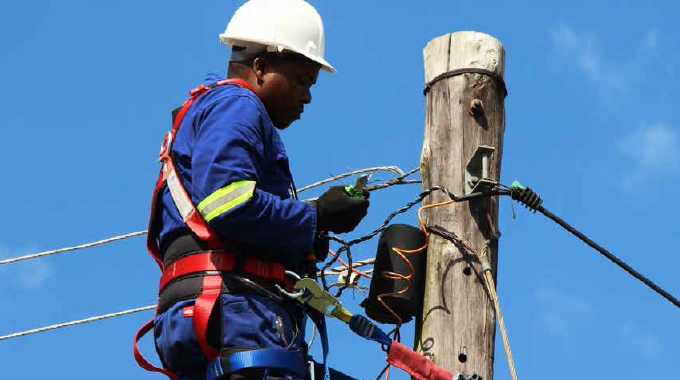
Speaking during the commissioning of the Light Emitting Diode (LED) lighting retrofit project at Gwanda Provincial Hospital last week, Minister of Energy and Power Development July Moyo said the Rural Electrification Agency (REA) had made strong progress in connecting institutions that previously had no power.
“Government has given priority to Matabeleland South under the rural electrification programme. All schools and clinics in the province are set to be electrified by November,” said Minister Moyo.
For clinics in remote areas, electricity brings clear and immediate benefits. It allows medicines to be stored properly, equipment to run without interruption, and health workers to treat patients at night under proper lighting. For schools, it means access to computers, better lighting for studying, and improved safety.
Beyond electrification, Government is working on several other projects across the province’s seven districts. These include building 41 science laboratories to strengthen learning in science subjects, upgrading schools in Matobo District, and completing and improving Kezi Hospital.
Other work includes the rehabilitation of the primary care nurse training school at Maphisa District Hospital, the completion of the Filabusi Registry, and road construction on the Gwanda–Maphisa and Bulawayo–Kezi routes.
These roads are expected to improve transport, make it easier for people to move goods, and support local business.
At the same time, efforts are being made to support local economies. Village Business Units are being introduced to help communities create stable sources of income and encourage small-scale entrepreneurship.
Minister Moyo said the legacy projects reflect the Government’s commitment to leaving a lasting impact in host provinces beyond national celebrations.
“These projects cut across all sectors and are ushering in much-needed progress in Matabeleland South. All are set to be completed in November,” he said.
He said 92 percent of schools in the province have already been electrified.
“Since the Independence Day celebrations were held in Matabeleland South we have instructed REA to prioritise Matabeleland South. The immediate target that we had set was to have all clinics and schools in Matobo District.
“For the rest of the institutions in other provinces in the district we should have electrified by November. We have been given a deadline that all legacy projects being implemented in Matabeleland South must be finished by November this year. This also applies to rural electrification of schools and clinics,” said Minister Moyo.
The programme is also covering traditional leaders’ homesteads. Minister Moyo said 98 percent of chiefs’ homesteads across the country have already been electrified, with the rest expected to be completed this year. Work will also extend to headmen.
In addition, the plan is to use electricity to support small income-generating projects.
“We expect the clinics and schools that we will electrify to operate business units to ensure reliable supply of food and basic relish for learners and patients. If there is surplus the products can also be sold to boost cash flow,” he said.
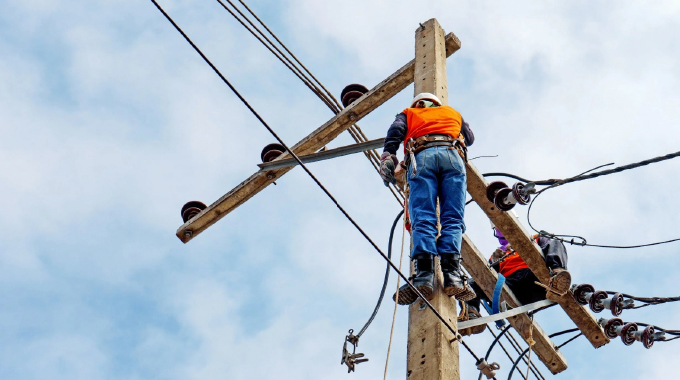
Nationally, Government has set a target to electrify every school before the end of the year. To achieve this, there is increased use of solar systems and other off-grid solutions, especially in remote areas where connecting to the main power grid is difficult and expensive.
This marks a shift from planning to actual delivery, as authorities focus on making sure that no school is left without electricity.
Minister Moyo said about 75 percent of schools across Zimbabwe are already electrified, with the remaining work focused on hard-to-reach areas. He said Government is determined to complete the programme within the set timeframe.
“The President has said we must make sure that every primary and secondary school is electrified this year as well as clinics. We have made a deliberate decision, supported by Cabinet and His Excellency President ED Mnangagwa, that this is the year we must finish electrifying all our schools — both secondary and primary,” Minister Moyo.
The electrification programme is also part of a wider energy plan aimed at increasing power generation to 2 100 megawatts by 2030. Solar energy is expected to play a major role, supported by partnerships between Government and private investors.
In rural areas, solar is seen as a practical solution, especially where extending the grid has been slow.
Government is also working on improving water supply, with dam construction and borehole drilling taking place in several areas to address ongoing drought challenges.
While most secondary schools are close to full electrification — at about 82 to 84 percent — primary schools, especially in remote areas, are still behind, with just over 70 percent connected so far.
Minister Moyo noted that electricity is an important resource and called on other players in the energy sector to help increase supply, especially through renewable energy.
Follow on X; @DubeMatutu