admin
admin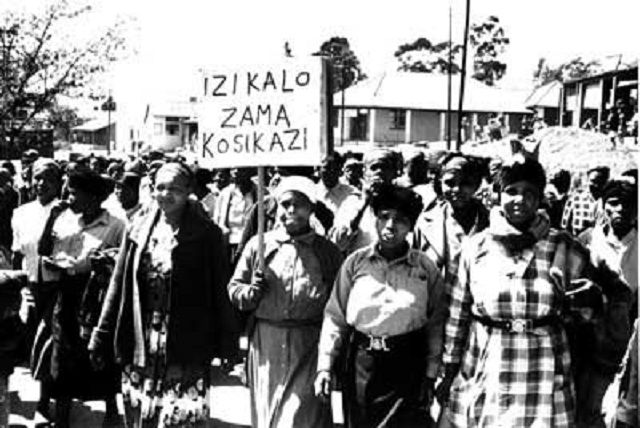
Tafadzwa Chibukwa, [email protected]
The kitchen, society decided, was their place and all they had to do was bear children and tend to the needs of the men in their lives.
Women were deemed weak and emotional; they were treated as second class citizens who could not own property, have a bank account or vote. Their education was not prioritised and only a handful dared to dream beyond the home.
Although patriarchy had decided the country’s liberation struggle was no place for the female species, as in every other sphere of life, some women stood firm and proved their worth till the bitter end.
Scores of women volunteered and put their lives on the line to fight the enemy and liberate the country from white minority rule.
While a significant number of the guerillas found on the frontline were men, that did not mean women folded their arms and hid.
They not only fought alongside their male counterparts on the frontline but also helped in other ways such as feeding the guerillas and providing them with ammunition.
In separate interviews, female war veterans shared their experiences and the roles they played during this period.
Some shared incidents where they almost lost their lives at the account of the enemy.
National War Veterans League Bulawayo Province Secretary for Information and Publicity Cde Metelia Matunha joined the armed forces in 1976 at the age of 14.
She said the guerillas moved from place to place recruiting new members, and they landed at her home town in Plumtree where she joined in the company of her friends.
“We had always been told by the elders in the community that the guerillas were moving from place to place recruiting new members for training. We were eagerly waiting for them to arrive so that we could join the forces and help liberate our country,” said Cde Matunha.
She said although she was young, she could see the unfair conditions that her parents were being exposed to.
This is what fuelled and inspired many of her age mates to join the liberation struggle in order to free the country from the shackles of the oppressor.
“Many people asked us why we had decided to join the liberation struggle at such a tender age and we would always give the same response; that we felt compelled to help our nation. Never was there a day when we felt out of place or belittled when we joined the armed forces even during training because we had great support and motivation from the older women and girls who had already been recruited. Our training camps felt like home,” said Cde Matunha.
She said although the army training was hard for them considering their age, they managed to finish because of their determination and encouragement from their female instructors who pushed them to their full potential.
After undergoing training however, not all women were deployed to the frontline.
Some were given tasks to see to it that the soldiers on the battlefield were supplied with ammunition, food and clothing.
“We were not necessarily deployed to the battlefield but some of us played a huge role behind the frontline. For example, we were deployed to be undercover agents to help infiltrate the enemy and get information on their every movement and relay the message to our higher officers,” said Cde Matunha.
National Secretary for the Welfare of the Disabled and Disadvantaged in the National War Veterans League, Cde Sehlule Jele said she joined the liberation struggle in 1977 at the age of 17.
Cde Jele said she trained at Mkushi Training Camp in Zambia. Mkushi was a Zipra camp for female guerillas that came under a horrific Rhodesian forces attack under Operation Gatling.
On 19 October 1978, the camp was bombed killing some of the bravest women who were fighting to liberate Zimbabwe.
Cde Jele said training as a soldier was not easy, especially for women.
Training was so intense that some women stopped menstruating as a result of the exercises and drills they had to do.
“Our training was not easy; we lost some of our members to training alone which gave us an insight of what to expect once we were on the battlefield.


 Online Reporter