Chronicle Editor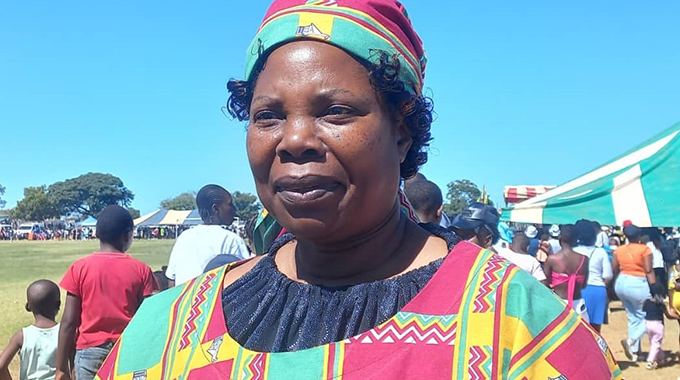
Sukulwenkosi Dube-Matutu, [email protected]
AS the country celebrated 44 years of independence last week, women in leadership positions in Matabeleland South Province took time to reflect on the revolutionary gains which have brought them economic and social emancipation.
When the gallant sons and daughters of Zimbabwe sacrificed their lives for the country’s independence, their blood ushered in an opportunity for women. Before Independence women were subjected to menial domestic jobs in kitchens and farms.
Government under the Second Republic has introduced policies and programmes aimed at empowering women. Most of the women are now occupying key decision-making positions in Government, and the corporate sector such as mining, business, agriculture, manufacturing, education, health, and tourism among others.
This includes 50-50 representation in all institutions, urgencies of Government, commissions and other bodies at all levels with women’s access to resources including land also guaranteed based on equality.
Government is mainstreaming women in economic sectors such as mining, agriculture, tourism and manufacturing in furthering women’s empowerment and is implementing programmes for women’s empowerment which include financial inclusion, access to markets, capacity building, and provision of appropriate work spaces, value chain development and promoting rural industrialisation.
In Matabeleland South Province, more women are rising through the ranks in both private and public sectors, and occupying key positions.

Gwanda District Development Coordinator, Ms Nomathemba Ndlovu, said women in the country have a lot to celebrate. She said several policies have been put in place by Government to ensure gender mainstreaming in all sectors.
“In the past, as women, we used to face discrimination but we are glad there has been a shift that we have witnessed over the years. At some point, women were being denied opportunities, not because they didn’t qualify, but because of their gender,” she said.
“We are now being given the opportunity to occupy positions and posts which were in the past dominated by men. Women have also made a mark in various sectors of the economy such as mining, and farming among others.”
Ms Ndlovu said through their involvement women are now able to contribute towards the attainment of Vision 2030. She said even women in rural communities have embraced the empowerment drive.
Ms Ndlovu said women mostly in rural areas used to shun these empowerment opportunities as they faced a lot of resistance from men.
Agriculture Advisory and Rural Development Services’ Matabeleland South provincial director, Mrs Shupikai Sibanda, said it came as a huge honour for her to be in charge of one of the country’s major economic sectors.
“The agricultural sector is one of the country’s main economic drivers and contributes to the National Development Strategy 1. I endeavour to lead the province into becoming one of the main contributors in developing the country’s agricultural sector,” she said.
“As women, there is a lot we can do to develop the nation. We are hard workers and it’s time we use our greatest weapon which is intellect to build our nation.”
Minister of State for Matabeleland South Provincial Affairs and Devolution, Dr Evelyn Ndlovu, said it is important for women to reflect on the empowerment opportunities that have come as a result of Independence.
She commended the Second Republic for uplifting and protecting women.
“The dignity of women has been restored, their rights are being protected and their potential and wisdom is being utilised. We now find many women in Cabinet and Parliament,” said Dr Ndlovu.
“Government has also come up with laws to protect women and young girls from all forms of abuse thereby preserving their dignity. We have a lot to celebrate on Independence Day as women from Zimbabwe”.
Government has made great strides in delivering its promises to empower women, with thousands benefiting from various programmes. Many are now successful farmers after benefiting from the land reform programme.
President Mnangagwa is on record saying the empowerment of women is a prerequisite for sustainable development and poverty reduction, as well as the attainment of gender and social equality which are all necessary for ensuring vibrant, healthy and inclusive communities.


 Online Reporter