admin
admin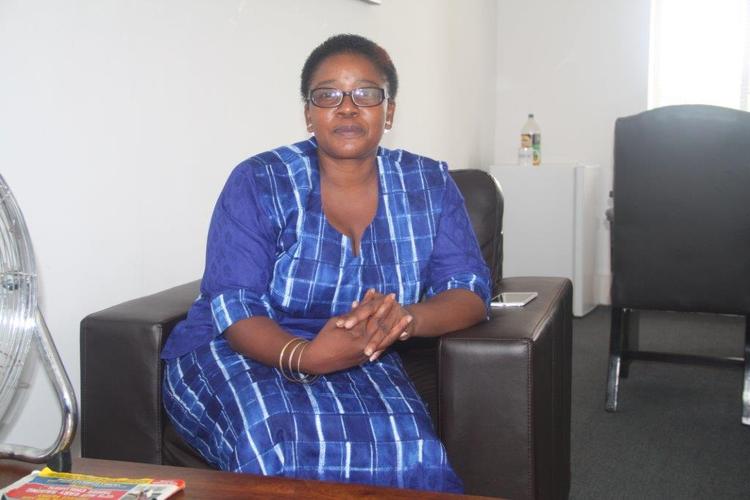
Business Reporter
THE country is inching closer towards full-scale processing of with Ke Nako Diamond Processing recently commissioning a deep boiling facility, which essentially transforms industrial diamonds to near-gem quality.
There are currently two companies that have been licensed by Government to clean the precious stones.
The deep boiling process, which typically lasts between 10 and 18 hours, is usually done using a mixture of extremely strong acids at high temperature. Such processes have managed to add value to diamonds that are auctioned off by Government.
Experts say the price of diamonds increase between 10 percent and 20 percent after they are cleaned.
Ke Nako founder and MD Ms Barbara Mutambanengwe believes that the commissioning of the facility is a major step towards adding value of local diamonds.
“Before I explain what we do, it is critical to point out that the local diamond is known to have a coating around it, which makes it difficult to determine its full value.
“In that state it is difficult, if not impossible, to determine the quality of the rock through the four Cs – carat weight, cut, colour and clarity.
“Our role is to remove that coating and we do so through a chemical washing process called deep boiling. I must point out that this is the first critical step in the value process of diamonds.
“Cleaning the diamonds improves the visual appearance of the stone, exposes the colour and improves the accuracy of valuation. The cutting and polishing will even yield better results because we will be selling a finished product, which means more revenue for fiscus . . .
“Since we started, we have been able to have most of the industrial diamonds upgraded to near gem and gem levels, which enables them to fetch much more money on the market,” she said.
Ke Nako was borne out of Ms Mutambanengwe 15-year stay in Botswana where she met Mr Francis Kgoboko (a chemical engineer who once worked for Debswana), former Debswana MD Mr Blackie Marole and former De Beers South Africa CEO Mr David Noko, who are now technical partners in the business.
“These men pushed me incessantly to realise my dream. Soon after my return, Government in 2013 came up with the Zimbabwe Agenda for Sustainable Socio-Economic Transformation, which had that one special cluster – Value Addition and beneficiation . . . For me, nothing embodied that cluster than the vision I had,” she said.
She soon transformed her vision into reality.
“I knocked on so many doors; it was not smooth sailing. I stumbled and fell many times but because I believed in this vision, I had to rise, dust myself and continue…
“Believing in a vision does not put food on the table. Rent has to be paid. Children have to go to school. Everyday expenses cannot be wished away. I struggled, yes, but after four years I succeeded and like in pregnancy it was like holding a baby in your arms, the labour pains are soon forgotten.
“We are firmly in support of the value addition and beneficiation cluster of the Zim-Asset as it speaks to the mission and vision.
“Ke Nako is grateful to President Mugabe for championing the need to beneficiate our minerals and as a company we a solidly behind his vision for a better and prosperous Zimbabwe,” she said.
Ke Nako presently only gets 40 000 carats against the plant’s installed capacity of 1,5 million carats.
It is hoped that the consolidation of diamond mining companies at the Marange diamond fields will help improve prospects for the business.
The businesswoman also opines that Ke Nako is an embodiment of two critical aspects that Government seeks to address – women and youth empowerment.
Added Ms Mtambanengwe: “I am a woman who has broken into a male-dominated sector and my hope is that I can inspire other women to fulfil their dreams.
“We have 12 youths that are under our employ who are fresh from school. We are cognisant of the need to empower youths in this country so we have engaged youth from disadvantaged backgrounds and (we) are training them. Our hope is to gradually increase our numbers as our volumes increase.
“Our thrust is to create all-rounders so all our staff are trained in the core aspects of their business despite the fact that they will be doing different tasks. At the moment, we are limited by capacity. We will enrol more youths as our capacity increases.”


 Online Reporter